
The Pacific Electric and the Streetcar Suburbs
Contents
The La Cañada Flintridge market is where Mike Kobeissi has worked for three decades, and much of the older suburban map of the region around it was drawn by a railway built to one standard, the interurban. An interurban is an electric railway that runs between towns rather than within one. By that measure the Pacific Electric was, in the words of the Southern California Railway Museum, America’s largest interurban electric railway, with more than 1,000 miles of line across the Los Angeles region.1
Interurban and streetcar
The standard is easiest to see beside its opposite. The Los Angeles Almanac explains that the Red Cars, named for their paint and powered from overhead wires, carried passengers from the San Fernando Valley to Long Beach and as far as Redlands and Newport Beach, while trips between downtown and the rest of the city mostly fell to the Yellow Cars of the Los Angeles Railway. The yellow system drew less affection and carried more than twice as many riders.5 The Metro library’s guide to the company adds that the Pacific Electric ran streetcars, interurbans and buses across Los Angeles, Orange, San Bernardino and Riverside counties.3
Red Cars and Yellow Cars
| Pacific Electric (Red Cars) | Los Angeles Railway (Yellow Cars) | |
|---|---|---|
| Kind of service | Interurban lines across the region | Local lines between downtown and the rest of the city |
| Reach | San Fernando Valley to Long Beach, out to Redlands and Newport Beach | The city of Los Angeles |
| Riders | The more celebrated system | More than twice as many passengers |
From horsecars to Huntington
Rail transit in Los Angeles began small. A history quoted in LA Weekly dates the first line to 1874, one open car pulled by a horse, followed by cable cars in 1885 and an electric railway chartered in 1886; the last horsecar line went electric in 1895.7 That same year the region’s first electric interurban opened between Los Angeles and Pasadena. In 1901 Henry Huntington, whom the museum calls a real estate and utility tycoon, formed the Pacific Electric, sold his stake to the Southern Pacific in 1910, and took the city’s local streetcar system in return when the Great Merger of 1911 folded nearly every interurban into one company.1
Suburbs along the track
The lines and the land went together. Vox’s history of the American streetcar notes that some developers built new suburbs around streetcar lines, since people living too far to walk to work depended on them.6 The Los Angeles companies, the LA Weekly history adds, also ran tracks out to areas where they happened to own land, which became more valuable as the lines made it less remote.7 PBS SoCal’s tour of Red Car remnants shows the pattern on the ground: Harry Culver built Culver City around two sets of tracks served by the Ivy Substation of 1907, and Irving Gill designed a depot for planned Torrance in 1912.4 The Los Angeles Conservancy describes Gill’s El Prado Bridge of 1913, which carried freight over the Red Car tracks, as a focal point of the original plan for the Torrance town center.9
The peak in the 1920s
By 1914 more than 1,600 Pacific Electric trains entered or left Los Angeles each day, and the system peaked in the middle of the 1920s. It was also a large freight carrier, the third largest originator of on line freight in California.1 In 1924 digging began on a tunnel for the Hollywood, Glendale and San Fernando Valley lines, meant to take 1,000 daily car movements off the congested downtown streets.3 A 1926 network map redrawn for The Guardian records a company that advertised itself as the largest electric railway in the world.8 The same decade brought the competitor. Vox cites 160,000 cars crowding Los Angeles streets in the 1920s, with transit riders complaining of hourlong delays.6
Pacific Electric from first line to last
- 1895The region's first electric interurban links Los Angeles and Pasadena.
- 1901Henry Huntington forms the Pacific Electric.
- 1911The Great Merger puts nearly all the region's interurbans under Southern Pacific control.
- Mid 1920sThe system reaches its peak.
- 1953 to 1958Passenger lines pass to Metropolitan Coach Lines, then to a public transit authority.
- 1961The Long Beach line, the last, gives way to buses.
Decline and the scrapyard
The reasons were ordinary rather than sinister. Cars could drive on the tracks, so streetcars stopped keeping schedules once even a small share of people drove; many operators were locked into five cent fares and obliged to maintain the pavement around their rails. The popular story of a General Motors plot falls short, Vox argues, since the holding company tied to it was involved in only about 10 percent of streetcar closures nationally.6 The Guardian’s mapmaker puts it more bluntly: the Pacific Electric was poorly run, and the public would not pay to save it.8 Ridership revived briefly in the Second World War, then fell.5 Passenger service passed to Metropolitan Coach Lines in 1953 and to a public transit authority in 1958, and the Long Beach line, the last, gave way to buses in 1961.1 A Los Angeles Times archive post reprints a 1956 report of Red Cars piled in a Terminal Island junkyard waiting for the cutting torch, and gives April 9, 1961 for the final run; the Almanac gives April 8.2 5
What changed and what did not
The cars and most of the passenger track are gone. Much of the street pattern is not. Huntington Drive and other unusually wide boulevards with broad medians, among them Hollywood, Glendale and Venice, mark old Red Car routes, and depots survive in Lynwood and North Hollywood. In Long Beach an old right of way became the Red Car Greenbelt, a planted path opened in 2018.4 Gill’s bridge in Torrance, cleaned of vines and gray paint and repaired for its centennial, won a Conservancy Preservation Award in 2015.9 Several freight lines kept after passenger service ended have returned to use as light rail and commuter rail.1 The Metro library calls the system a precursor of Metrolink, and The Guardian notes that much of the modern Metro is simply a rebuilt Pacific Electric.3 8 The cars survive too: a group of Los Angeles teenagers began saving them around 1956, and the museum they started in Perris keeps more than 35 pieces of Red Car equipment.7 1 A route map is a clue to how a neighborhood grew, not an appraisal of any house in it, and a reader with a specific property in mind should put that question to their own advisors. The road era that followed is described in the Arroyo Seco Parkway, and the people who walked these valleys long before any track was laid in the Tongva and the Arroyo Seco.
References
- Southern California Railway Museum. Pacific Electric, 2020 04 22.
- Los Angeles Times. From the Archives: A mountain of red cars, 2017 09 12.
- Metro Transportation Library and Archive. Pacific Electric Railway Company, 1901 to 1965, 2024 07 15.
- PBS SoCal. Where to Find Remnants of L.A.'s Red Car System, 2022 03 18.
- Los Angeles Almanac. Red Cars, 2025 01 01.
- Vox. The real story behind the demise of America's once mighty streetcars, 2015 05 07.
- LA Weekly. Out in the Desert Town of Perris, L.A.'s Streetcars Are Frozen in Time, 2016 10 08.
- The Guardian. Mapped: historical public transit systems v their modern equivalents, 2019 04 03.
- Los Angeles Conservancy. Pacific Electric Railway, El Prado Bridge, 2024 08 16.
External links
See also
-
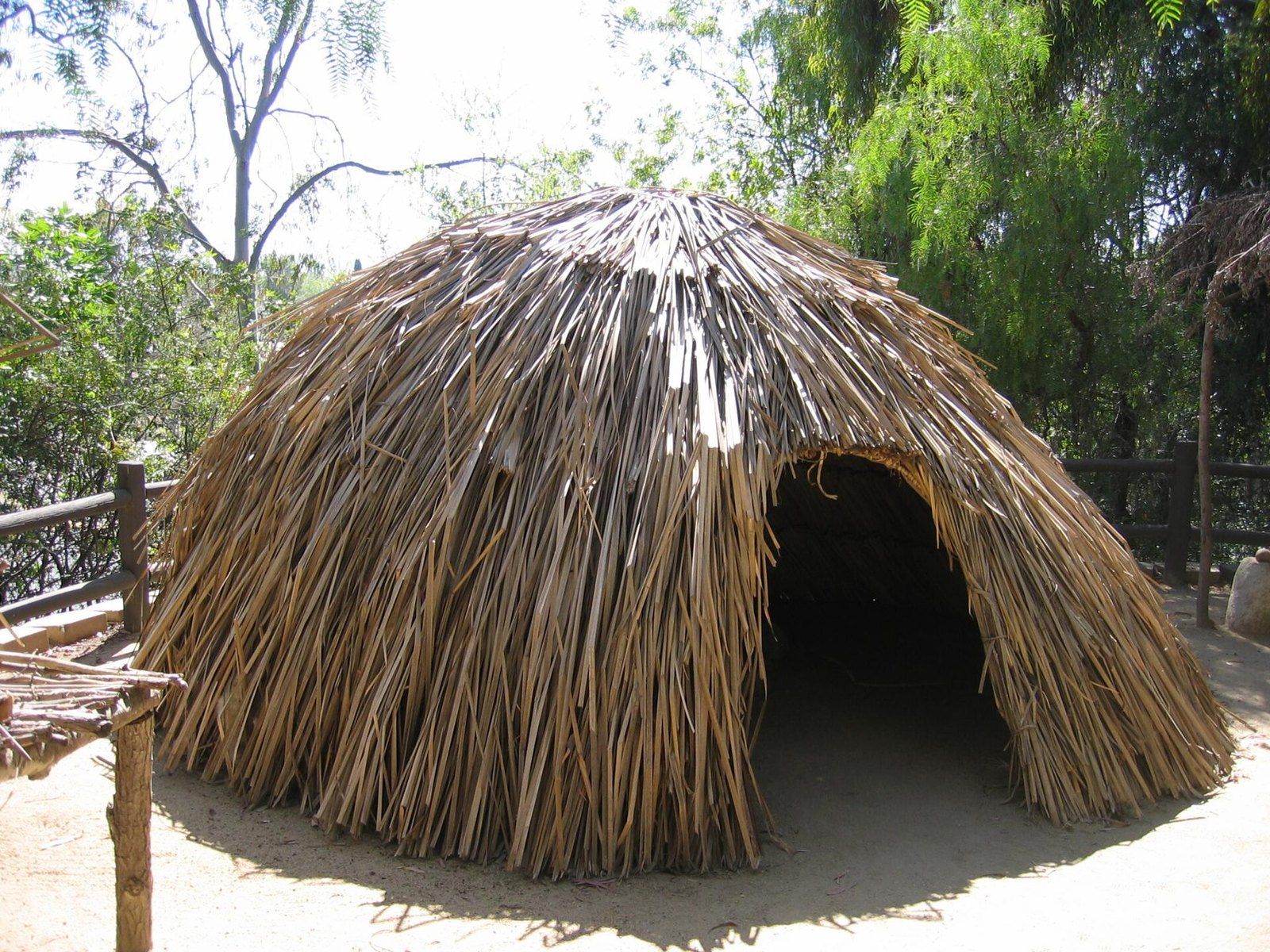 La Cañada Flintridge History
The Tongva and the Arroyo Seco
Tovaangar's villages, trails and acorn economy left traces that still frame what is known of the foothills.
-
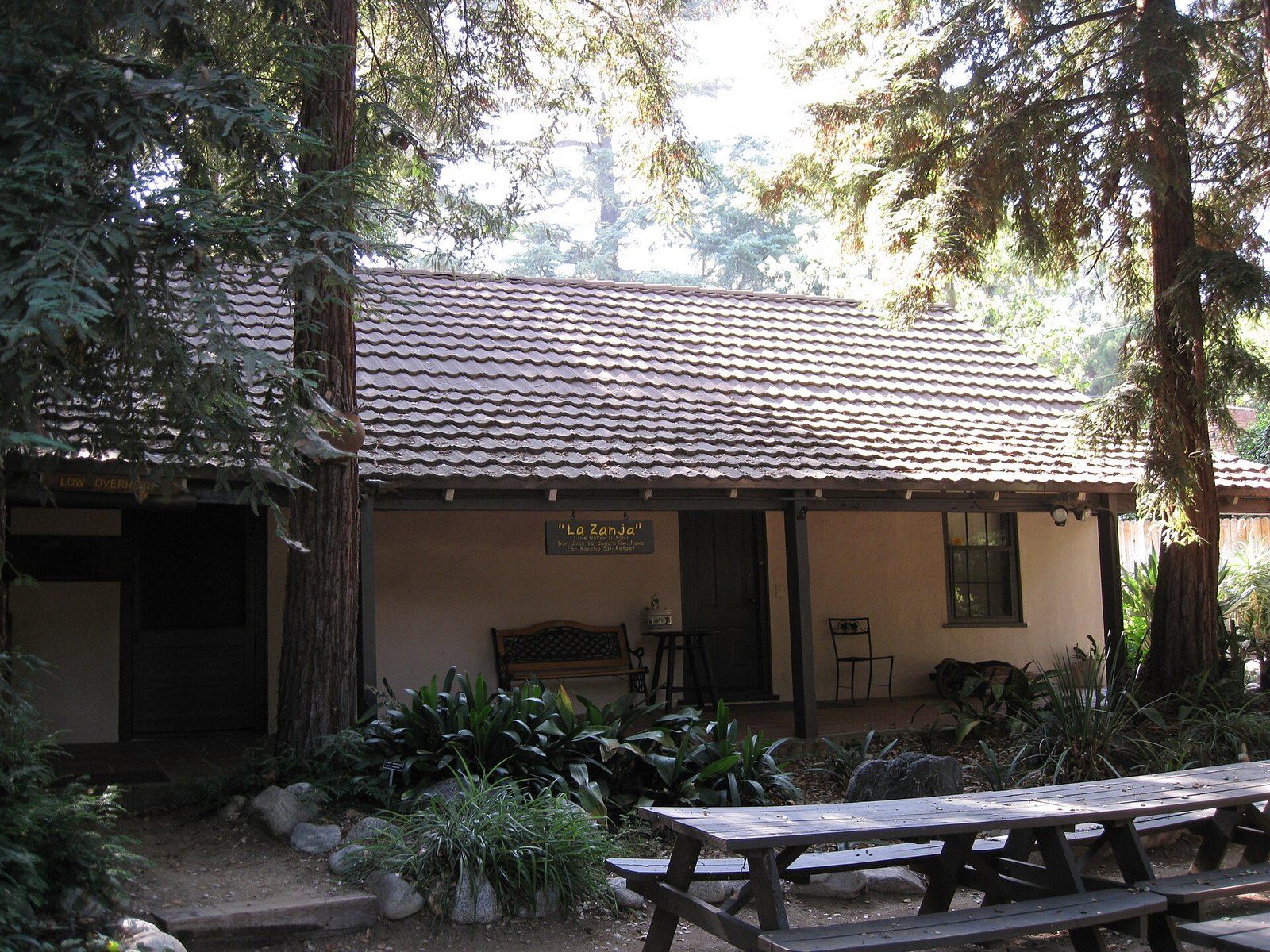 La Cañada Flintridge History
The Ranchos of the Crescenta Valley
From the Verdugo grant of 1784 to Briggs's ten acre lots and Flint's subdivision, the chain of title behind the valley.
-
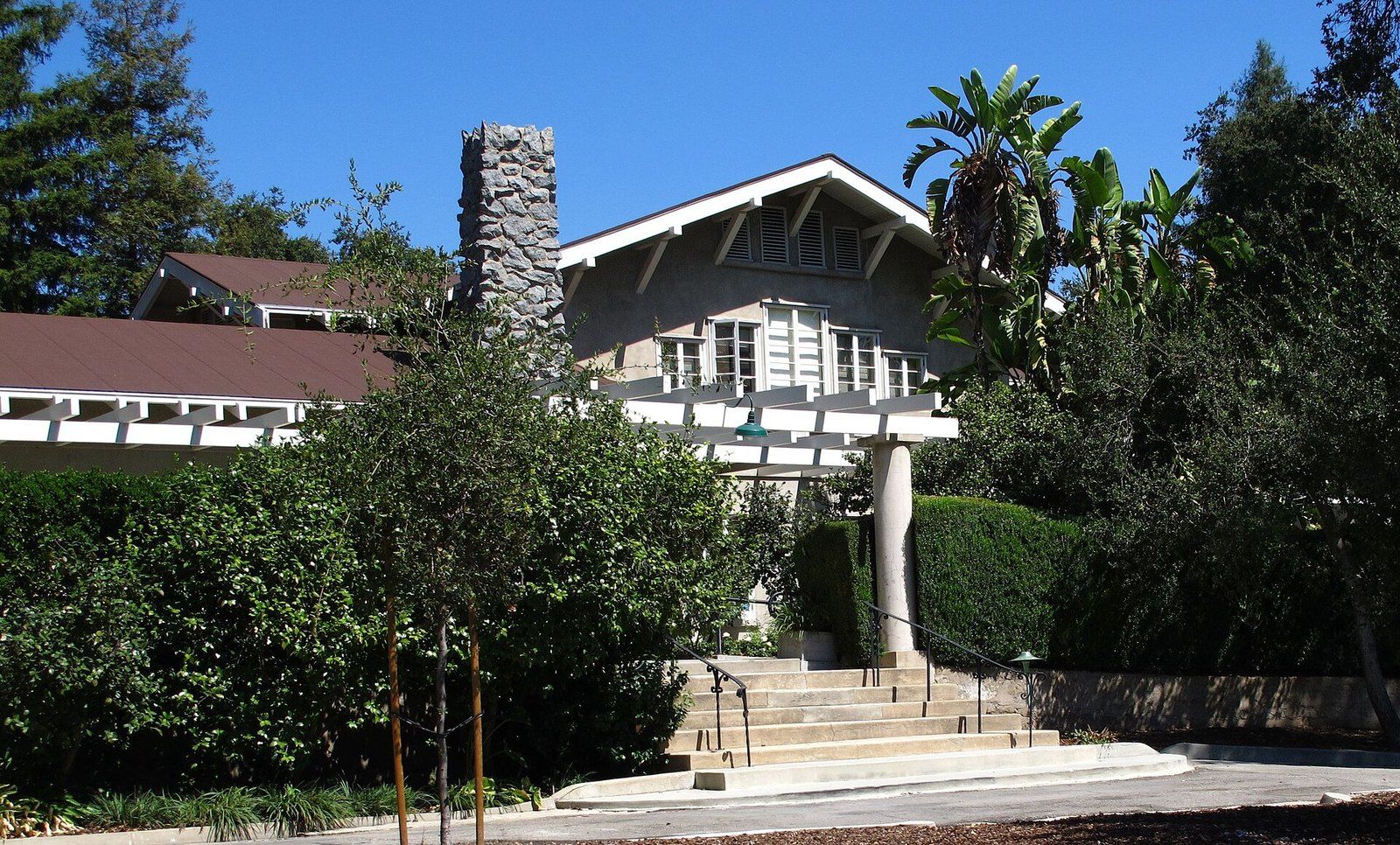 La Cañada Flintridge History
Lanterman House
A doctor's family home, a ballroom that waited decades for a dance, and the archive the town keeps inside its walls.
-
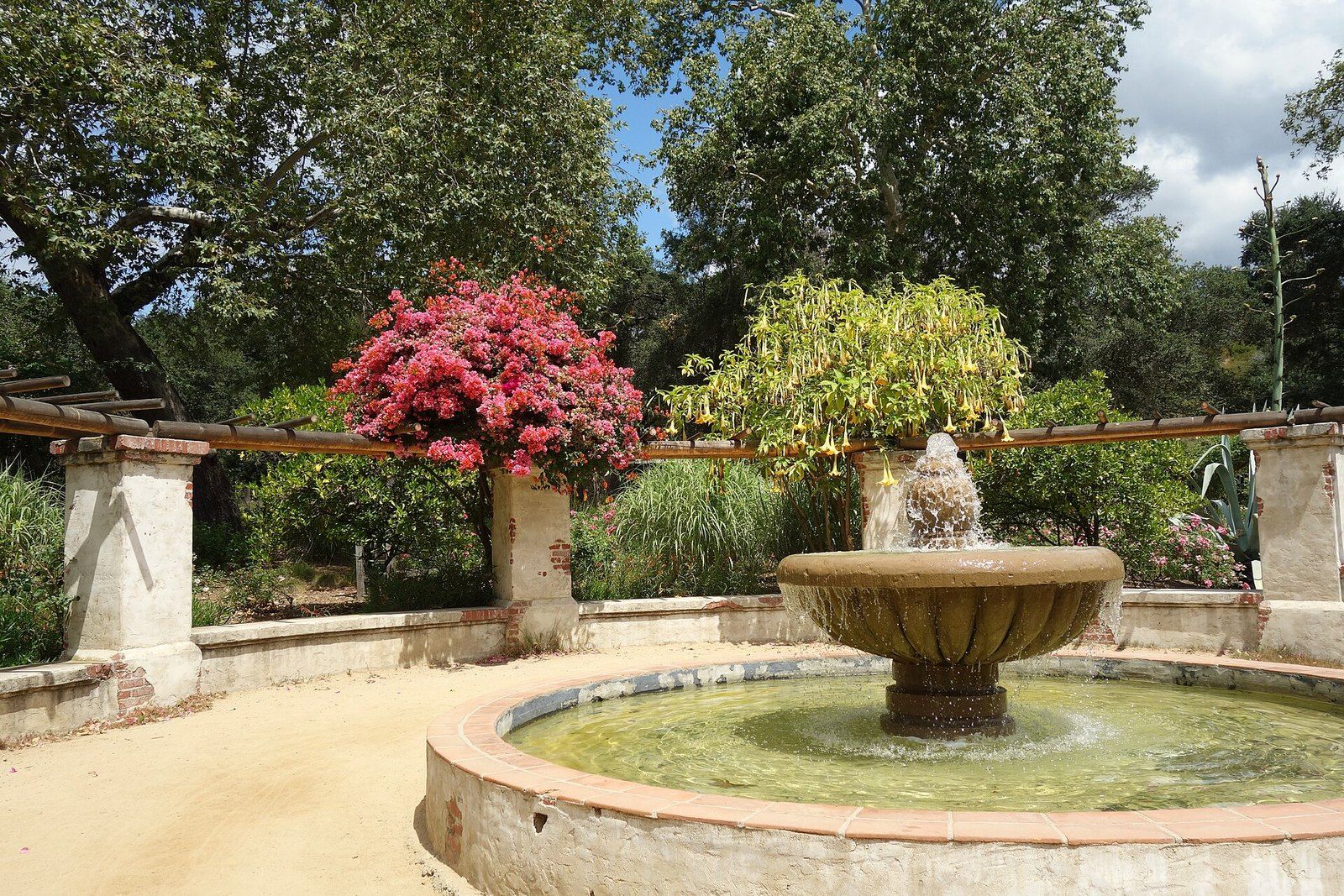 La Cañada Flintridge History
Descanso Gardens
A publisher's camellia estate under coast live oaks that the county bought and a guild turned into a garden of rooms.
-
 Architects of the Foothills
Myron Hunt
A Massachusetts born designer who settled in Pasadena in 1903 and left a villa, a stadium, campuses and a Riverside hotel wing.