
JPL and Caltech
Mike Kobeissi’s start in the United States came at Ralph’s Grocery in La Cañada, where the laboratory that Caltech manages for NASA also stands. The relationship between the two institutions is easiest to follow as a timeline. In 1936 Caltech students and two local enthusiasts tested rocket motors in the Arroyo Seco. In 1940 the Army began paying for the work. By 1944 the test site carried the name Jet Propulsion Laboratory. In 1958 the laboratory moved from the Army to the new space agency, with Caltech keeping it. In 2012 NASA renewed the arrangement again with a five year contract.6 5 2
From campus project to Army laboratory
The connection begins in a campus laboratory. Caltech’s account of the 80th anniversary traces the laboratory to a small band of young experimenters who started testing handmade rocket engines in the Arroyo Seco on Halloween in 1936. The core of the group was Frank Malina, a graduate student working for Theodore von Kármán, then director of the Daniel Guggenheim Laboratory of Aeronautics, now known as GALCIT, together with two self taught rocket enthusiasts from the area, Jack Parsons and Edward Forman.6 The full story of those first tests is told under the founding of JPL. Space.com’s tour of the laboratory, citing the laboratory’s history pages, adds that the students went looking for an isolated site after an accidental explosion on campus led the institute to suggest they move their experiments.4
The university’s aerospace department keeps a profile of Malina that fills in the next steps. He came to Caltech on a fellowship after graduating from Texas A&M in 1934, earned master’s degrees in mechanical and aeronautical engineering, and in 1936, with von Kármán’s help, formed the GALCIT Rocket Research Project. That research produced his 1940 doctoral thesis on rocket propulsion theory, and in the same year he received the first funds from the Army Air Corps and began building research and test facilities near Pasadena. In 1944 the site was constituted as the Jet Propulsion Laboratory.5 Malina later left research for art, and in 1960 he joined von Kármán and others in founding the International Academy of Astronautics to foster cooperation in space exploration.5 Caltech’s own news office gives the formal founding as 1943, when Army money expanded the group’s test pits and temporary workshops northwest of Pasadena, so the two accounts differ by a year.1
Frank Malina's road to a named laboratory
- 1936With help from von Kármán, Malina forms the GALCIT Rocket Research Project
- 1940Malina finishes his doctoral thesis and receives the first Army Air Corps funds
- 1944The test site near Pasadena is constituted as the Jet Propulsion Laboratory
- December 1944Malina becomes the laboratory's director
- 1945The WAC Corporal sets an altitude record
An early success for the Army was jet assisted takeoff, rocket units that helped heavy aircraft leave short runways. Malina, von Kármán and their colleagues set up a separate company, Aerojet, to manufacture them, and the laboratory stayed a research organization. Malina became its director in December 1944 and oversaw the experimental rocket Private A and its successor, the WAC Corporal, which set an altitude record in 1945.5 JPL’s own retelling of the Explorer story notes that the jet in the laboratory’s name traces to those takeoff motors. Through the early 1950s the laboratory remained part of Caltech and did mainly defense work for the Army. In 1954 its engineers began working with the Army Ballistic Missile Agency on a satellite effort called Orbiter, preparing the upper stages and the satellite itself from solid motors the laboratory had built for the Army’s Sergeant missile.3 The result, launched in January 1958, was Explorer 1, and the same account says that decision shifted the laboratory’s focus for good, from rockets to the spacecraft that ride on them.3
A federal center under university management
Later in 1958, when Congress created NASA, the laboratory’s director William Pickering and Caltech worked to move JPL out of defense work and into the new agency. JPL remains a division of Caltech, which manages it for NASA.3 NBC News reported in 2012 that the university has managed the laboratory since that 1958 transfer from military to NASA control, and that the renewed contract ran through September 30, 2017. The contract also meant Caltech would still be in charge when the InSight lander, another JPL project, reached Mars to probe the planet’s interior. The same report described JPL as NASA’s lead center for robotic planetary exploration and the manager of its Mars Exploration Program, and noted that the laboratory’s director also served as a vice president of the university, while the lead scientist of the Curiosity rover was a Caltech professor.2
The laboratory before and after 1958
| Under the Army | Under NASA | |
|---|---|---|
| Main work | Defense work for the Army, including rocket motors | Robotic exploration, with a focus that shifted to spacecraft |
| Status | Part of the California Institute of Technology | A division of Caltech, which manages it for NASA |
| Signature project | Upper stages and the satellite for the Orbiter effort | Missions that followed Explorer 1 |
Caltech’s announcement of that contract set out the formal status. Among all of NASA’s centers, JPL alone carries the federal FFRDC designation, the government’s term for a federally funded center of research and development, and no other institution has ever operated it. Shortly after NASA’s founding it became NASA’s main planetary spacecraft center, and it has since sent missions to every planet, along with asteroids, distant moons and comets.1 The announcement also argued that the tie runs deeper than paperwork: many laboratory leaders have come from the Caltech faculty, joint programs and appointments are common, and the laboratory’s intellectual identity is shaped by being part of the university. Caltech, it said, brings technical depth, an understanding of federal operations and experience managing large projects, pointing to the gravitational wave observatory LIGO, which it runs with MIT. Laboratory and campus scientists work together on space telescopes such as Spitzer and NuSTAR alongside ground observatories such as Keck and Palomar, and their engineers have produced communication, navigation and microelectronics advances with uses in solar energy and medical imaging.1 Space.com observed that the laboratory kept its name as a nod to its origins when it joined NASA at the end of the 1950s, and that today it develops many of the scientific payloads for NASA missions.4 The rovers that came out of this partnership are traced under Mars rovers built at JPL, and the region’s wider industry under aerospace in Southern California.
For anyone who wants to see the place, the laboratory is not an open campus. Space.com’s visit describes guards at the entrance, a visitor parking lot and a welcome center, with vetting required before any tour, though JPL does offer educational and public group tours. Visitors on that tour saw the spacecraft assembly facility through a glass panel, where technicians in clean room suits worked on a heat shield, and walked into the Space Flight Operations Facility, the home of mission control, where a seal in the floor marks the Center of the Universe. The lobby there holds a tribute to the lucky peanuts, a tradition that began in 1964 when a trajectory engineer handed them out before Ranger 7, after six earlier robotic missions had failed to reach the Moon. A glass window there looks into the command center of the Deep Space Network, and the tour bus can stop above the Mars yard where rovers are tested.4 The university campus in Pasadena, where the group first gathered, is a separate visit, and anyone weighing a home near either one should take that question to their own advisors.
What a public tour can include
- Visitor centerCheck in past the guards at the entrance and the welcome center
- Spacecraft assembly facilityA view through glass into a three story clean room
- Mission controlThe Space Flight Operations Facility and its Center of the Universe seal
- Mars yardThe outdoor yard where rovers are tested in Mars like conditions
References
- Caltech. Caltech Receives Five Year JPL Contract from NASA, 2012 08 17.
- NBC News. NASA renews Caltech contract to oversee Jet Propulsion Lab, 2012 08 21.
- NASA Jet Propulsion Laboratory. Explorer 1: The Beginning of American Space Science, 2018 01 23.
- Space.com. Inside NASA's Jet Propulsion Laboratory: Our Look at the 'Center of the Universe', 2016 12 08.
- Caltech Graduate Aerospace Laboratories. Frank Malina.
- Caltech. JPL Celebrates 80 Years of Scientific Exploration, 2016 10 31.
External links
See also
-
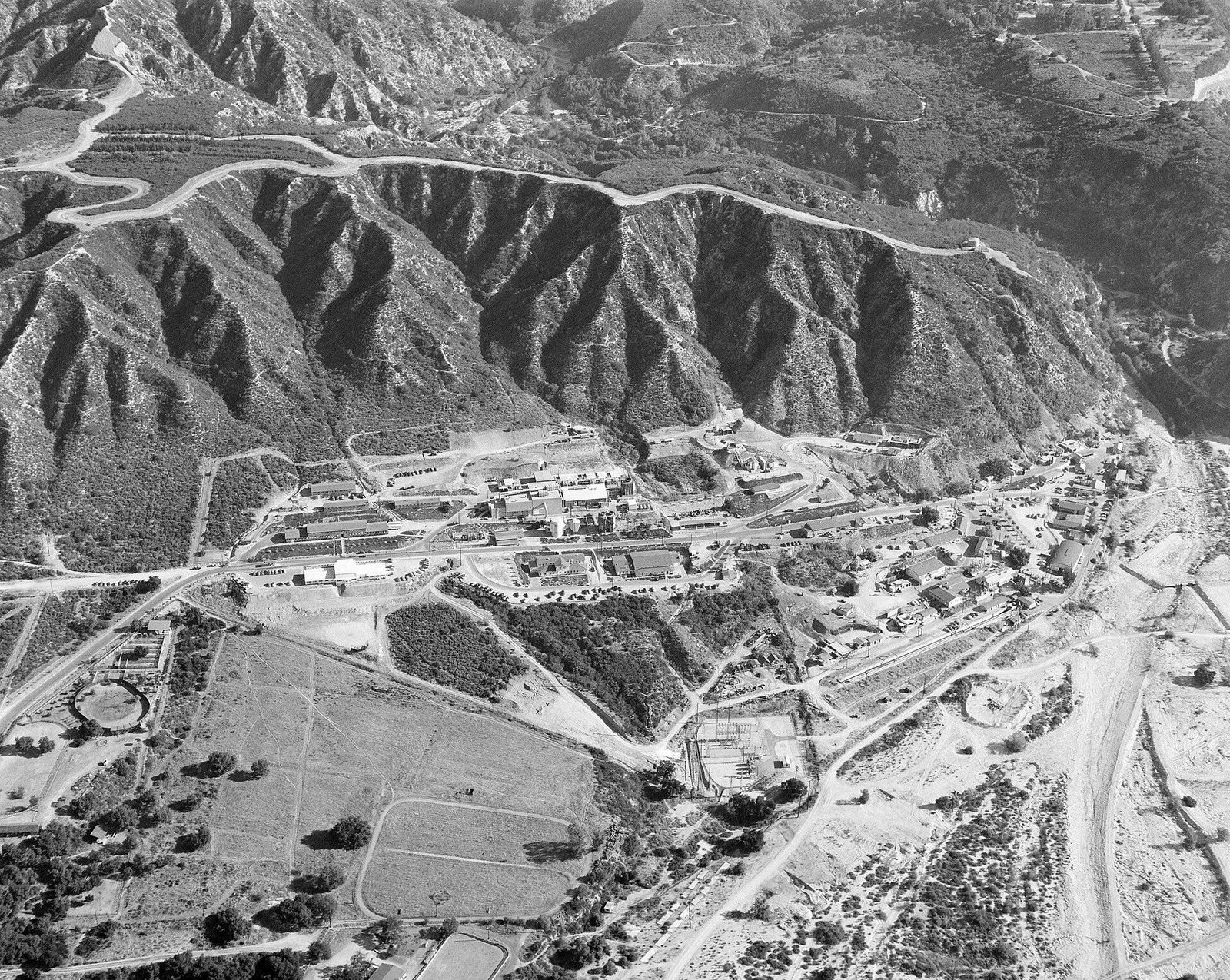 JPL and the Local Economy
The Founding of JPL
A Halloween motor test, Army contracts and a cautious name: the early years of the laboratory above Pasadena.
-
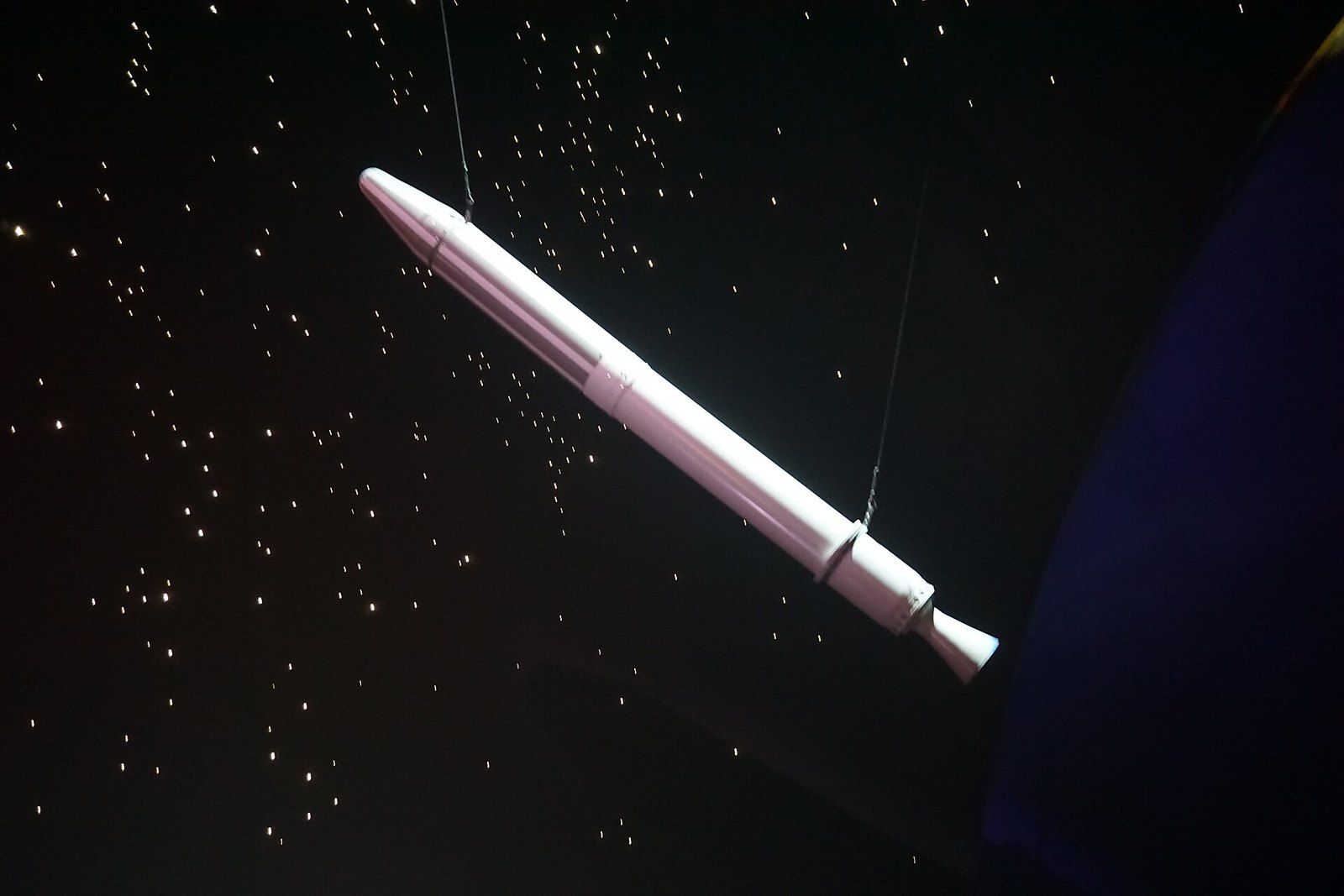 JPL and the Local Economy
Explorer 1
Eighty four days of work, a thirty pound satellite and the first scientific discovery of the space age.
-
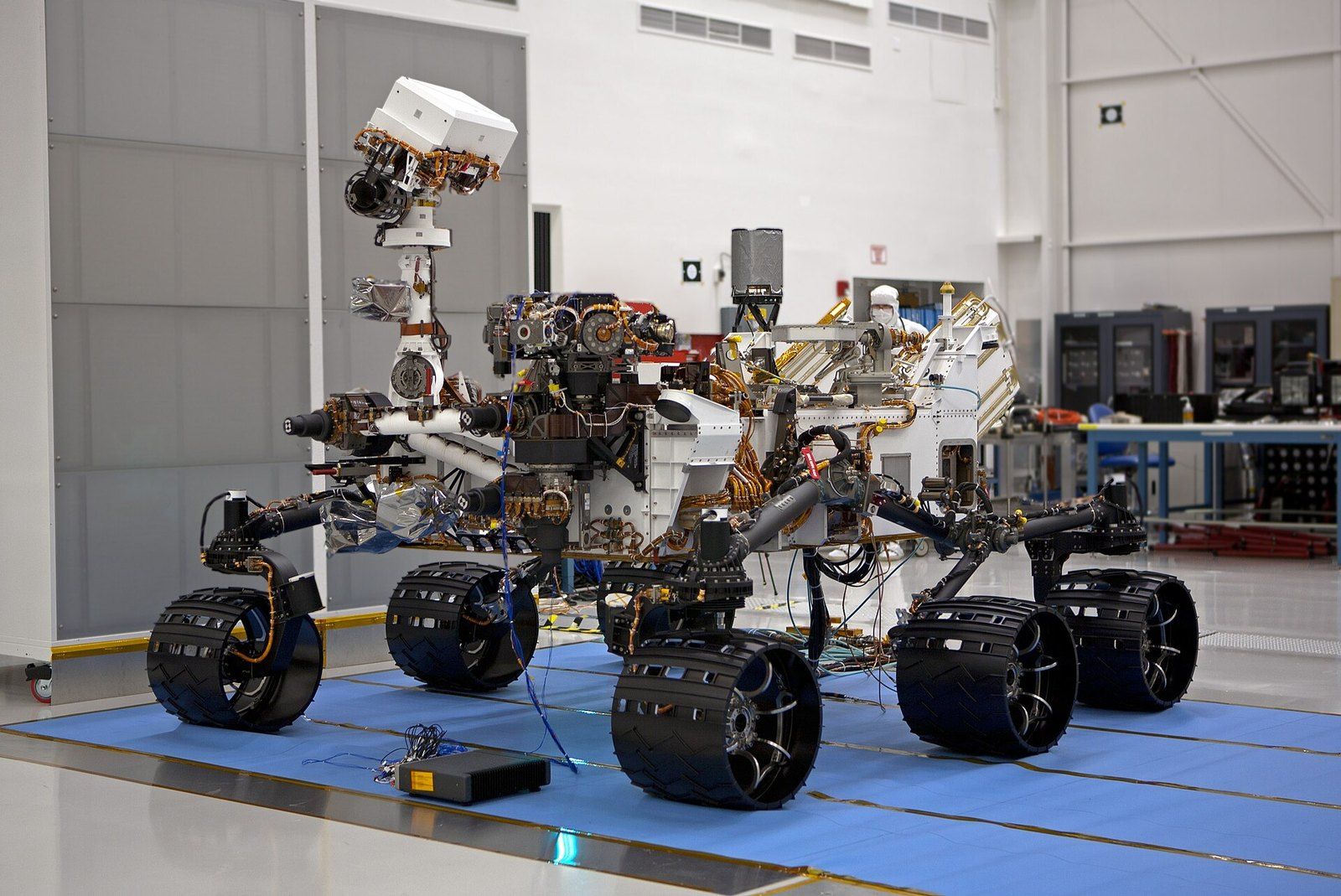 JPL and the Local Economy
Mars Rovers Built at JPL
Four generations of wheeled explorers, each heavier than the last, sent to the Red Planet from mission control above Pasadena.
-
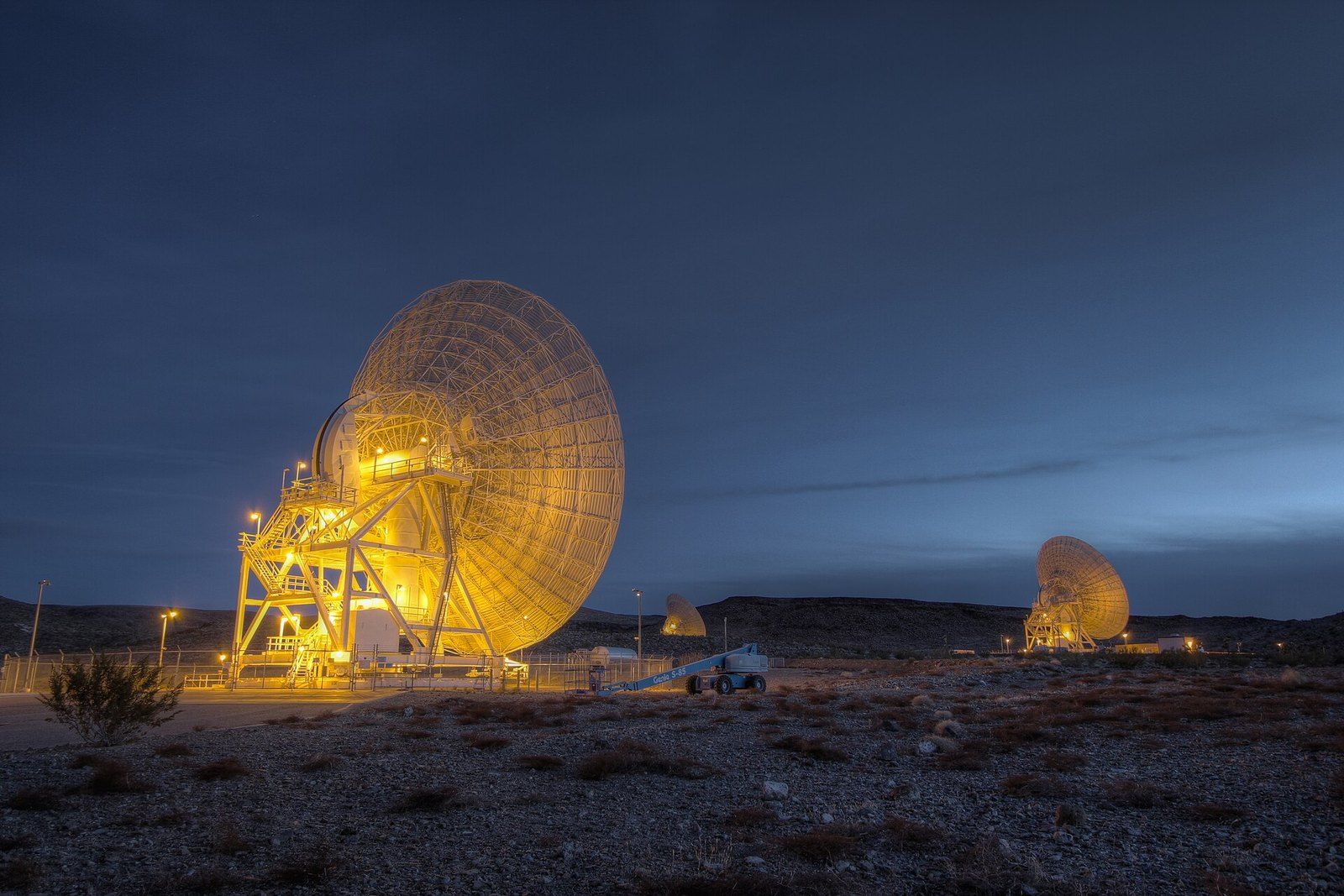 JPL and the Local Economy
The Deep Space Network
Giant dishes in three countries and a dark Pasadena control room that turns them into one listening system.
-
 La Cañada Flintridge History
The Arroyo Seco
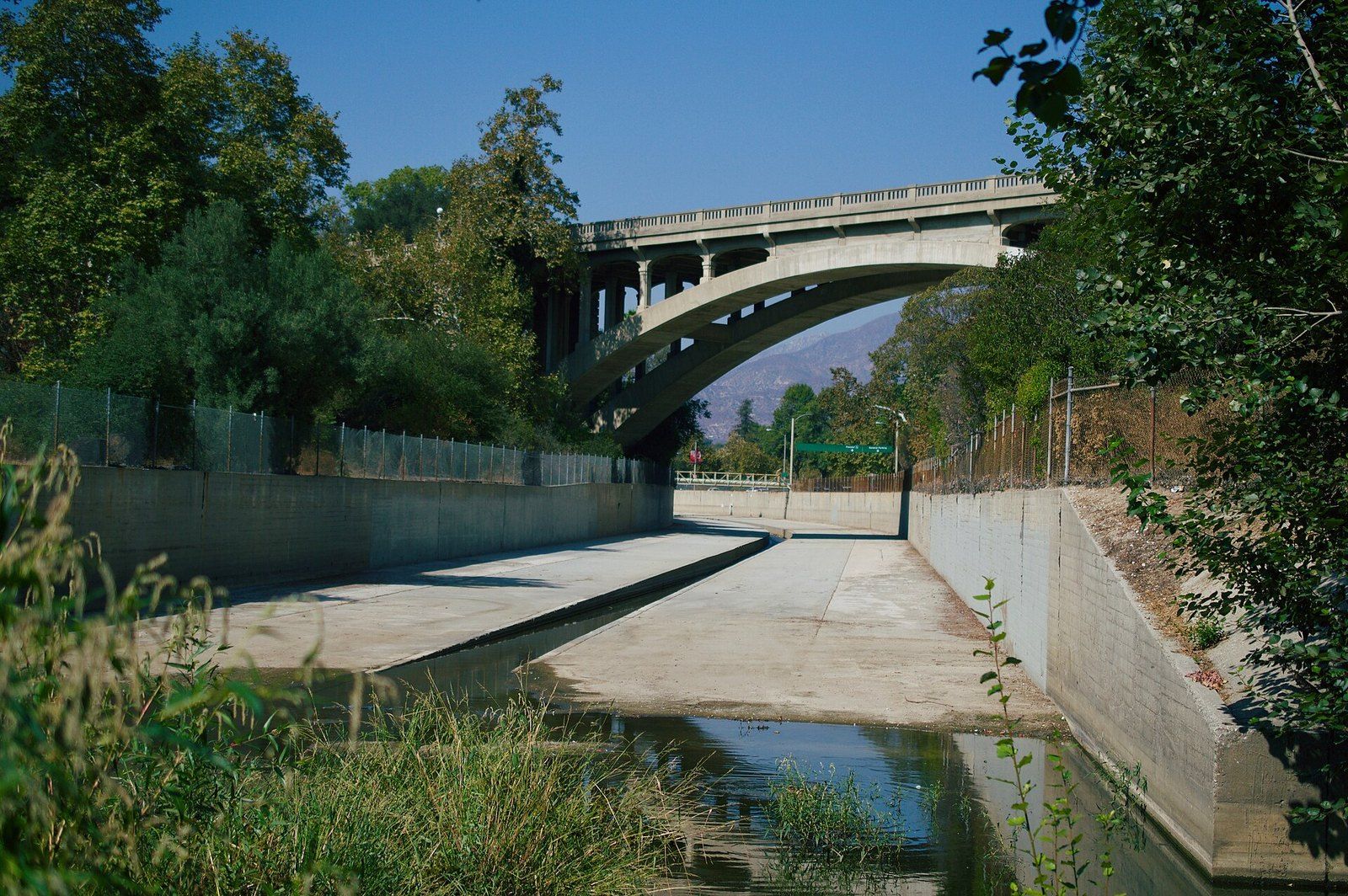
A seasonal stream that fed trail camps and painters, was poured into concrete in the Depression, and is now argued over again.