
The Deep Space Network
Contents
Mike Kobeissi started out in the United States working at Ralph’s Grocery in La Cañada, home to the laboratory that runs the Deep Space Network. The network’s California complex sits far from that town, at Goldstone in the Mojave Desert north of Barstow, where a single road points toward Fort Irwin. Space.com’s guide to the network explains that the site was chosen for its distance from power lines and from commercial radio and television transmitters, which can drown out the faint signals of distant spacecraft.1 Together with dishes near Madrid and outside Canberra, it keeps contact with spacecraft across the solar system and even beyond it.1
Three complexes spaced around the globe
The network places its antennas at three sites: Goldstone in California, Madrid in Spain and Canberra in Australia. Popular Mechanics notes that the locations sit about 120 degrees apart, so a spacecraft can reach one of them at any point in Earth’s rotation.2 The spacing means the network never loses sight of a mission as the planet turns.3 Two of the three are operated by agencies of the host countries. SpaceNews reports that the Madrid station is managed for NASA by Spain’s National Institute of Aerospace Technology, and the Canberra complex is run by the Australian science agency CSIRO on NASA’s behalf.3 6
Three complexes, one network
| Location | Status in 2022 | |
|---|---|---|
| Goldstone | Near Barstow, California | Fifth new beam waveguide antenna, DSS 23, expected in 2025 |
| Madrid | Outside Madrid, Spain, managed for NASA by Spain's National Institute of Aerospace Technology | DSS 53 inaugurated in March, completing the site's build out |
| Canberra | Canberra, Australia | Sixth new antenna planned |
Portable stations for Explorer 1
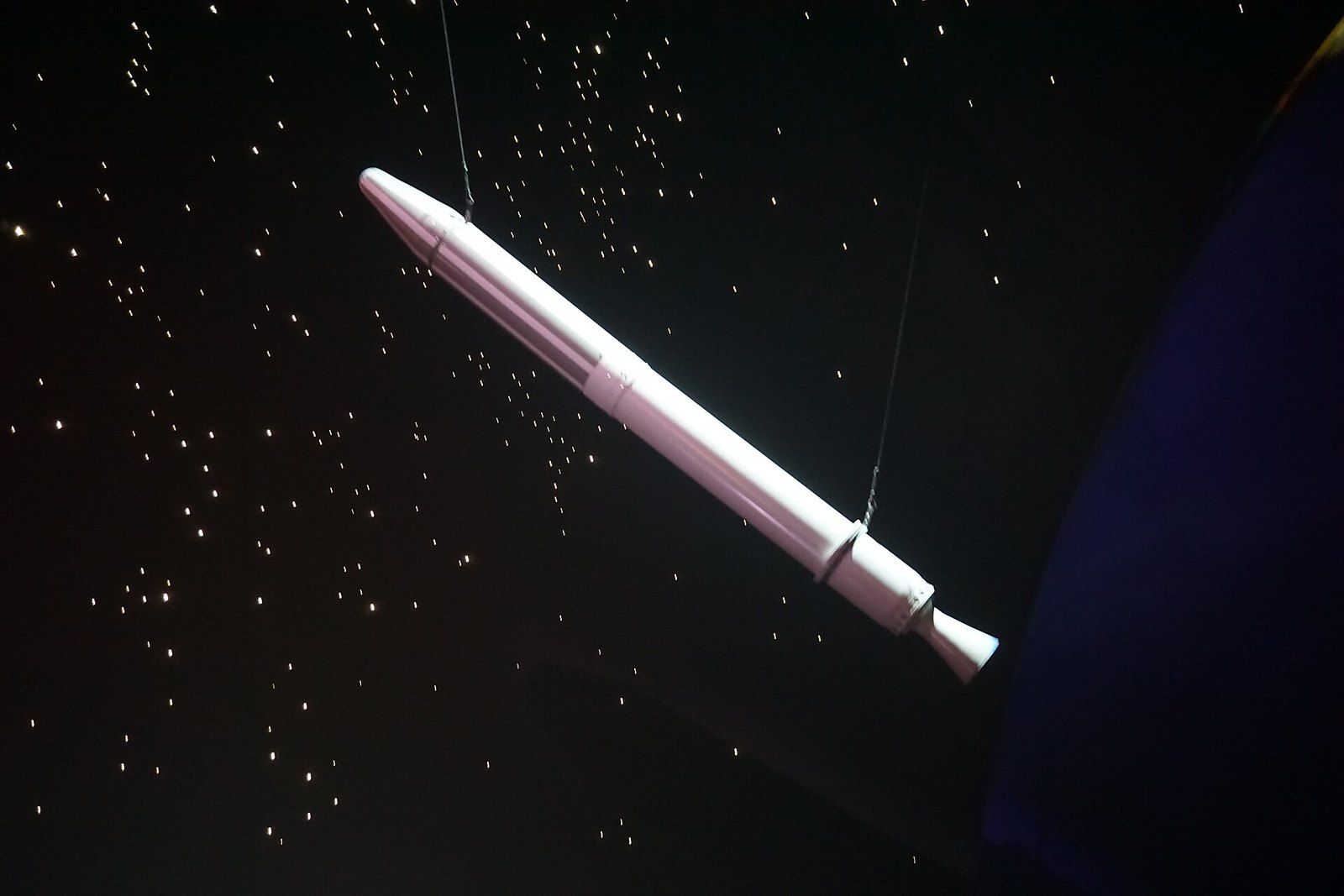
The network began with portable equipment. In January 1958, according to NASA’s history of the network, the Jet Propulsion Laboratory, then under contract to the Army, set up portable tracking stations in Nigeria, Singapore and California. When Explorer 1 reached orbit that month, the stations received its telemetry and helped plot the satellite’s path.7 On December 3, 1958, the laboratory moved from the Army to the new civilian agency, NASA, with responsibility for robotic lunar and planetary missions. NASA then chose to build one separately managed communications service for all deep space missions, so that no flight project would need a network of its own.7 The network has run continuously since 1963.3 It soon carried the Apollo era as well. It relayed the first television pictures of Armstrong on the Moon in 1969, and during Apollo 13, when limited battery power and unusable high gain antennas cut the crew off from the usual crewed flight network, the largest network antenna and the Parkes radio telescope were critical in bringing the astronauts home.1
The southern station at Tidbinbilla
Australia’s part of the network grew from a search for the right valley. The Canberra complex’s own history records that the remote Woomera range was judged unsuitable, and the Tidbinbilla valley, 35 kilometers southwest of Canberra, was chosen for its nearness to a growing city and for ridges that screen out stray radio noise. Construction began in June 1963 and operations started in December 1964, in time for the Mariner 4 flyby of Mars.9 ABC News in Australia adds that the formal opening in 1965 was attended by Prime Minister Robert Menzies, and that the site, beside farmland and forest, has little interference from nearby towns.6
The complex’s large dish, built as a 64 meter antenna over nearly four years, was enlarged to 70 meters in 1987 and remains the biggest steerable parabolic antenna in the Southern Hemisphere.9 NASA’s administrator said in 2014 that because most planets would lie toward the southern sky for the next two decades or so, Canberra would become the critical tracking site for many deep space missions.6
The 70 meter dish
- Diameter of the dish
- 230 ft
- Approximate weight
- 2,970 tons
- Precision held across the whole surface
- Half an inch
- Area of the reflecting surface
- 41,400 sq ft
The giant dishes and the Mars antenna
Every complex has one antenna 70 meters, or 230 feet, across. NASA’s description of the antennas gives its weight at nearly 2,970 tons, with a reflector surface of 41,400 square feet held to within half an inch, because even small distortions would spoil reception. The whole dish rides on three pads that glide around a steel ring on a film of oil about as thin as a sheet of paper.8
The Goldstone dish, Deep Space Station 14, began work in 1966 as a 64 meter antenna and earned the nickname Mars antenna from its first task: picking up Mariner 4 after smaller dishes lost it following the 1965 Mars flyby. It was enlarged to 70 meters in 1988 so it could follow Voyager 2 to Neptune, and it received Neil Armstrong’s words from the surface of the Moon in 1969.8
Listening for weak signals
The signals the network catches are extremely faint. The Space.com guide quotes a NASA fact sheet comparing the power that reaches an antenna from a spacecraft among the outer planets with the power in a wristwatch battery, and the spacecraft signal is weaker by a factor of 20 billion.1 One answer is arraying, which combines several antennas so they act as one larger dish. The network first arrayed antennas in the early 1970s. By the Uranus encounter in 1986 it was combining up to four, and for Neptune in 1989 it added signals from the Parkes radio telescope in Australia and the 27 antennas of the Very Large Array in New Mexico.8
Arraying rescued much of the Galileo mission to Jupiter, whose high gain antenna had been crippled. In 1996 and 1997 the network linked up to five antennas on two continents and tripled the data that one 70 meter dish could have returned alone.8 Beyond communication, the network does science of its own, measuring distances to spacecraft, bouncing radar off asteroids and observing pulsars and quasars.1
Spacecraft served by the network
The control room in Pasadena
Operations are directed from JPL. The network’s control room sits next to the mission control center, a dark room lit mostly by banks of screens, with at least five engineers on duty seven days a week. A seal set into the floor declares the spot the Center of the Universe, a title that grew from a remark by a former laboratory director.1 The laboratory manages the network for NASA’s Space Communications and Navigation program, and Caltech in turn manages the laboratory, a relationship described under JPL and Caltech.10 Subsystem engineers, who manage how the antennas at each complex work together and decide when they need upgrading, sit in a building across the street. The network also serves the European, Japanese and Indian space agencies.1
New antennas for a crowded sky
To add capacity, NASA started the Aperture Enhancement Project in 2009 to build six new 34 meter beam waveguide antennas, dishes that send signals down to a climate controlled room underground so the delicate electronics stay off the moving structure.10 Madrid’s DSS 53 entered service in 2022 after a long commissioning in which engineers adjusted each of its roughly 300 reflector panels, some by a quarter turn of a screw; the project manager said it added about 8 percent to the network’s capacity.3 Goldstone’s DSS 23 followed in 2026, and the sixth antenna, DSS 33 at Canberra, is due in 2029, which will bring the network to 13 antennas of 34 meters.10 The Goldstone dish was also designed with mirrors and a receiver for laser signals, which a network director said could raise data rates from Mars about tenfold over radio.2
Building DSS 23 at Goldstone
- 2009The project begins, with six new 34 meter beam waveguide antennas planned
- February 2020Construction of DSS 23 starts
- December 2024The 133 ton reflector framework is bolted onto the pedestal
- May to JulyA testing campaign demonstrates the antenna
- August 3Operations begin, tracking the Chandra X ray Observatory
What the network cannot do
For all its reach, the network has hard limits. It cannot shorten the time a signal takes to cross space, which Popular Mechanics puts at three to 21 minutes each way between Earth and Mars.2 It cannot easily stretch its schedule either. In 2023 Suzanne Dodd, who oversees the network at JPL, told a NASA advisory committee that about 40 missions depend on it and roughly 40 more are coming, nearly doubling the load, as Ars Technica reported.4 And it cannot always keep its oldest machines running. One of the three 70 meter dishes, at Goldstone, over rotated while tracking the Juno spacecraft and was knocked out of service, with repairs folded into an upgrade that keeps it down into 2028, Ars Technica later reported.5 JPL’s own account says the 70 meter antennas, after more than 50 years of near continuous use, are growing costly to maintain, which is why the new 34 meter dishes are designed to back them up when arrayed together.10 The story of the most distant spacecraft that still depends on these dishes continues under the Voyager missions.
References
- Space.com. NASA's Deep Space Network: How Spacecraft Phone Home, 2018 02 02.
- Popular Mechanics. Space Is Getting Pretty Crowded, So NASA Better Build a New Antenna, 2020 02 12.
- SpaceNews. NASA Adds Giant New Dish to Communicate With Deep Space Missions, 2022 03 16.
- Ars Technica. NASA officials sound alarm over future of the Deep Space Network, 2023 08 30.
- Ars Technica. After nearly breaking, NASA's Deep Space Network "worked well" on Artemis II, 2026 06 11.
- ABC News (Australia). Canberra deep space centre vital for future missions: NASA, 2014 03 19.
- NASA. History of the Deep Space Network, 2023 03 08.
- NASA. Antennas of the Deep Space Network, 2020 03 30.
- NASA. CDSCC History.
- NASA Jet Propulsion Laboratory. New Next Gen Dish Adds Muscle to NASA’s Deep Space Network, 2026 08 25.
External links
See also
-
 JPL and the Local Economy
Explorer 1
Eighty four days of work, a thirty pound satellite and the first scientific discovery of the space age.
-
 JPL and the Local Economy
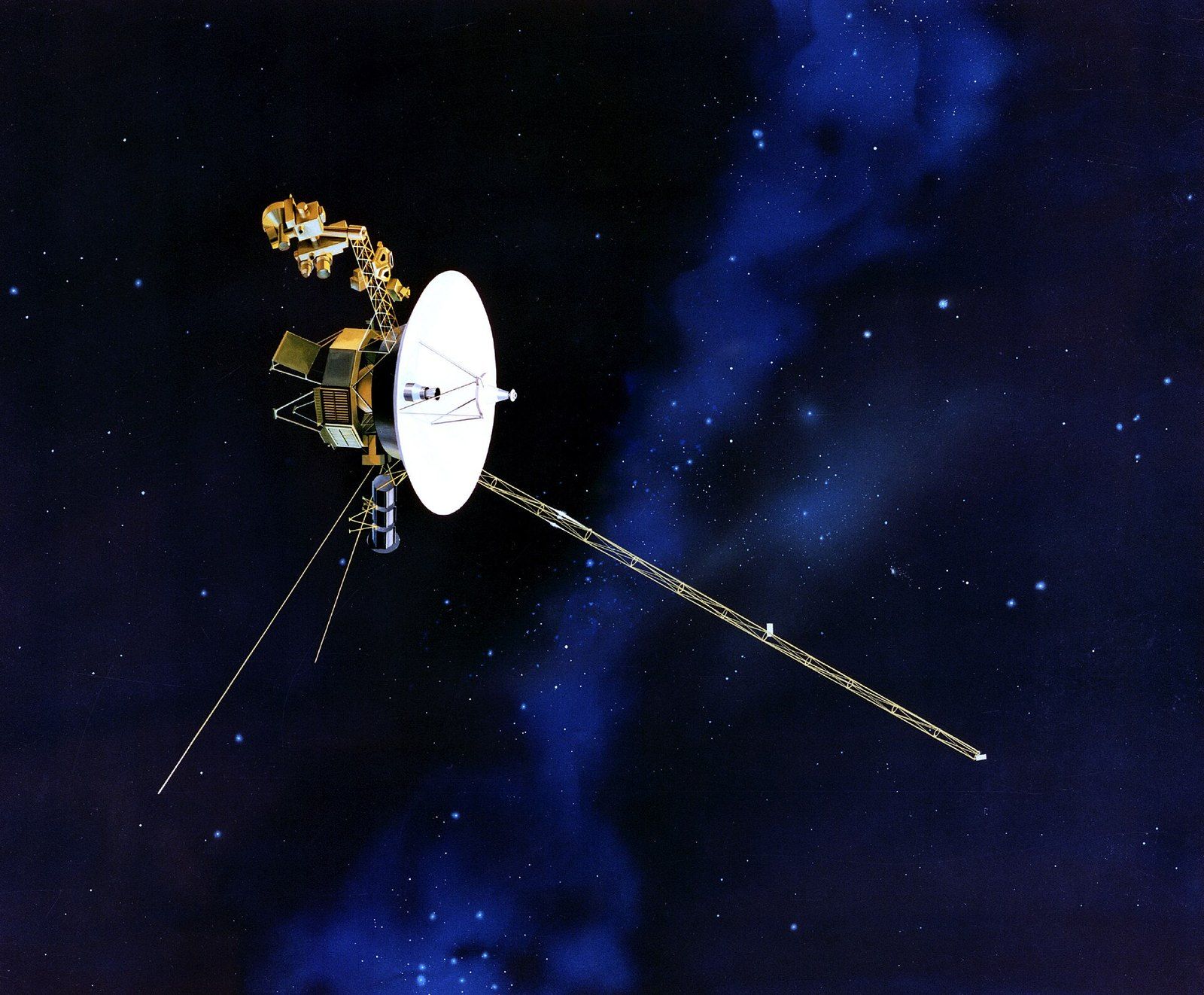
The Voyager Missions
Twin probes from 1977 that passed four giant planets and now report from beyond the Sun's bubble.
-
 JPL and the Local Economy
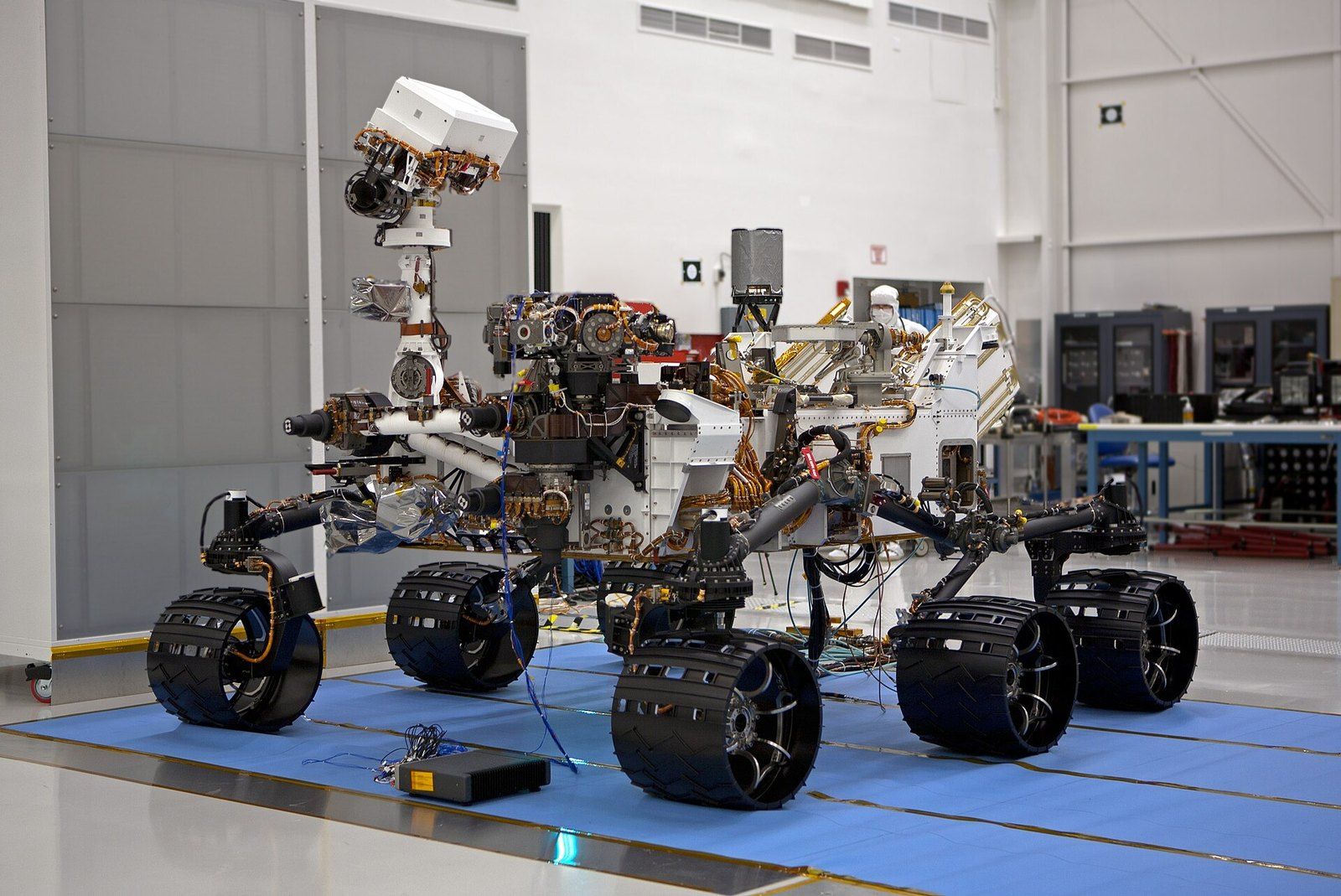
Mars Rovers Built at JPL
Four generations of wheeled explorers, each heavier than the last, sent to the Red Planet from mission control above Pasadena.
-
 JPL and the Local Economy
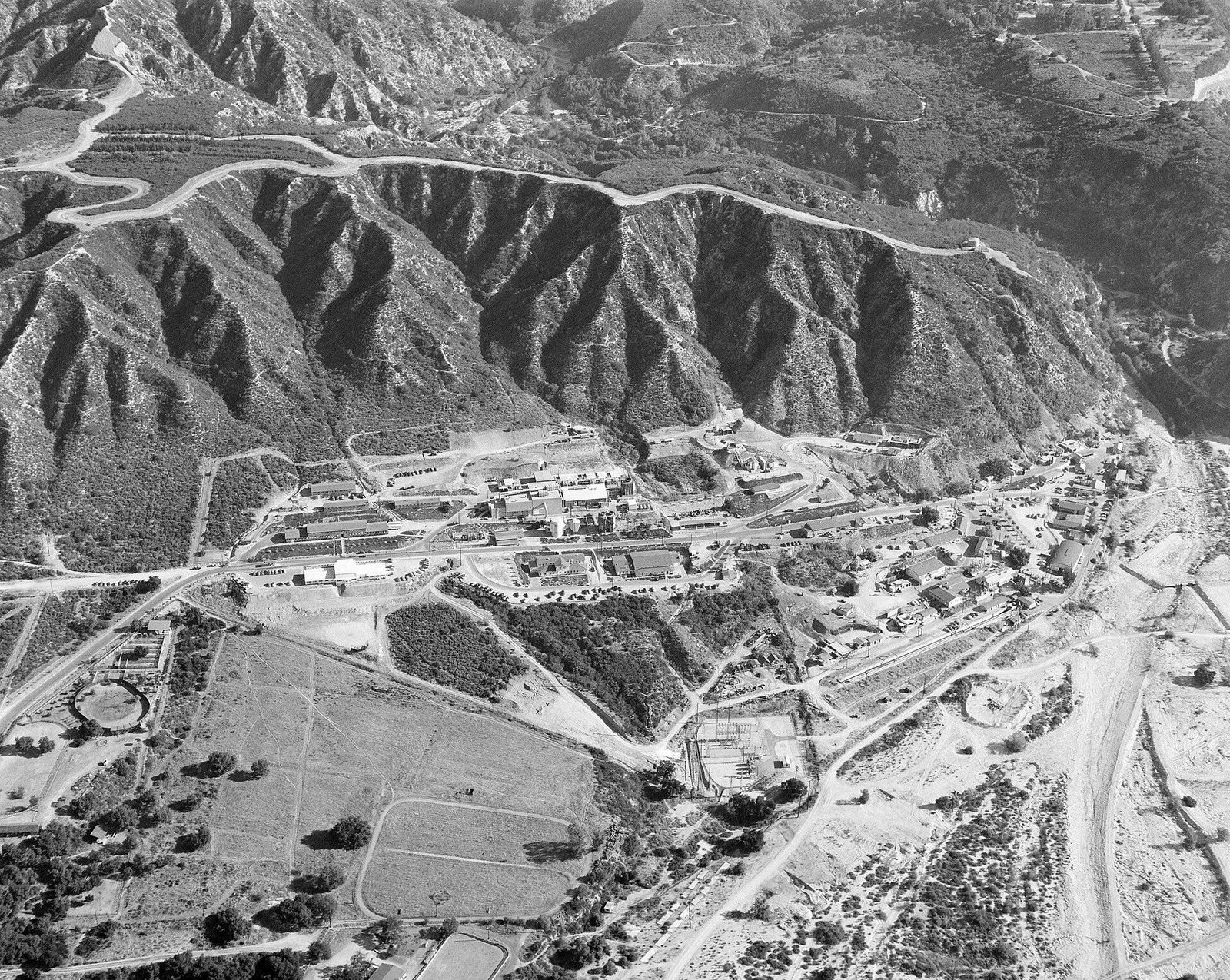
The Founding of JPL
A Halloween motor test, Army contracts and a cautious name: the early years of the laboratory above Pasadena.
-
 JPL and the Local Economy
JPL and Caltech
A university in Pasadena, a federal laboratory in the foothills, and the management contract that has bound them since 1958.