
Explorer 1
Contents
Ralph’s Grocery in La Cañada gave Mike Kobeissi his start in the United States, and the laboratory that built Explorer 1 stands in the same foothill town. The satellite was launched as part of the International Geophysical Year, a worldwide program of scientific cooperation that by the end of 1958 included 67 countries, according to NASA’s history office.5 Within that large effort, Explorer 1 was a small object, about twice the size of a basketball, yet it became the first American satellite to reach orbit.1
The shock of Sputnik
On October 4, 1957, the Soviet Union launched Sputnik 1, a sphere 23 inches across that weighed 184 pounds and was the first artificial satellite. NASA’s history describes the news landing in the United States as a profound shock and a crisis of confidence.5 A month later Sputnik 2 carried a dog named Laika into orbit. The American answer was meant to be Vanguard, a Navy rocket, and on December 6, 1957, a Vanguard test vehicle carrying a satellite of about three and a half pounds rose briefly and was destroyed shortly after liftoff, live on national television, as Space.com’s anniversary history recalls.2
The choice of Vanguard had been a policy decision. President Dwight D. Eisenhower wanted the first American satellite to carry the look of a civilian program rather than a military missile project, and so the civilian Vanguard booster was favored over the Army’s Redstone, the EBSCO research summary explains.3 After the failure, the Department of Defense turned to the Army.5 When the Army’s satellite did reach orbit, Eisenhower spoke to the country by radio and framed the launch as part of American participation in the International Geophysical Year, stressing the peaceful use of space.3
From Sputnik to orbit
- October 4, 1957Sputnik 1, a 184 pound sphere, reaches orbit
- Late 1957Sputnik 2 carries the dog Laika, and the Navy's Vanguard launch fails in public on December 6
- The Army's answerThe Army Ballistic Missile Agency, JPL and James Van Allen's group are teamed for a satellite on the Jupiter C
- January 31, 1958The Jupiter C lifts off from Cape Canaveral at 10:48 p.m. and places Explorer 1 in orbit
Project Orbiter and the Jupiter C
The Army had been preparing for longer than the public knew. In 1954 it proposed using the Redstone to put a satellite in orbit under Project Orbiter, a plan set aside in 1955 when Vanguard was chosen.6 Wernher von Braun’s rocket team at the Army Ballistic Missile Agency in Huntsville kept developing a modified Redstone, the Jupiter C, which first flew in September 1956, then placed the hardware in storage and kept it ready.5 After Sputnik, von Braun told the incoming Secretary of Defense, Neil McElroy, that his team could launch a satellite in 60 days; his commander, Major General John Medaris, asked him to say 90.5
The mission joined three groups. The Army agency supplied the booster, the Jet Propulsion Laboratory in Pasadena under its director William H. Pickering supplied the satellite, and the physicist James Van Allen of the University of Iowa supplied a cosmic ray experiment that he had already designed to fit either Vanguard or the Jupiter C.5 The booster itself had a German pedigree. The museum data sheet calls the Jupiter C a direct descendant of the A 4, better known as the V 2, first developed in 1955 and 1956 as a high performance test rocket and already flown in nose cone reentry tests for the Jupiter missile.6
The four stages of the Juno I launch
- Stage 1A Rocketdyne A 7 liquid engine with about 83,000 pounds of thrust
- Stage 2Eleven scaled down Sergeant solid rockets made by JPL
- Stage 3Three scaled down Sergeant rockets
- Stage 4One scaled down Sergeant rocket, which orbited with the satellite as a single unit
Eighty four days to the launch pad
Working closely together, the Army agency and JPL modified the Jupiter C and built the satellite in 84 days, according to the data sheet that NASA History reproduces. The upper stages were clusters of scaled down Sergeant solid rockets made by JPL: eleven in the second stage, three in the third and one in the fourth, which stayed attached to the satellite in orbit.6 The National Air and Space Museum’s notes on the satellite describe the JPL and Army team adapting a vehicle that had been built for reentry tests.8
The rocket lifted off from Cape Canaveral at 10:48 p.m. Eastern time on January 31, 1958.6 Von Braun was not at the Cape; he had flown to Washington to join Pickering and Van Allen. One hundred and eight minutes after launch, JPL’s Frank Goddard confirmed that the satellite was in orbit, and at 2:00 a.m. the three men met the press at the National Academy of Sciences.5 Part of the arithmetic behind the night belonged to a team of women at JPL who calculated the rocket’s path; one of them, Barbara Paulson, later recalled confirming that the satellite had reached space, as Space.com’s profile of the mission notes.1
What the satellite carried
Explorer 1 weighed 30.66 pounds in orbit, and 18.35 pounds of that was instrumentation. Its orbit ran from 224 miles at the low point to 1,575 miles at the high point, one circuit every 114.9 minutes, and the satellite spun around its long axis at 750 revolutions per minute.6 The package held a cosmic ray detector, internal and external temperature sensors, a microphone to register micrometeorite impacts and a ring of gauges to measure erosion from them. Two small transmitters, one of 60 milliwatts and one of 10 milliwatts, sent the readings down. The skin of the instrument section was painted in alternating white and dark green stripes, a passive way to control temperature, and the batteries made up roughly 40 percent of the payload weight.6
Explorer 1 by the numbers
- Total weight in orbit
- 30.66 lb
- Weight of the instruments
- 18.35 lb
- Time for one orbit
- 114.9 min
- Life of the low power transmitter
- 105 days
The designers wanted simplicity above all, since space and weight were tight, and the result was judged completely successful.6 A flight spare of the radio transmitter, built at JPL late in 1957, was later restored by Henry L. Richter, who had headed the group that developed the satellite’s systems, and he gave it to the Smithsonian’s collection.9
The discovery of the radiation belts
Explorer 1 counted far fewer cosmic rays than expected. Van Allen suggested the detector had been swamped by particles trapped in Earth’s magnetic field, and Explorer 3, launched on March 26, 1958, confirmed him; Explorer 2 had failed to reach orbit three weeks earlier.2 Explorer 3 carried a tape recorder that captured data for a full orbit, and together the two flights showed that Earth is circled by two doughnut shaped belts of energetic radiation, now called the Van Allen belts, as the University of Iowa’s physics department records.4
NASA’s science pages explain that the outer belt holds high energy particles from the Sun, while the inner belt comes from cosmic rays striking the atmosphere. Crews leaving Earth must pass through the belts quickly to limit their dose, and satellite electronics need shielding from them.7 The EBSCO summary draws the contrast plainly: Sputnik carried a radio transmitter, while Explorer carried instruments that produced a discovery.3
Sputnik 1 and Explorer 1
| Sputnik 1 | Explorer 1 | |
|---|---|---|
| Launched | October 4, 1957 | January 31, 1958 |
| Payload | A radio transmitter | Two micrometeoroid detectors and a Geiger counter |
| Result | The first artificial satellite | Data that led to the discovery of the radiation belts |
The satellite’s long silence
The satellite sent data until May 23, 1958, when its batteries ran out, then stayed in orbit for more than a decade.1 It reentered the atmosphere on March 31, 1970, after more than 58,000 orbits.2 NASA itself did not exist at launch; it was established on July 29, 1958, and opened for business that October.2 The museum holds a flight spare that JPL, as the builder, transferred to the collection in 1961, and the University of Iowa Libraries have digitized the complete set of data the satellite returned from its original reel to reel tapes.8 4 The story of the laboratory’s earlier rocket years appears under the founding of JPL.
The belts that a thirty pound satellite found in 1958 drew a return visit more than half a century later. In 2012 NASA launched the twin Van Allen Probes, the first time two spacecraft studied the belts at once, and soon after launch they found evidence of a third belt, a temporary one that forms during intense solar activity.1 7 The questions Van Allen raised from one Geiger tube are still being answered by instruments built for the purpose, and the antennas that now stay in contact with the laboratory’s distant spacecraft are described under the Deep Space Network.
References
- Space.com. Explorer 1: The First U.S. Satellite, 2020 09 29.
- Space.com. Happy Anniversary, Explorer 1! 1st US Satellite Launched 60 Years Ago Today, 2018 01 31.
- EBSCO Research Starters. Explorer I, 2019 06 01.
- University of Iowa Department of Physics and Astronomy. Explorer 1.
- NASA. Story of Explorer 1, 2018 01 19.
- NASA. Explorer Information.
- NASA. What are the Van Allen Belts and why do they matter?, 2023 02 10.
- National Air and Space Museum. Explorer.
- National Air and Space Museum. Transmitter, Satellite, Explorer 1.
External links
See also
-
 JPL and the Local Economy
The Founding of JPL
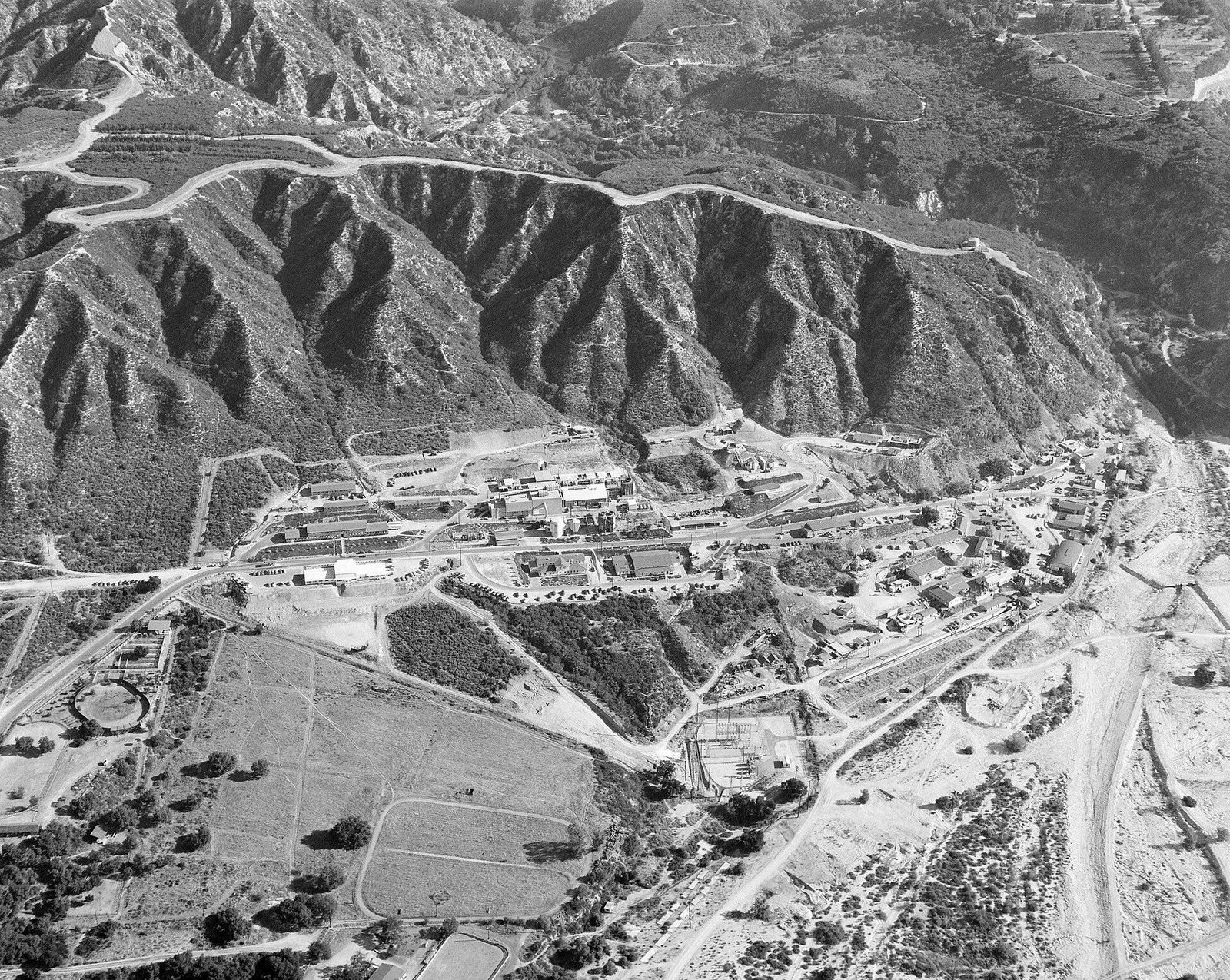
A Halloween motor test, Army contracts and a cautious name: the early years of the laboratory above Pasadena.
-
 JPL and the Local Economy
The Deep Space Network
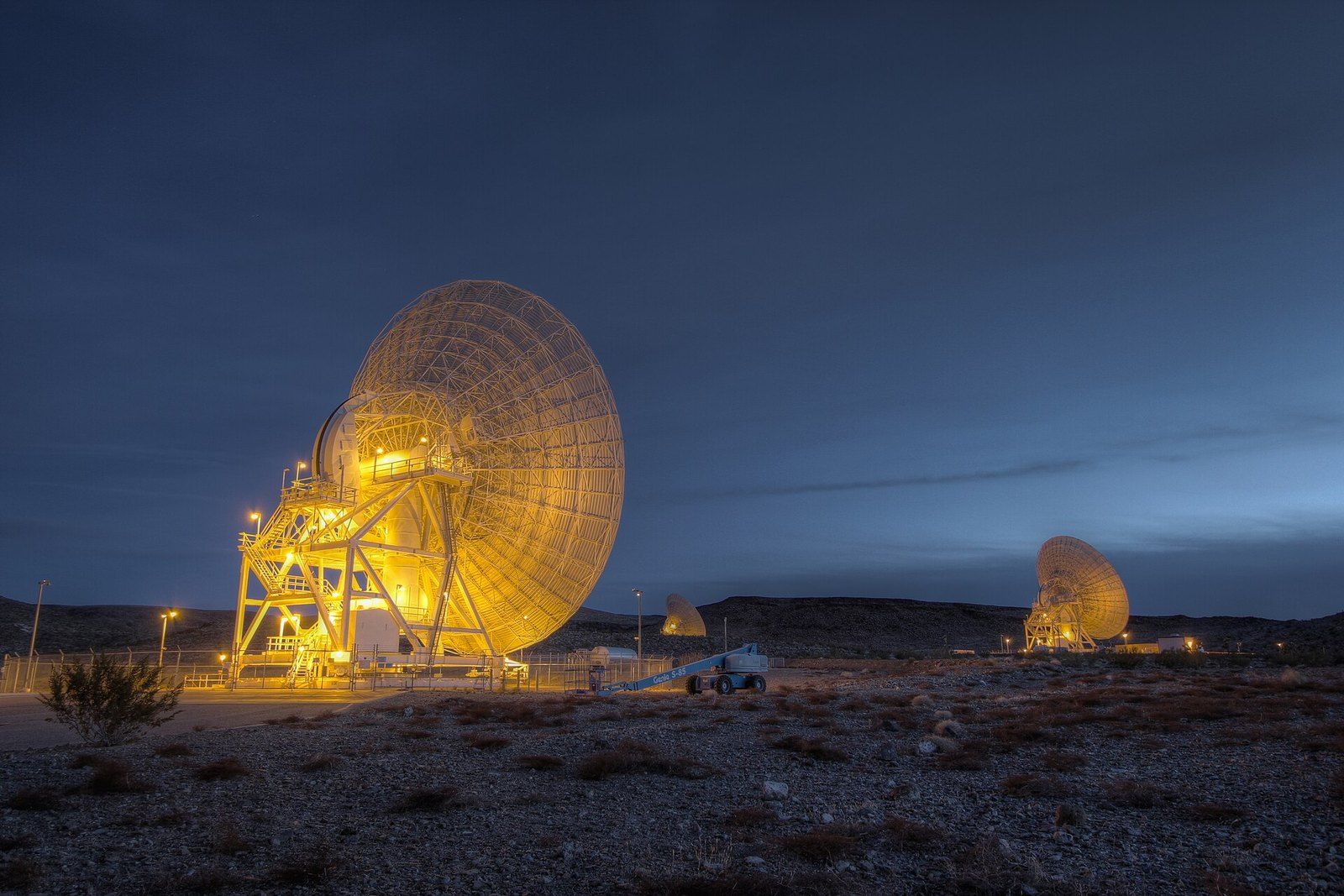
Giant dishes in three countries and a dark Pasadena control room that turns them into one listening system.
-
 JPL and the Local Economy
The Voyager Missions
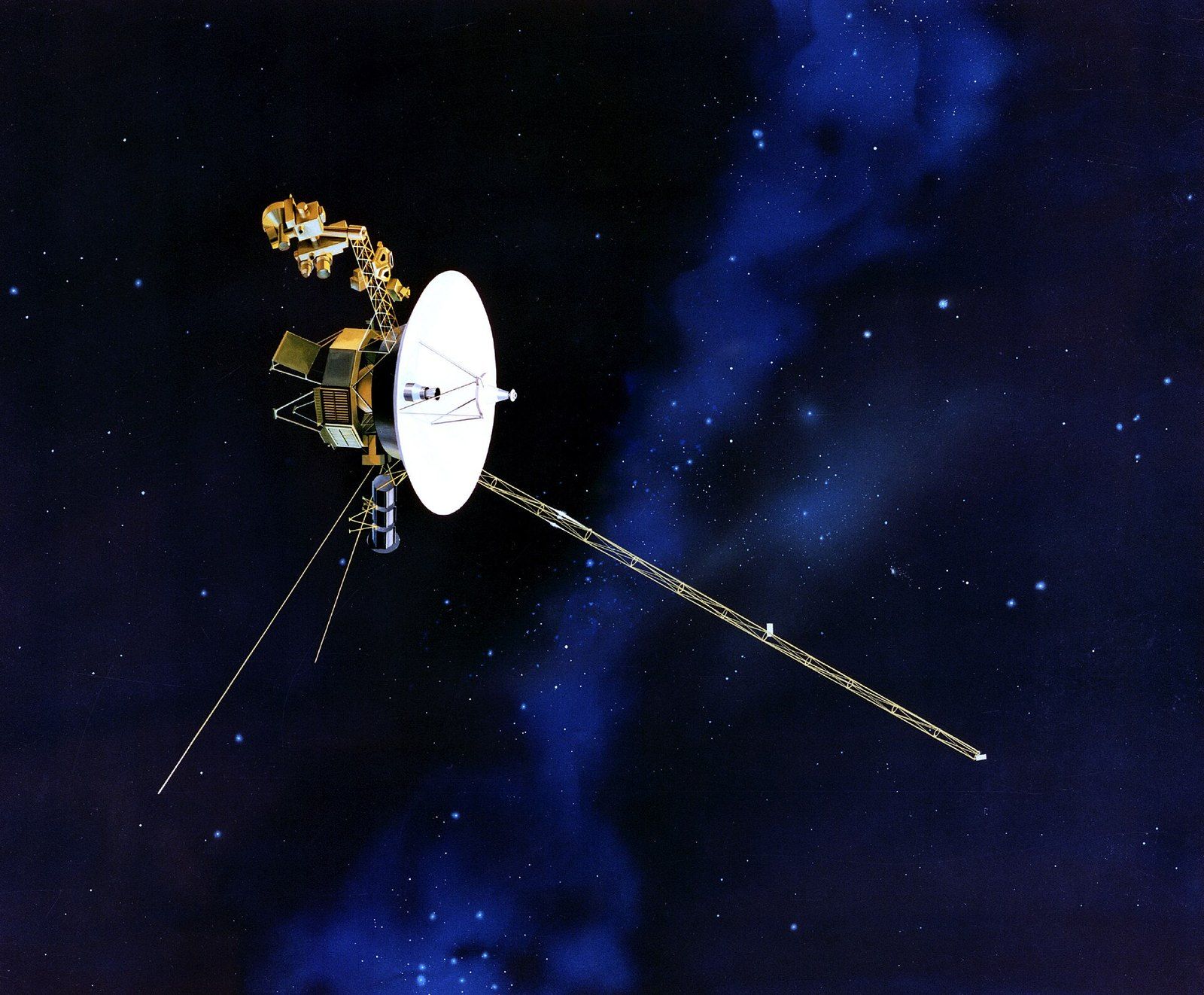
Twin probes from 1977 that passed four giant planets and now report from beyond the Sun's bubble.
-
 JPL and the Local Economy
Mars Rovers Built at JPL
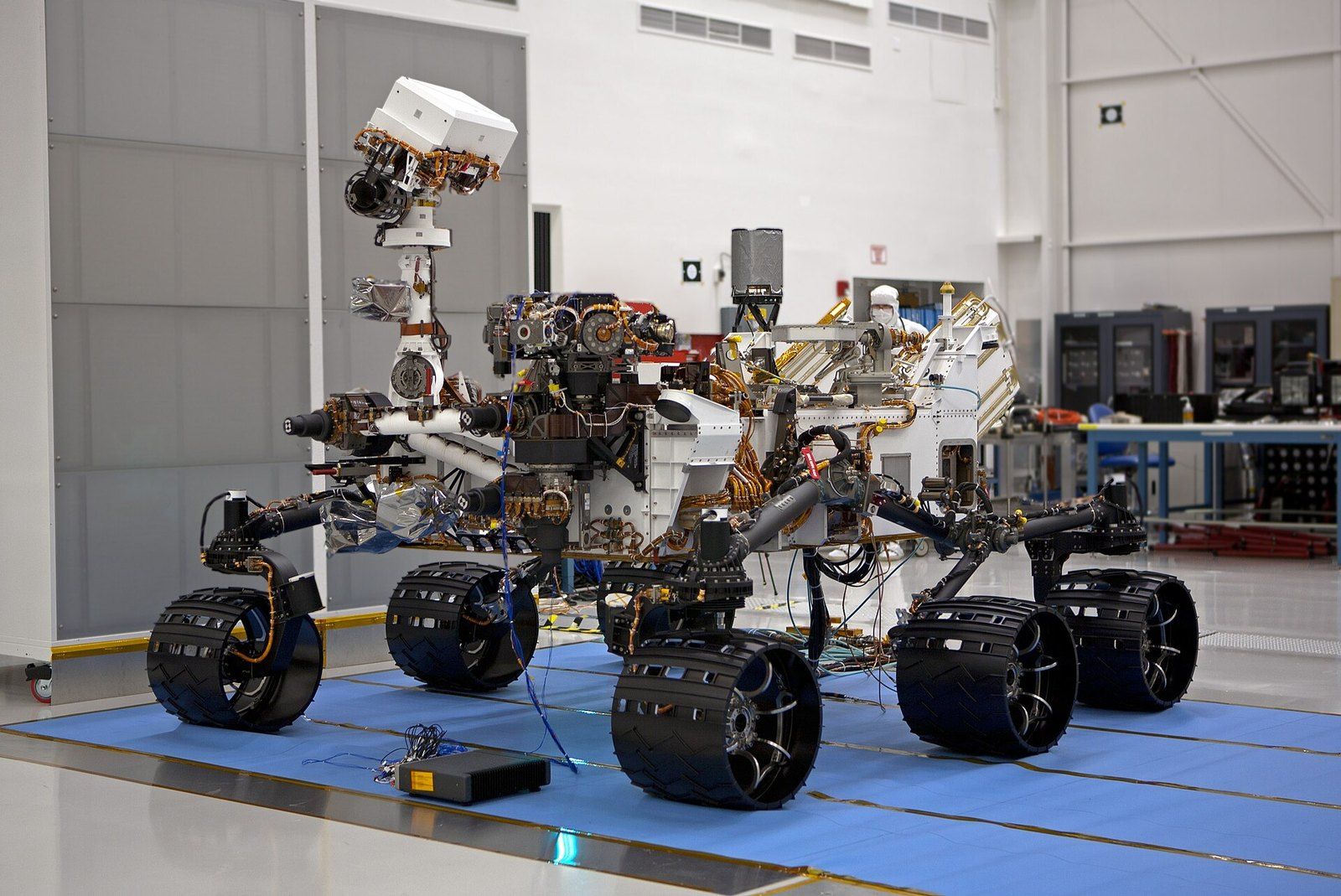
Four generations of wheeled explorers, each heavier than the last, sent to the Red Planet from mission control above Pasadena.
-
 La Cañada Flintridge History
The Arroyo Seco
A seasonal stream that fed trail camps and painters, was poured into concrete in the Depression, and is now argued over again.