
The Swimming Pool in Southern California
Contents
Mike Kobeissi’s work covers building and buying, remodeling and selling, with guidance on staging and renovation as well as on design, and the standard backyard pool of Southern California is a single object that can be described plainly. It is a basin of concrete sprayed over steel, poured or shot as one continuous shell, finished in plaster and set into the ground behind the house. That form took shape in the region between the 1920s and the 1940s, as an industry timeline from Pool and Spa News shows.6 What followed was cultural as much as technical. In the words of a 2014 Los Angeles Times column, the postwar Los Angeles ideal reduced to its core was a house for every family, a garden for every house and a pool in every garden.1
Plunges by the sea
Before the backyard pool came the plunge. From the 1880s through the 1920s, crowds traveled to the coast to swim in large covered pools a few steps from the ocean. In 1877 the Santa Monica Bath House opened with steam baths and a saltwater pool, and in 1905 an 8,450 square foot plunge opened in Ocean Park under Moorish domes, according to PBS SoCal’s Lost LA series.4 Some came to watch rather than swim, and at Abbot Kinney’s Venice of America a plate glass wall turned the plunge into what one guide called a human aquarium. Rail companies backed many of them. Henry Huntington’s Redondo Beach bathhouse claimed the largest heated saltwater plunge in the world, but as tastes turned to the open beach the plunges faded, and the Pacific Electric closed Redondo’s in 1941.4
Estate pools of the studio era
The private pool arrived with Hollywood money. In 1920 Douglas Fairbanks and Mary Pickford added a pool 55 feet wide and 100 feet long, with a sandy beach, to Pickfair. William Randolph Hearst built his first pool at San Simeon in 1924, and Edward Doheny’s Greystone estate followed in the mid 1920s with pools, ponds and hillside waterfalls, a 2007 Los Angeles Times history recounts.2 Architects took the pool into the modern house as well. Frank Lloyd Wright gave the Ennis House a pool, and in 1929 Richard Neutra completed the Lovell house in Los Feliz with a pool in place of a terrace.2
How the pool shell changed
- Early 1920sPools are formed and poured concrete with expansion joints; Southern California sees about 20 pool starts a year
- Late 1920sPascal Paddock finishes and waterproofs pools with white plaster
- 1934Paddock pours the whole shell as one monolithic structure, ending expansion joints
- 1940Philip Ilsley builds the first gunite pool in west Los Angeles
- 1941 to 1945The war puts the industry on hold
- 1952 to 1957The first pool boom
From poured concrete to gunite
The builders worked out the technique. In the early 1920s Southern California saw only about 20 new pools a year. Pascal Paddock built his first pool in 1922, began finishing pools in white plaster in the late 1920s and, in 1934, learned to pour the whole shell as one piece. Philip Ilsley built the first gunite pool in west Los Angeles in 1940.6
Gunite, sprayed on rather than formed, was the turning point. The Eichler Network dates the mass market for backyard pools to its spread in the 1940s, when Paddock Engineering boasted that its methods had put pools within reach of everybody.3
The postwar boom
The war paused the trade, and the boom came after it.6 The nation had 11,000 pools in 1947.2 The first boom ran from 1952 to 1957.6 In the 1960s, prosperity and a wave of single family building put more than 150,000 pools behind California homes, while kidney shaped pools alone went in at up to 20,000 a year around Los Angeles, Dwell reports.5 One author told the Eichler Network that the ordinary house suddenly became a resort, and that prices fell far enough for developers to include pools in their projects. Joseph Eichler built no pools beside his tract houses, yet the modern house his architects designed for him had one filling most of the backyard.3
Pools by the numbers
- Pools in the whole country in 1947
- 11,000
- Residential pools in California in 2007
- 1.1 million
- Share of those pools in Southern California
- 60 to 75 percent
- Water lost each year from a typical uncovered pool, 2004 estimate
- 19,659 gallons
The kidney and the free form
The curve came early. In 1939 Ilsley began experimenting with rounded pool surfaces in Los Angeles, and a decade later his firm finished a free form pool shaped like a three leaf clover in the Hollywood Hills.2 The kidney shape has a European source. Alvar Aalto’s Villa Mairea in Finland, finished in 1939, had a pool outlined like a natural lake, and in 1948 the landscape architect Thomas Church, an admirer of Aalto, gave the Donnell garden in Sonoma a kidney shaped pool. Widely published in the 1950s, it came to stand for the California outdoor life.5
Pools in the modern house
Postwar architects made the pool part of the composition. Richard Neutra designed one for the 1946 Kaufmann House in Palm Springs, and Pierre Koenig hung one from the hillside edge of the 1960 Stahl House, Case Study House 22. Photographed by Julius Shulman and Maynard Parker, such pools read as glamorous but attainable.1 In 1957 John Lautner gave the pool at the Silvertop house in Silver Lake an edge where the water seemed to vanish.2 Working with the landscape architect Garrett Eckbo, Lautner designed what appears to be the first infinity edge pool.3 The pool belongs to the wider history of indoor outdoor living.
The kidney shape, from Finland to Sonoma
- 1939Alvar Aalto completes Villa Mairea in Finland with a pool shaped like a natural lake
- 1948Thomas Church designs a kidney shaped pool for the Donnell garden in Sonoma
- 1950sThe Donnell pool appears on the covers of Sunset and House Beautiful
- 1960sMore than 150,000 pools are built at California homes
- Mid 1970sDrought empties pools and skateboarders take over their curved bowls
The pool as picture
Artists turned the backyard pool into an image of the region. David Hockney first visited California in 1963 and called it his promised land. His 1967 painting A Bigger Splash shows a Los Angeles pool beside a pink modernist house with no one in sight. He painted it from someone else’s photograph and spent two weeks on the splash alone, the Tate explains.7 Darker images ran alongside, from the body floating in the pool at the start of Sunset Boulevard in 1950 to the unpeopled blue ovals of Ed Ruscha’s Nine Swimming Pools in 1968.1
In 2012 the Palm Springs Art Museum mounted Backyard Oasis, about 140 photographs from 1945 to 1982, as part of the Getty’s Pacific Standard Time initiative, its announcement noted.9 One curator on the project showed how shelter magazines presented the pool as an aesthetic setting, a backdrop for every other activity around the house, Palm Springs Life reported.8
Drought and an empty basin
Water has always shadowed the symbol. When drought took hold in the mid 1970s, the state urged owners to drain their pools, and skateboarders found the curved, empty bowls ideal ground for new tricks.5 By 2014 a mapping project had counted more than 43,000 pools in Los Angeles County, while an uncovered pool could lose roughly 20,000 gallons a year to evaporation, far less than lawns take but hardly trivial.1 The same questions now surround replacing the lawn and the limits of the Mediterranean climate. Owners still restyle the basin, some laying bright tile or painted murals across the floor.10
The vocabulary worth knowing
Plunge. A large heated pool, often of seawater, inside a seaside bathhouse.4
Gunite. Concrete sprayed into place rather than poured into forms, the material that made the mass market pool possible.3
Monolithic shell. A pool poured as one structure with no expansion joints, a method Paddock devised in 1934.6
Free form and kidney. Curved outlines that replaced the rectangle from the late 1930s onward.2
Vanishing edge. A rim over which water seems to flow away, the later infinity pool.2
Lap pool. A long, narrow pool for swimming lengths, which the landscape design firm Galper Baldon Associates claimed to bring to California in 1970.2
Planting around the basin is the subject of California native plant gardens. Whether a particular yard should gain, keep or fill in a pool is a question for the owner’s own builder, inspector and other advisors.
References
- Los Angeles Times. The swimming pool, symbol of Southern California, takes a dip, 2014 08 01.
- Los Angeles Times. The splashiest history, 2007 08 16.
- Eichler Network. California Popularized the Backyard Pool, 2019 07 04.
- PBS SoCal. Swimming Pools at the Beach? When L.A. Took the Plunge, 2013 07 18.
- Dwell. The Rise of the Kidney Shaped Pool and Its Unexpected Impact on Skate Culture, 2019 05 24.
- Pool and Spa News. A History of Pools and Spas: Timeline, 2013 02 20.
- Tate. Understanding David Hockney's A Bigger Splash, 2018 08 17.
- Palm Springs Life. Breaking the Surface, 2011 11 30.
- Palm Springs Art Museum. Backyard Oasis Press Release, 2011 11 29.
- Sunset. This Is the Biggest Swimming Pool Trend of the Moment (Hint: It's for Design Risk Takers), 2024 05 21.
External links
See also
-
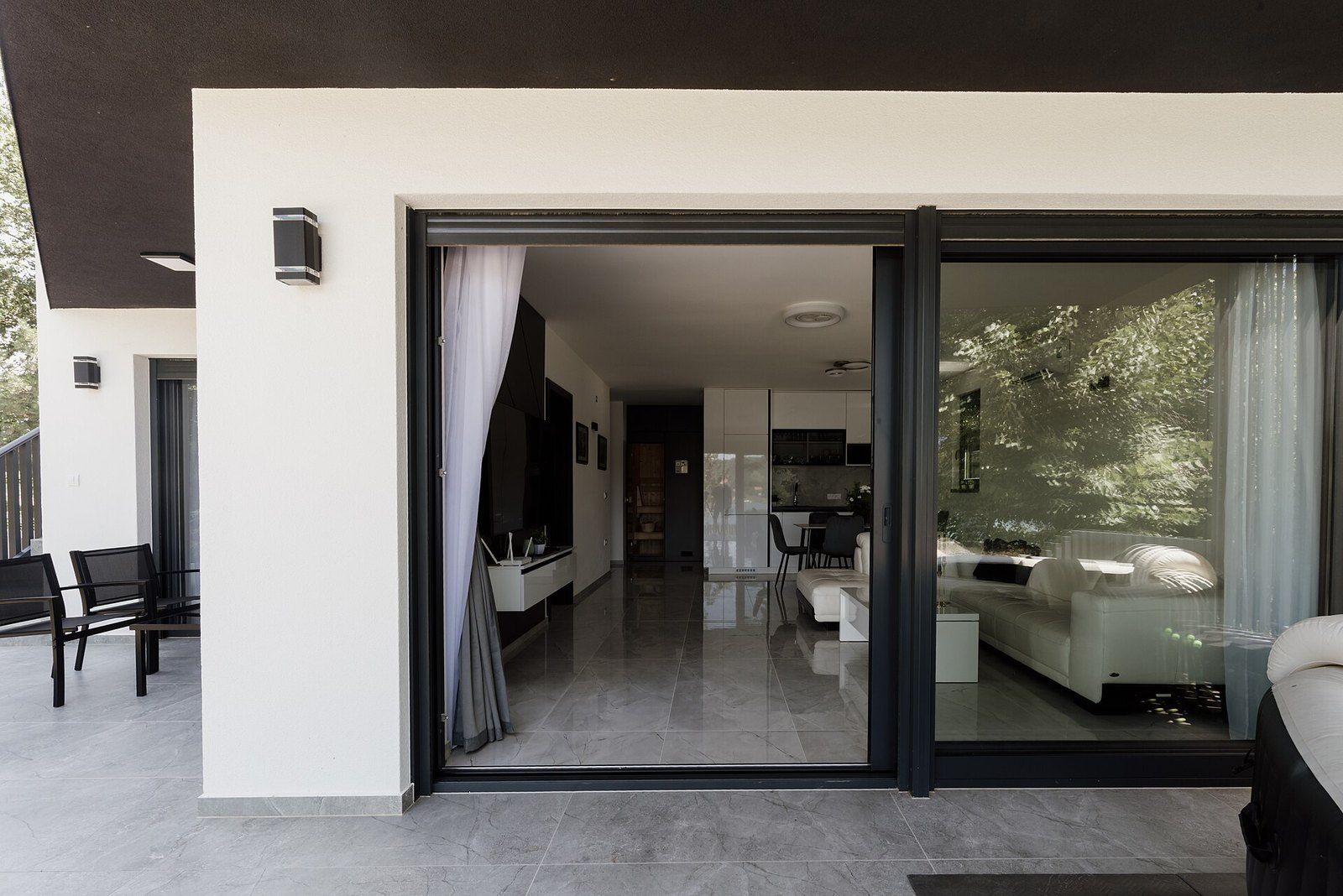 Gardens and Outdoor Living
Indoor Outdoor Living
How a wall of sliding panels and a courtyard plan turned the California yard into a set of rooms.
-
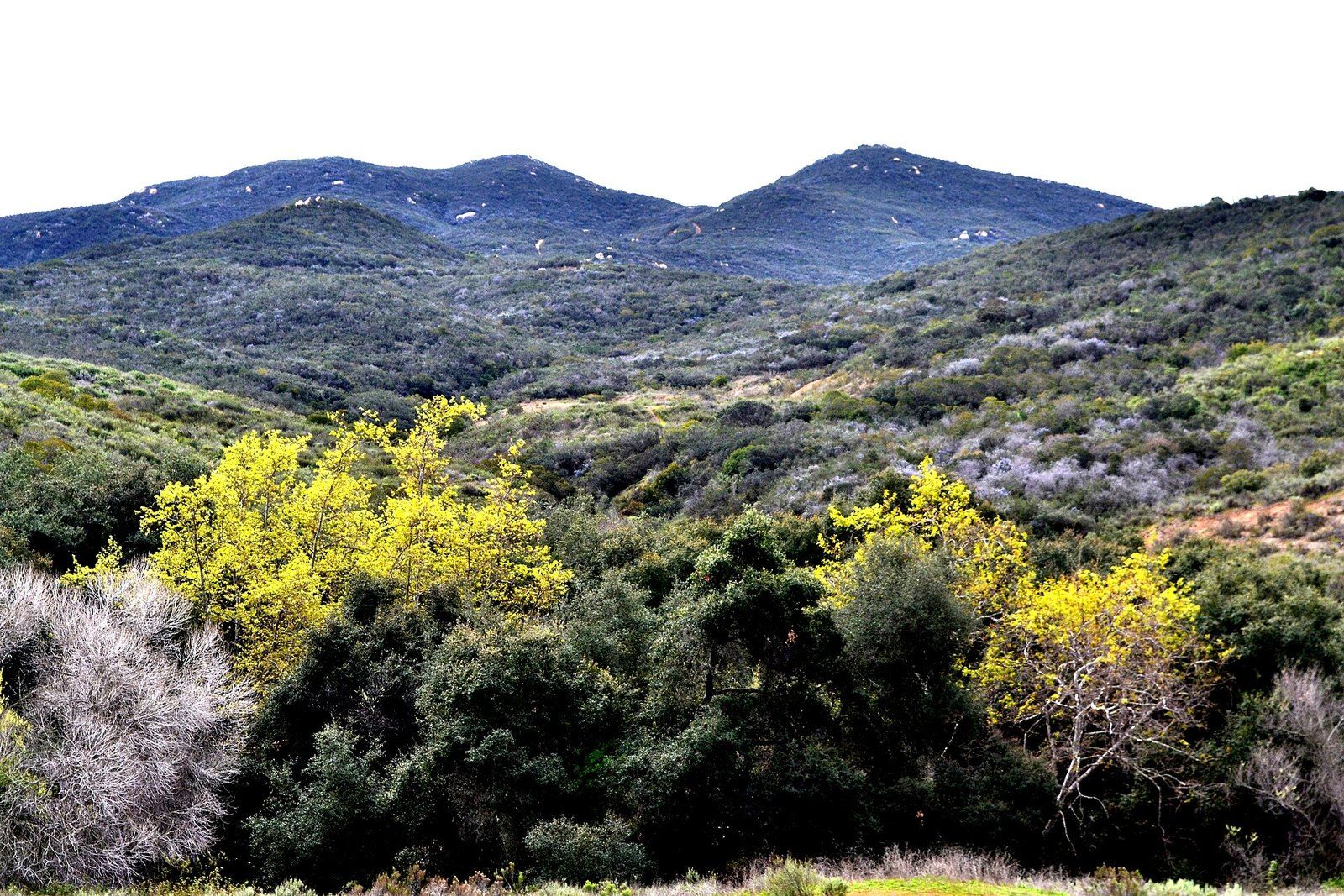 The San Gabriel Foothills
The Mediterranean Climate
Long rainless summers, short wet winters and the handful of west coast regions, from Chile to the Cape, that share them.
-
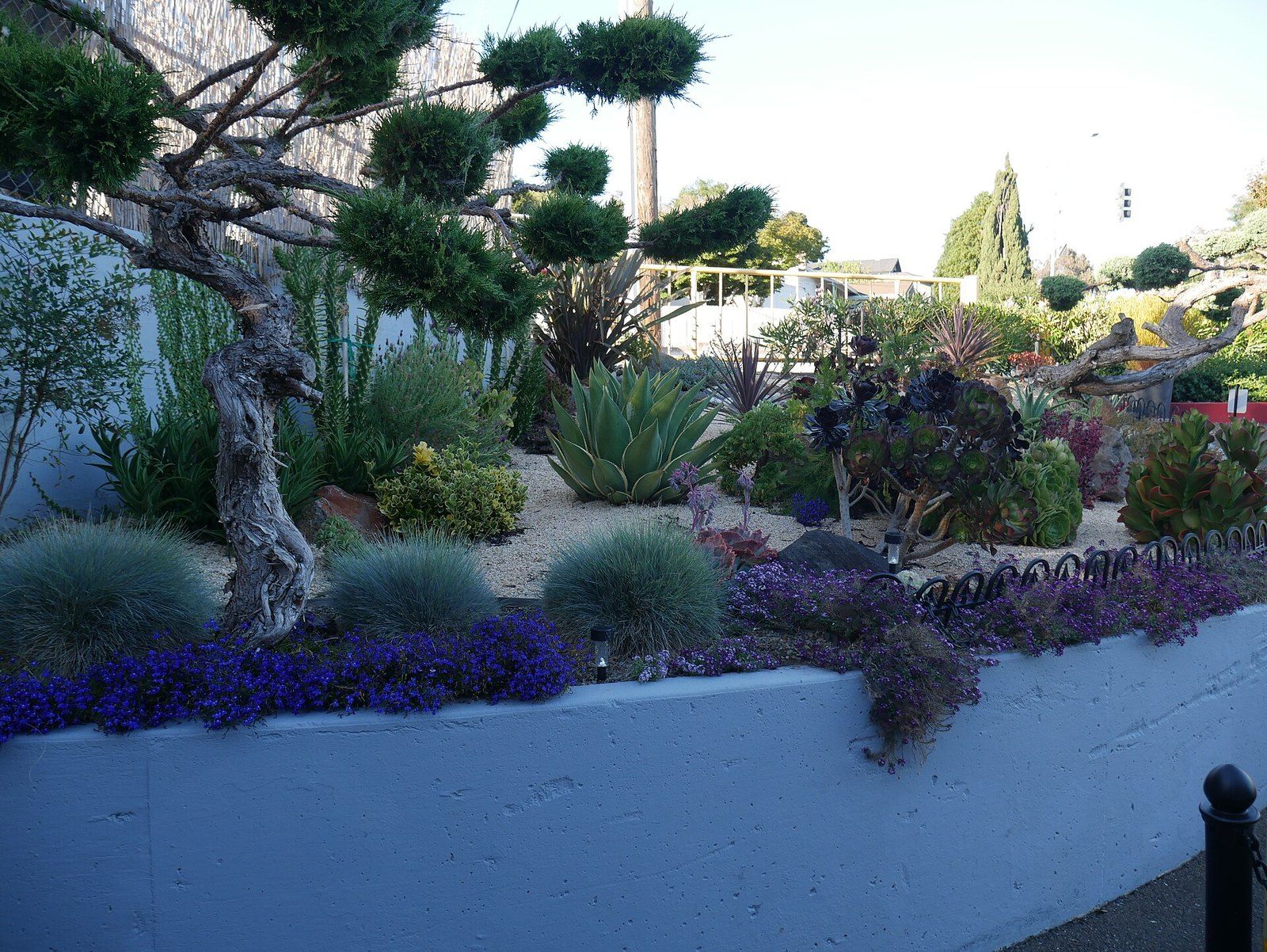 Gardens and Outdoor Living
Replacing the Lawn
The postwar green yard, the water it drinks, and the mulch, natives and meadow grasses taking its place.
-
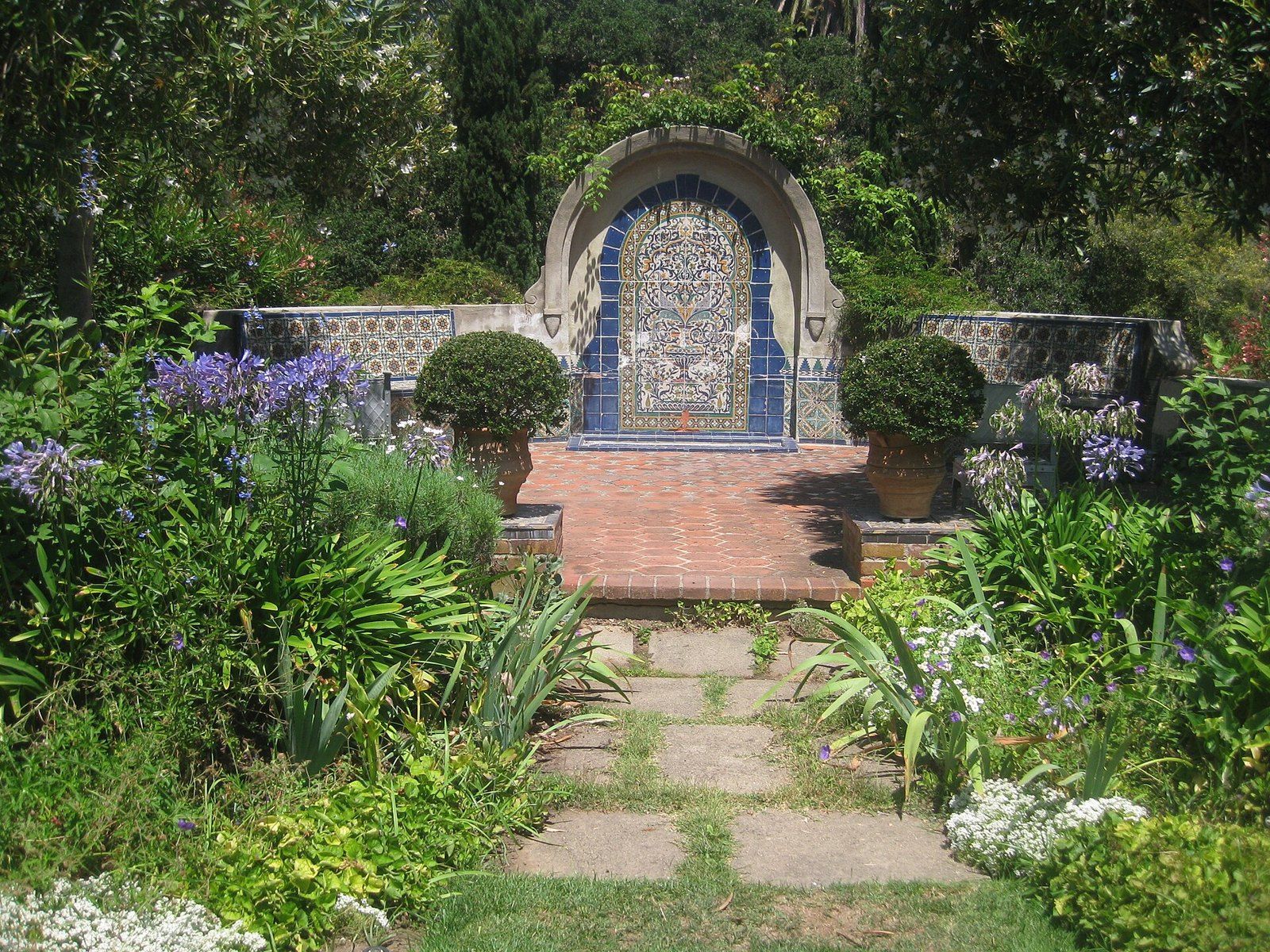 Gardens and Outdoor Living
Mediterranean Gardens
Lavender from the Basin, kangaroo paw from Australia, aloe from the Cape: a garden style built from five sister climates.
-
 Gardens and Outdoor Living
California Native Plant Gardens
Gardens planted from the state's own chaparral, oak woodland and coastal scrub, and the seasons they keep.