
The Mediterranean Climate
Contents
Mike Kobeissi has, for three decades, worked the La Cañada Flintridge market, and the town lies inside one of the few climate types on earth defined by a dry summer. The label is older than it sounds as a scientific term. By the Los Angeles Times account, Mediterranean became a climatological term in the 1920s, when the Russian born botanist Wladimir Köppen divided the world’s regions by temperature and rainfall, and California emerged as one of only five places where a temperate latitude, a west facing coast and a cold offshore current combine to give winter rain and a long summer drought.7 The Köppen scheme is still taught, and the physical geography manual published by BCcampus places the type in North America from Portland, Oregon, through all of California.4
The Köppen definition
The classification works from monthly records of temperature and precipitation, averaged over many years so that a single wet or dry season does not decide the result.4 In the system’s shorthand the Mediterranean climate is written Cs, for a dry summer, and it comes in two forms. In both, the coldest month averages below 18°C but above minus 3°C, at least four months average above 10°C, the wettest winter month gets about three times the rain of the driest summer month, and that driest month receives less than 40 millimeters.4 The interior type, Csa, has a warmest month above 22°C; the coastal type, Csb, never reaches that average.4 The same manual describes the climate as switching from mild, wet winters to hot, arid summers with a high share of sunshine, a wide daily temperature range, some risk of winter frost and frequent low cloud and fog on the coast.4
The two Köppen Mediterranean types
| Csa, interior Mediterranean | Csb, coastal Mediterranean | |
|---|---|---|
| Summer | Distinctly dry and hot, under continental high pressure | Distinctly dry and cool, under maritime high pressure |
| Warmest month | Average above 22°C (72°F) | No month averages above 22°C (72°F) |
| Coldest month | Below 18°C (64°F) but above minus 3°C (27°F) | Below 18°C (64°F) but above minus 3°C (27°F) |
| Rain | Wettest winter month about three times the driest summer month, which gets under 40 mm | Wettest winter month about three times the driest summer month, which gets under 40 mm |
| Warm months | At least four months average above 10°C (50°F) | At least four months average above 10°C (50°F) |
California holds more variety than the two letters suggest. The state’s biodiversity atlas, reproduced by the California Coastal Commission, names three versions: a cool summer, cool winter climate along the coast and the western slope of the Sierra Nevada, a coastal variant with frequent summer fog, and an interior valley version with hotter summers and cooler winters.1 In all three most of the precipitation falls in winter, the opposite of the pattern across much of the world.1 Totals still vary enormously. California Geographic notes a difference of roughly 30 inches a year between wet Eureka in the far northwest and dry San Diego, as storms drop their rain on windward slopes and leave the valleys beyond in a rain shadow.2
Five regions on the map
The climate occupies a narrow band. California Geographic places the five Mediterranean regions between about 30 and 40 degrees north and south, on the west coasts of continents, each flanked by a cold ocean current and a semi permanent high pressure cell offshore.2 Sunset magazine lists the members: the lands around the Mediterranean Sea, California, central Chile, southwestern Australia and the Cape region of South Africa.5 The atlas adds that outside the Mediterranean Sea region the climate is limited to five locations, two of them in Australia.1
California's Mediterranean climate in four numbers
- Mediterranean climate regions in the world
- 5
- Latitude band, north and south, where they occur
- 30 to 40 degrees
- Age of the present Mediterranean climate in California
- 5 to 15 million years
- Difference in yearly rainfall between Eureka and San Diego
- About 30 inches
The regions are not equal. A writer for the Mediterranean Garden Society notes that the Mediterranean Basin, which gave the climate its name, holds more than half of the world’s total, although parts of its own coast in Egypt, Libya and Tunisia are too dry to qualify.3 In California and Chile the climate is pinned against the Pacific by mountains close to the coast, while in Australia and South Africa monsoon troughs can bring unpredictable summer rain, which shapes the vegetation there.3 The same writer warns against the northern visitor’s picture of one continuous summer, since rain arrives unevenly from year to year and place to place, and winter can bring a short frost.3 Taken together, the Times reported, these regions make up only about two percent of the world’s land.7
What drives the dry summer
Two features offshore set the rhythm in California. California Geographic explains that the California Current carries cold, nutrient rich water south along the coast, while the North Pacific High, a large and persistent high pressure cell, blocks storm tracks for most of the year; in winter it retreats toward the equator and lets Pacific storms reach land.2 The manual describes the same mechanism in general terms: summer aridity caused by the sinking air of the subtropical highs, which may last up to five months, and winter rain from mid latitude cyclones.4
The pattern is old but not fixed. The present Mediterranean climate in California is about five to fifteen million years old, dating to the middle or late Miocene, when cooling deep ocean temperatures and stronger upwelling along western coasts stabilized the air over the eastern Pacific.2 From year to year, oscillations such as El Niño, La Niña and the Pacific Decadal Oscillation shift the strength and position of the high, which makes annual rainfall highly variable.2 The winter of 2023 showed how far that can go: the San Francisco Chronicle reported that forecasters expected a dry La Niña season, then watched a series of atmospheric rivers, linked by scientists to tropical activity thousands of miles away, build an enormous Sierra Nevada snowpack.9
The seasons of a Mediterranean garden
- AutumnAfter summer drought and dormancy, the yearly life cycle of plants starts again.
- WinterPeriods of rain alternate with warm, sunny days, and mild weather keeps garden work going.
- SpringA full display of bloom is cut short by hot, dry winds that ripen and scatter seed.
- SummerA long, hot dry season sends plants and bulbs into dormancy.
Plants and gardens
Plants in these regions have adapted to the long dry season. California Geographic lists summer deciduousness and small, thick, leathery leaves among the strategies, while coastal plants rely on fog drip in summer.2 The atlas notes that the mild temperatures and winter rain support some of the highest species richness in California.1 Across the regions, National Geographic reported, warm dry summers, wet cool winters and infrequent freezes coincide with some of the world’s richest natural biodiversity; the Mediterranean Basin alone has more than 12,000 plants found nowhere else.8
Gardeners read the calendar differently here. In a Mediterranean climate, the garden society writer observes, autumn rather than spring is when the plant year starts again, and a long hot summer is something many bulbs need in order to go dormant and ripen.3 A Sunset profile of a Marin County garden describes a newcomer from Chicago learning that aridity had replaced the hot, wet summers he knew and that Mediterranean plants came alive in winter, then replacing ferns, azaleas and rhododendrons with lavender, rosemary, aloes and rockrose.6 Plants native to any of the five regions tend to thrive in the others, which gives gardeners a large palette.5
Water used by two Santa Monica test gardens
Water agencies took up the idea. The Times reported in 2004 that two Santa Monica front yards had been planted as a test, one with lawn and one with a Mediterranean garden, and that in their first full month of measured use the conventional garden drew 232 gallons a day against 47 for the Mediterranean one.7 The range above the foothills carries the same plant communities on a larger scale, as described under the San Gabriel Mountains and the Angeles National Forest.
What remains unsettled
The biggest open question is how warming will change the balance of wet and dry years. The Chronicle reported scientists’ view that California’s Mediterranean climate naturally swings between wet and dry years, but that the extremes will become both wetter and drier as the planet warms.9 California Geographic adds that a warming Arctic can leave pressure cells stuck in place, strengthening the North Pacific High and deflecting rain for longer stretches, which lengthens drought.2 For wine regions, a modeling study described by National Geographic projected declines in rainfall for nearly all Mediterranean regions.8
Another region already shows the pressure. In 2025 The Guardian reported that parts of South Australia had recorded their lowest rainfall in the fourteen months since February 2024, with Adelaide receiving 14 millimeters from January to March against a usual 64, and an ecologist there described the city’s climate as shifting from warm Mediterranean toward semi arid.10 Yet a climate researcher quoted in the same report cautioned that observed drought trends were not yet clear enough to attribute to climate change, because the weather systems involved are so complex.10 The same uncertainty hangs over California’s own record, and the entry on Mount Wilson Observatory follows the astronomers who came to these mountains for their clear air. Choices about planting, water and outdoor space for a specific property are best made with the reader’s own advisors.
References
- California Coastal Commission. Atlas of the Biodiversity of California: Climate and Topography.
- California Geographic. An Overview of California's Mediterranean Climate System, 2022 07 23.
- Mediterranean Garden Society. What is a mediterranean climate?.
- BCcampus. Appendix 2: Köppen Climate Classification System.
- Sunset. What makes it Mediterranean?, 2004 11 15.
- Sunset. 6 Lessons for Mediterranean Climate Gardening, 2016 01 20.
- Los Angeles Times. The proper look of paradise, 2004 07 22.
- National Geographic. New Vineyards Could Create Conservation Challenges, 2013 04 09.
- San Francisco Chronicle. Here's the science behind the endless storms drenching California this winter, 2023 03 30.
- The Guardian. Parched waterways, dead fish and trees ready to give up: historic big dry grips South Australia, 2025 04 16.
External links
See also
-
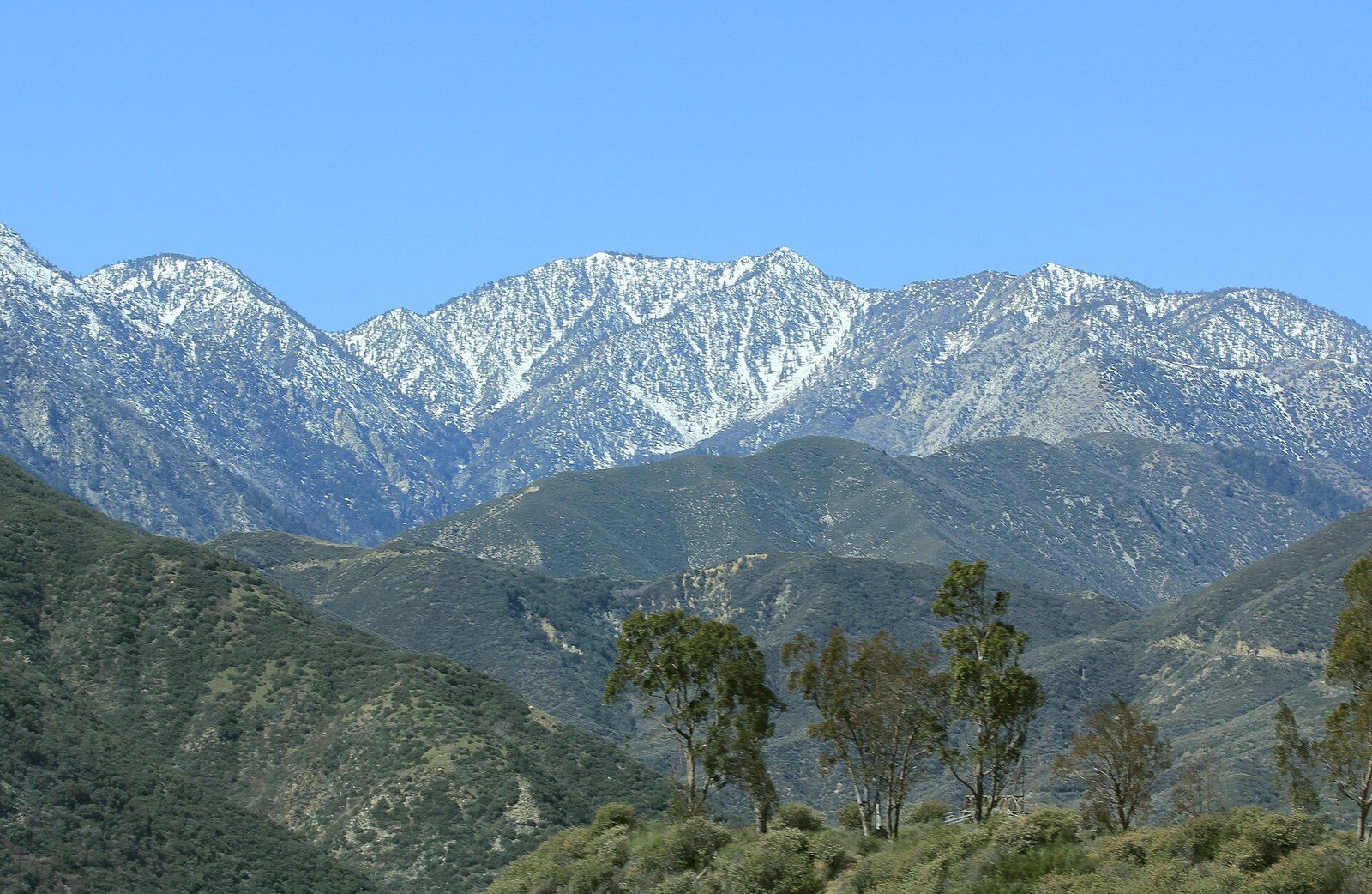 The San Gabriel Foothills
The San Gabriel Mountains
The range above Los Angeles, read through its rock, its faults, its summits and the people who crossed it first.
-
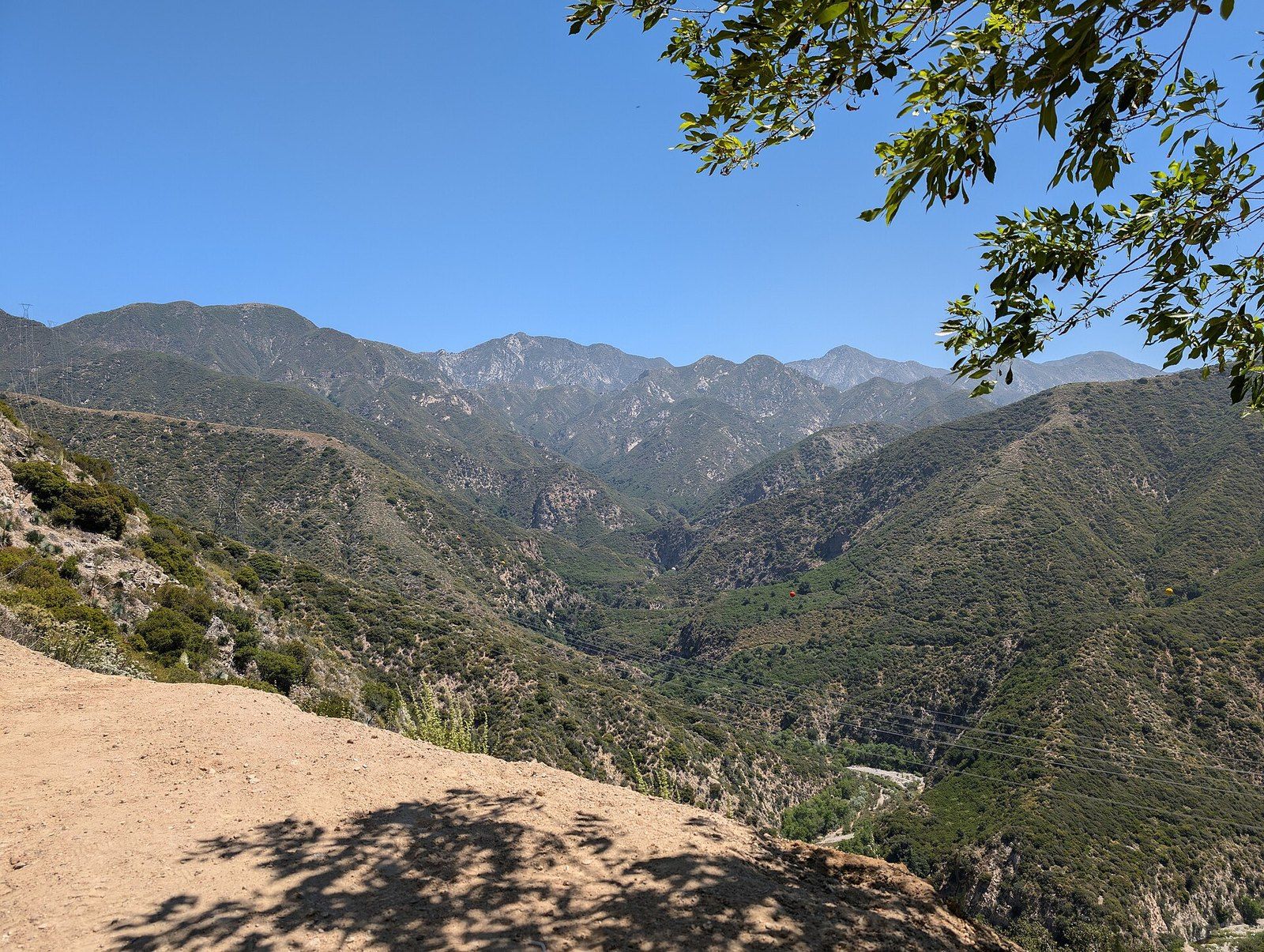 The San Gabriel Foothills
Angeles National Forest
Public land above the foothill towns, from an 1892 watershed reserve to trail camps, a mountain highway and a national monument.
-
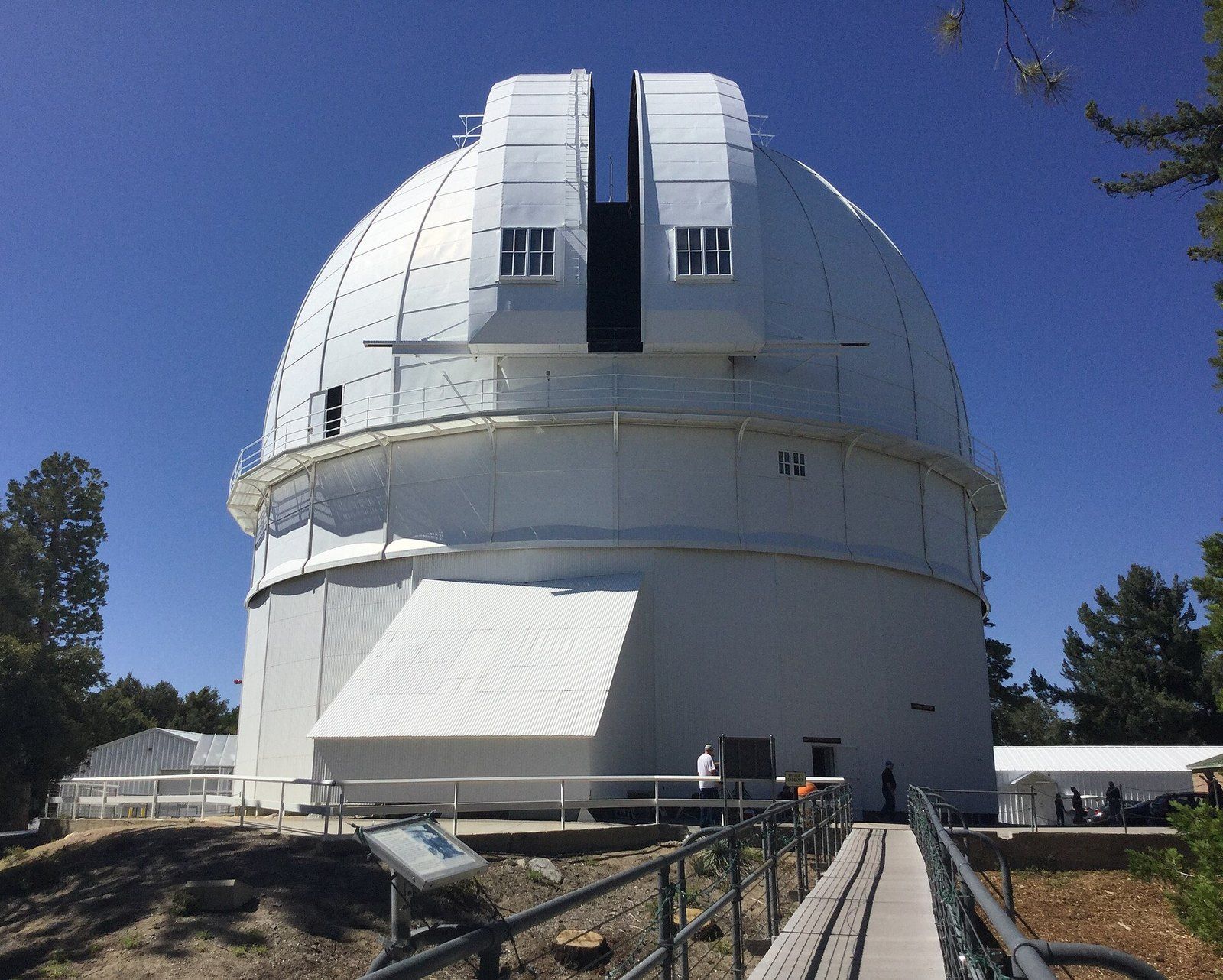 The San Gabriel Foothills
Mount Wilson Observatory
A mountaintop laboratory in the San Gabriels where big mirrors showed that the Milky Way is one galaxy among many.