
Mediterranean Gardens
Buying, remodeling, selling and building make up what Mike Kobeissi’s work covers, with guidance on staging, renovation and design, and Mediterranean gardens owe their name to a climate label with a named author. A 2004 Los Angeles Times essay on the style traced the term to Wladimir Köppen, the Russian born botanist whose 1920s classification sorted the globe according to its heat and its rain, and for whom Mediterranean described a particular subset of temperate climates rather than a sea.1 By that definition, the essay explained, California belongs to a set of just five regions in which three conditions meet: a latitude in the temperate band, a shoreline that looks west and a cold ocean current running past it, which together bring winter rain followed by months without it. Its four counterparts lie in southern Australia, central Chile, South Africa’s western Cape and the basin of the Mediterranean Sea. The essay reported the message the region’s water agencies wanted gardeners to absorb: climatically, Southern California has more in common with Crete than with the Carolinas.1
Five regions, one climate
The Mediterranean Garden Society describes the same five regions and notes that the Mediterranean Basin is by far the largest, holding more than half of all land with this climate, although parts of its southern coast, in Egypt, Libya and Tunisia, receive too little rain to be counted.9 The regions lie roughly between 31 and 40 degrees of latitude on the western sides of continents. In California and Chile, mountains near the Pacific hem the climate in; in Australia and South Africa, monsoon systems can bring unpredictable summer storms that shape the vegetation.9 UC Master Gardeners in Contra Costa County add the mechanism: two of the regions sit in the Northern Hemisphere and three in the Southern, each on a west or southwest coast where cold ocean currents moderate temperatures and subtropical high pressure keeps summer rain away.7
The regions matter beyond gardening. UCLA’s Mildred E. Mathias Botanical Garden notes that they cover only 2.25 percent of Earth’s land surface but hold 16 percent of its plant species, which is why California counts as a biodiversity hotspot, and that their vegetation is dominated by evergreen shrublands with leathery leaves.6
A rare climate
- Regions on Earth with a Mediterranean climate
- 5
- Share of Earth's land surface they cover
- 2.25 percent
- Share of the world's plant species they hold
- 16 percent
- Latitude band, north or south, where they lie
- 30 to 40 degrees
The calendar is the part newcomers misread. The society’s account, by a past president who gardens on Mallorca, says the plant year begins in autumn, after summer dormancy, much as spring begins it farther north, and it warns that northern writers who praise one continuous summer misread the place; winter alternates rain with mild sunny days, and the spring display ends abruptly with hot, dry winds. Rainfall varies widely from year to year and place to place, and many Mediterranean bulbs depend on a long hot summer to ripen.9 The climate itself is described at greater length under the Mediterranean climate.
Plants that travel between them
Because the climates match, plants move easily among them. Sunset’s short guide says plants native to each region thrive in all of them, and lists the familiar herbs, lavender, rosemary, sage, santolina and thyme, alongside California’s ceanothus, fremontodendron and sagebrush; grevillea, kangaroo paw and Westringia from Australia; Cape plumbago, kniphofia, leucospermum and lion’s tail from South Africa; and Pride of Madeira and rockrose from the Mediterranean region itself.2 Garden Design points out that some plants now typical of Mediterranean gardens in Europe, such as bougainvillea and pelargonium, came from South Africa, Australia, South America and California, and are called Mediterranean only because gardeners there adopted them.5
The plants share their survival methods as well as their weather. The Contra Costa Master Gardeners describe species that are drought deciduous, dropping leaves under stress and regrowing them when water returns, as California sagebrush does; species like purple sage that grow different leaves by season; and California lilacs with thick, leathery leaves and fewer pores to limit water loss. Gray, white or hairy surfaces reflect sunlight and reduce heat stress.7 Garden Design makes the same point about silver foliage, and the Times essay describes a palette of gray, blue and olive leaves, summer rather than winter dormancy and strong scents from eucalyptus, rosemary and pine.51
Mixing the regions is the usual practice. A Master Gardener demonstration garden in Contra Costa County emphasizes California natives such as toyon, ceanothus and Pozo Blue sage, then sets among them kangaroo paw from southwest Australia, hardy yellow iceplant from South Africa and sweet bay from the Mediterranean, to show how plants from the different regions combine in a low water planting.8 The opposite lesson came from a Marin County hillside profiled by Sunset: a new owner from Chicago found that ferns, azaleas, rhododendrons and Japanese maples struggled despite constant water, and over fifteen years replaced them with lavender, rosemary, aloes, rockrose and pomegranates.3
One Marin garden's swaps
| Planted at first | Replaced with | |
|---|---|---|
| Shade plants | Ferns | Lavender and rosemary |
| Flowering shrubs | Azaleas | Aloes |
| Evergreen shrubs | Rhododendrons | Rockrose and pomegranates |
From label to style
In the Times account, Mediterranean won out as a banner over xeriscaping, from the Greek for dry, which suggested cactus gardens, because it embraced the widest range of plants and styles. Books on the practice began appearing in 1990, led by Hugo Latymer, a British nurseryman on Mallorca; the San Francisco physician Peter Dallman wrote the standard reference on the floras of the five regions, and Pacific Horticulture’s editor started the Gardening Under Mediterranean Skies symposium in 1998 expecting dozens and drawing hundreds.1 The same essay described a 1922 Moroccan style house in Larchmont whose owners replaced lawn and concrete with symmetrical beds of palms, tea trees, agave, lavender and rosemary around gravel, a bird bath and a pond. In Santa Monica that year, two neighboring front yards were planted as a test: in the first full month of records the conventional one used 232 gallons a day and the Mediterranean one 47.1
As a look, the style has a settled vocabulary. Garden Design lists shade from pergolas and trees, water in fountains and birdbaths, outdoor rooms for dining, oversized terracotta containers, warm stone and gravel in place of lawn, glazed tile, fragrant plants and a palette of cobalt, terracotta and mustard tempered by neutral stone and foliage.4 The society’s design guidance adds the practices behind the look, along with a respect for the spirit of the place through local stone, gravel and plants.10 The pool that often anchors these gardens has its own history under the swimming pool in Southern California, and the native side of the palette is covered in California native plant gardens.
Designing for a summer dry garden
- Choose adapted plantsEvergreen shrubs, aromatic herbs and desert species that survive without summer rain.
- Wait and watchOn a new plot, observe a full year before settling the design.
- Plant in the cool seasonAutumn or winter planting lets roots establish before the heat.
- Water deeply, rarelyInfrequent deep watering after planting builds deep roots.
- Keep the rainHarvest rainwater and use gravel and other permeable surfaces so it soaks in.
- Leave the leavesFallen leaves feed the soil and slow evaporation.
The style is easiest to understand in person. UCLA’s botanical garden keeps a Mediterranean Ecosystem collection with Phlomis from the Basin, Cordia from central Chile, aloe from the Cape and eucalyptus from southwestern Australia, now being revitalized with wild collected seed, some of it shared by the Jerusalem Botanical Gardens.6 The Times pointed readers to the grounds of the furniture maker Sam Maloof in Alta Loma, landscaped with old citrus trees and sweeping native and Mediterranean plantings, and to Rancho Santa Ana Botanic Garden in Claremont and Santa Barbara Botanic Garden.1 In Northern California, Sunset’s Marin gardener studied Filoli in Woodside and the Ruth Bancroft Garden in Walnut Creek, and the Contra Costa demonstration garden shows the mixed planting at domestic scale.38 Which plants suit a particular yard, given its soil, slope and exposure, is a question for the owner and a nursery, designer or other advisors of the owner’s choosing.
References
- Los Angeles Times. The proper look of paradise, 2004 07 22.
- Sunset. What makes it Mediterranean?, 2004 11 15.
- Sunset. 6 Lessons for Mediterranean Climate Gardening, 2016 01 20.
- Garden Design. Mediterranean Garden Ideas and Inspiration, 2022 10 04.
- Garden Design. Mediterranean Plants to Grow in Your Garden, 2022 10 07.
- Mildred E. Mathias Botanical Garden, UCLA. Mediterranean Ecosystem.
- UC Master Gardener Program of Contra Costa County. Gardening in a Mediterranean Climate Zone, 2025 03 26.
- UC Master Gardener Program of Contra Costa County. Mixed California Native and Mediterranean Garden.
- Mediterranean Garden Society. What is a mediterranean climate?.
- Mediterranean Garden Society. Designing for the Mediterranean Climate, 2025.
External links
See also
-
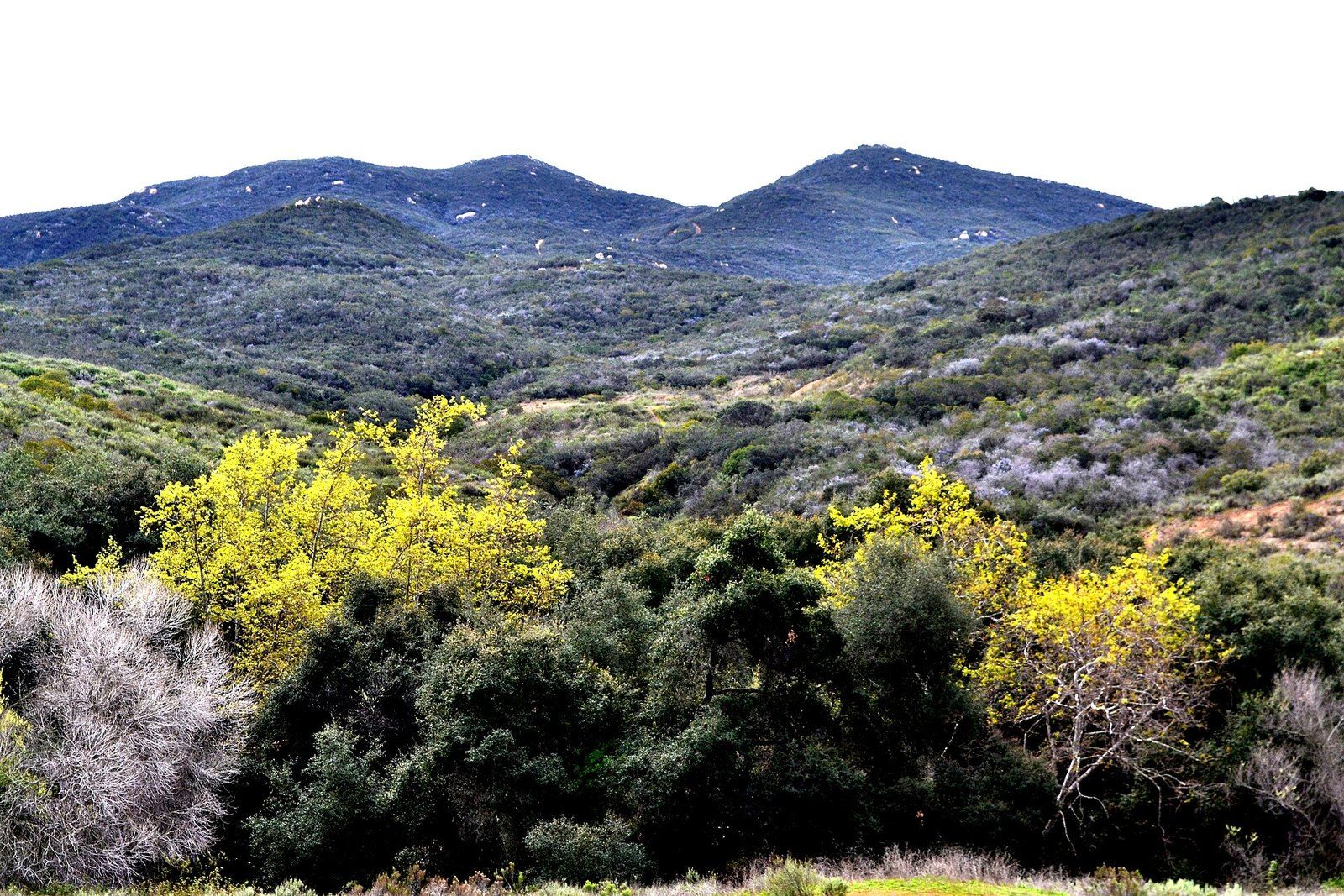 The San Gabriel Foothills
The Mediterranean Climate
Long rainless summers, short wet winters and the handful of west coast regions, from Chile to the Cape, that share them.
-
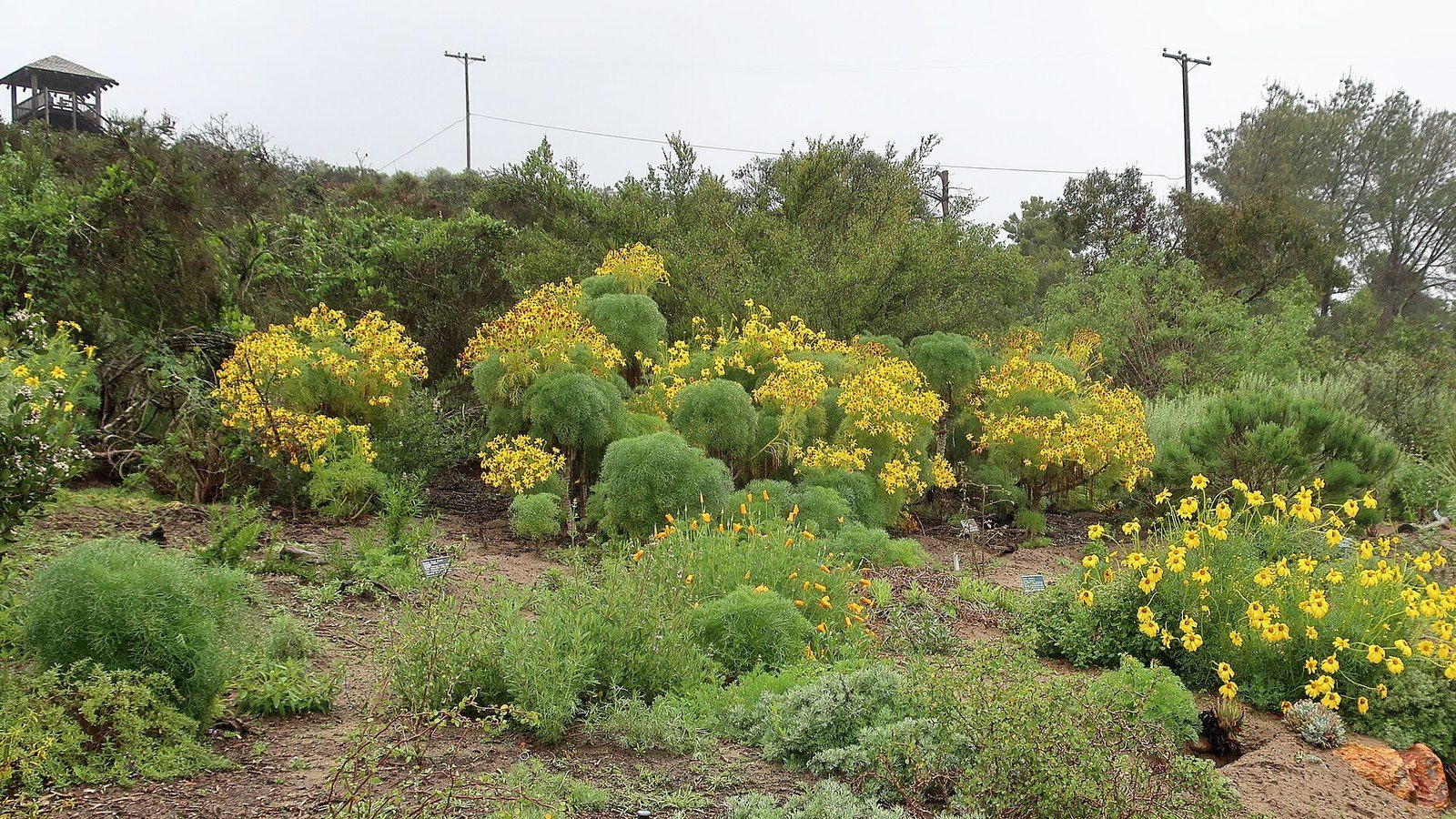 Gardens and Outdoor Living
California Native Plant Gardens
Gardens planted from the state's own chaparral, oak woodland and coastal scrub, and the seasons they keep.
-
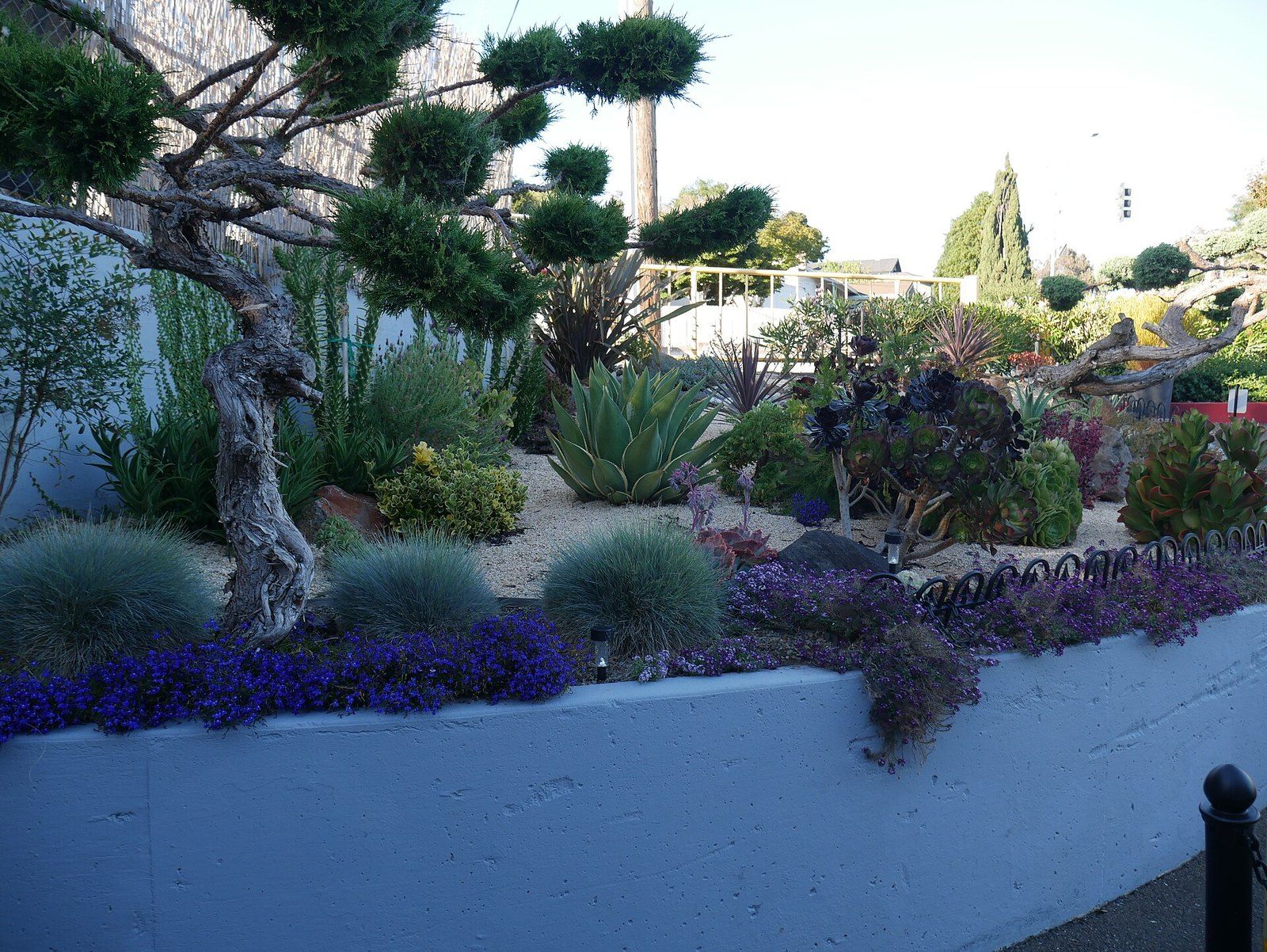 Gardens and Outdoor Living
Replacing the Lawn
The postwar green yard, the water it drinks, and the mulch, natives and meadow grasses taking its place.
-
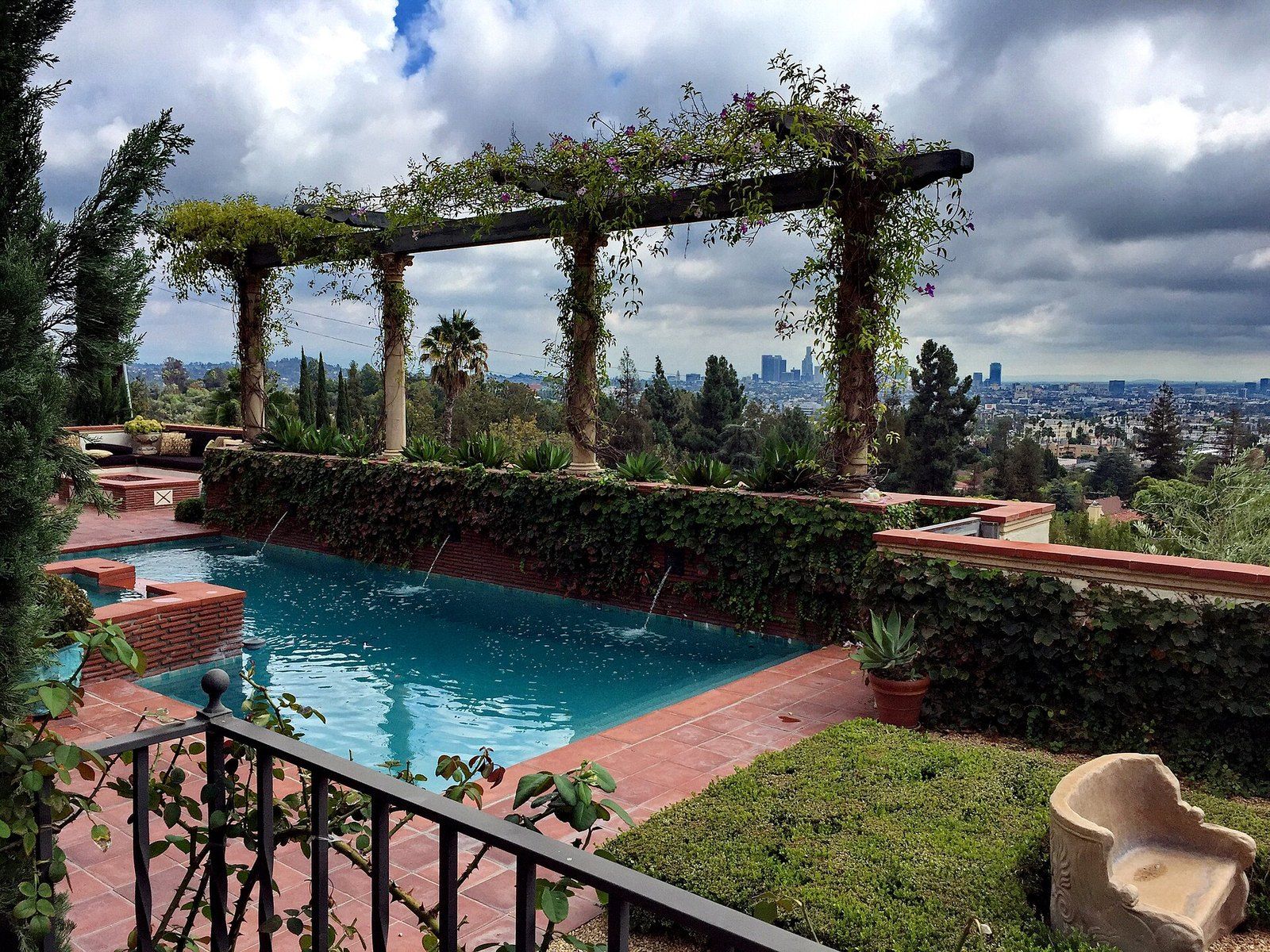 Gardens and Outdoor Living
The Swimming Pool in Southern California
From saltwater bathhouses on the beach to a sprayed concrete basin behind the ranch house, and what it came to stand for.
-
 Gardens and Outdoor Living
Indoor Outdoor Living
How a wall of sliding panels and a courtyard plan turned the California yard into a set of rooms.