
California Native Plant Gardens
Contents
With guidance on renovation, design and staging, Mike Kobeissi’s work covers selling, remodeling, buying and building, and a native plant garden begins with a word whose meaning is narrower than it seems. In California gardening, native describes a plant that belongs to one of the state’s own plant communities, and the California Native Plant Society names the common ones: northern and southern oak woodland, valley grassland, chaparral, desert, coastal sage scrub and bluff, mixed evergreen forest and redwood forest.1 The society goes further and asks gardeners to grow locally native plants, raised by restoration nurseries from seed and cuttings of nearby watersheds whose sources they track, so that the gene pool of each region stays diverse.1 It also points to an irony in the term. California’s native plants have been grown in gardens around the world for more than a century, yet few gardens designed in California reflect the state’s own flora.1
Water, care and chemistry
The best known claim for native gardens is water. Once established, the society says, many California natives need little irrigation beyond normal rainfall, and establishment takes two to five years; some species stay healthy for much of the year on one to four waterings a month.1 The same guide lists lower maintenance in general, with less fertilizer, less pruning and less or no pesticide than many common garden plants require. Most natives perform better without fertilizer, which pushes growth past what the plant can sustain and can shorten its life, and for most of them a single pruning a year is enough. Mulch does much of the remaining work, slowing evaporation, discouraging weeds and favoring beneficial soil bacteria, though organic matter may be needed where construction has left an infertile top layer.1
The comparison usually drawn is with lawn. NPR’s Life Kit reported that the United States now has enough lawn to cover an area larger than the state of Georgia, with the watering, mowing, fertilizer and weed killers that go with it contributing to air and water pollution.6 Low maintenance does not mean none. A nonprofit director interviewed in the same report rejected the idea of a garden that needs no care at all, while agreeing that the work declines over time.6
Natives once established
- Time many natives take to become established
- 2 to 5 years
- Monthly waterings that keep some species healthy for much of the year
- 1 to 4
- Pruning a year, enough for most natives
- 1
Habitat in a residential lot
The second claim is wildlife. The society says research shows native wildlife prefers native plants, that hummingbirds, butterflies and beneficial insects are adapted to them, and that a garden of natives cannot replace habitat lost to development but can act as a bridge to the wild areas that remain. Pollinators can improve fruit set, native insects and birds help keep down mosquitoes and leaf eating bugs, and because most pesticides kill indiscriminately, cutting them back lets natural pest control take over and keeps garden chemicals out of creeks.1 NPR traced a larger version of the idea to the entomologist Doug Tallamy, who argued that converting half of America’s lawns to native plantings would create tens of millions of acres of habitat at a time when birds and butterflies are declining. Native flowers, trees and shrubs are part of the local food web, the report explained, which is why they feed local wildlife so reliably.6
Designers often mix natives with plants from similar climates. Dwell profiled a South Los Angeles garden by the designer Brandy Williams that combines succulents with California natives and lavender to draw bees, butterflies and birds, and noted her view that succulents alone are limited as year round food for pollinators, so she adds natives such as Heuchera maxima for hummingbirds.9 That blend of native and Mediterranean climate plants is a style of its own, covered under Mediterranean gardens.
Choosing plants for a site
Native gardening starts with the site rather than the plant list. The society’s guide to starting a native garden, written by a chapter officer, asks gardeners to walk the property and record sun and shade, how often it tops 100 degrees or falls below freezing, wind, elevation, slope, soil type, soil pH and drainage, with water that soaks in within ten to fifteen minutes counted as good.2 It flags details a homeowner might miss, such as concrete and stucco walls making nearby soil alkaline and glass or aluminum walls reflecting too much heat and light. Its watering rule is specific: deep watering once a week for the first three years, then none unless the soil is dry at root level, with automated systems discouraged except for container plants or species from marshes. At the nursery, the guide says, buyers should ask where each plant came from, how large it grows above and below ground, how much space and sun it needs, and when it should go in.2 Sunset suggests looking up the local plant community by ZIP code, since chaparral shrubs need very different conditions from plants of an oak woodland or northern coastal scrub.7
Planting a native in the cool season
- Match the communityLook up the local plant community, such as chaparral, oak woodland or coastal scrub.
- Start smallChoose plants of one gallon or less, which suffer less transplant shock.
- Soak the holeDig twice the width of the pot, then fill and drain it three or four times.
- Do not amendBackfill with the original soil only, and keep soil away from the trunk.
- Add a nurse rockSet a rock on the south side to help roots establish and hold moisture.
- Weed, water, waitWater in light rain years, little in summer, and expect real growth in year two.
A different calendar
Native gardens keep the seasons of the California climate rather than those of a watered lawn. Descanso Gardens describes its California Garden as at its best in spring and summer, with yellow palo verde, orange California poppies, blue ceanothus, creamy buckeye and, in early summer, the oversized fried egg flowers of Matilija poppies; in late summer and fall it turns to greens, grays and browns as the plants go dormant to survive the hot, dry season.3 Planting follows the same logic. The society recommends fall and early winter, giving roots time to establish before spring growth, and Sunset calls winter the peak planting season and warns that plantings rarely show real growth before their second year; it advises watering no more than once a month in summer, and some species need none at all while dormant.17 A 2022 post from the Theodore Payne Foundation described summer as the time to plan rather than plant, because heat and dryness make new plants hard to establish, and suggested holding summer purchases in containers until October or November.5
Where the gardens can be seen
The Descanso garden is also a piece of history. It covers eight acres, opened in 1959 and was designed by Theodore Payne, a nurseryman and early advocate of native plants.3 The foundation that carries his name runs an annual tour of home gardens; its 2022 edition, the nineteenth, opened 34 gardens across greater Los Angeles, its first in person tour since 2019. One featured site was Kuruvungna Springs in Santa Monica, a village site of the Tongva, the original people of Los Angeles, where new native plantings frame the springs.4 By that summer the foundation said its certification course had trained more than 450 professional native plant landscapers.5 Native gardens need not look sparse. Sunset’s tour of an Oakland garden shows sticky monkey flower, hummingbird mint and Matilija poppies layered with grasses and other low water plants into a full summer meadow.8 The society also lists public botanic gardens where natives can be studied, among them Rancho Santa Ana Botanic Garden and Santa Barbara Botanic Garden.1 Taking out turf to make room for natives is its own subject, treated in replacing the lawn, and the climate behind all of it is described under the Mediterranean climate. The society’s own summary of the differences reduces to five lines.
Native planting and conventional planting
| California natives | Many common garden plants | |
|---|---|---|
| Water | Minimal irrigation beyond rainfall once established | Regular watering |
| Fertilizer | Usually better without it | Fed to keep up growth |
| Pesticide | Less or none, with natural pest control | More common |
| Pruning | Once a year is usually enough | Pruned throughout the year |
| Wildlife | Preferred by native birds, butterflies and beneficial insects | Less used by native wildlife |
What suits a particular yard, and what work it involves, is a question for the owner and the nursery staff, designer or other advisors the owner chooses.
References
- California Native Plant Society. Why Garden with Native Plants, 2017 01 28.
- California Native Plant Society. Starting a Native Plant Garden, 2017 03 13.
- Descanso Gardens. California Garden, 2024 08 20.
- Theodore Payne Foundation. 2022 Native Plant Garden Tour, 2022 01 31.
- Theodore Payne Foundation. Summertime, 2022 06 30.
- NPR. Kill your lawn, plant native flowers, 2026 07 28.
- Sunset. This Is the Best Time to Plant Your Native Garden, Here's How to Do It, 2023 11 14.
- Sunset. The Drought Tolerant Garden That Actually Looks Lush All Summer, 2026 07 09.
- Dwell. This Sensational Los Angeles Garden Was Built for the Pollinators, 2022 11 15.
External links
See also
-
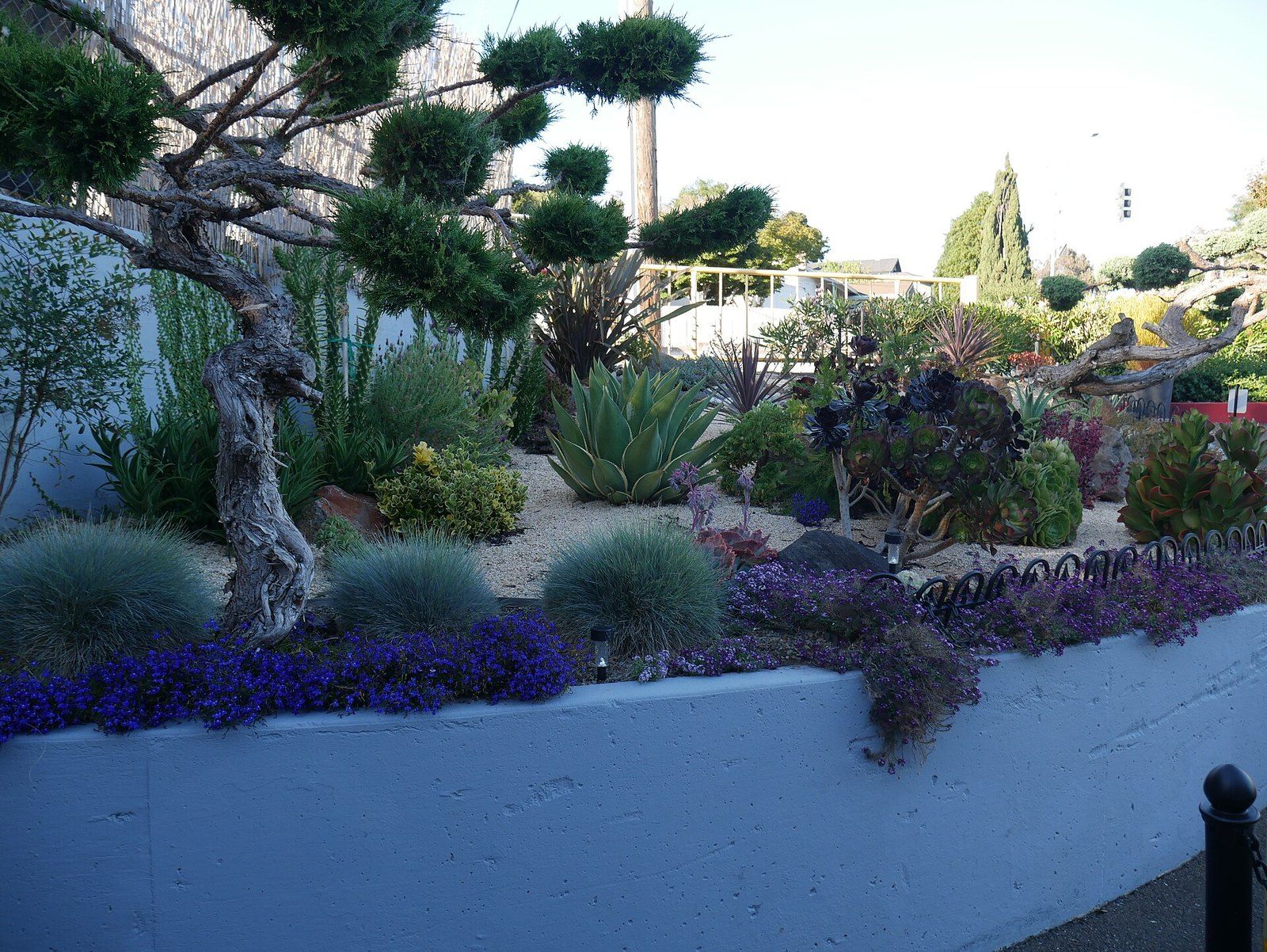 Gardens and Outdoor Living
Replacing the Lawn
The postwar green yard, the water it drinks, and the mulch, natives and meadow grasses taking its place.
-
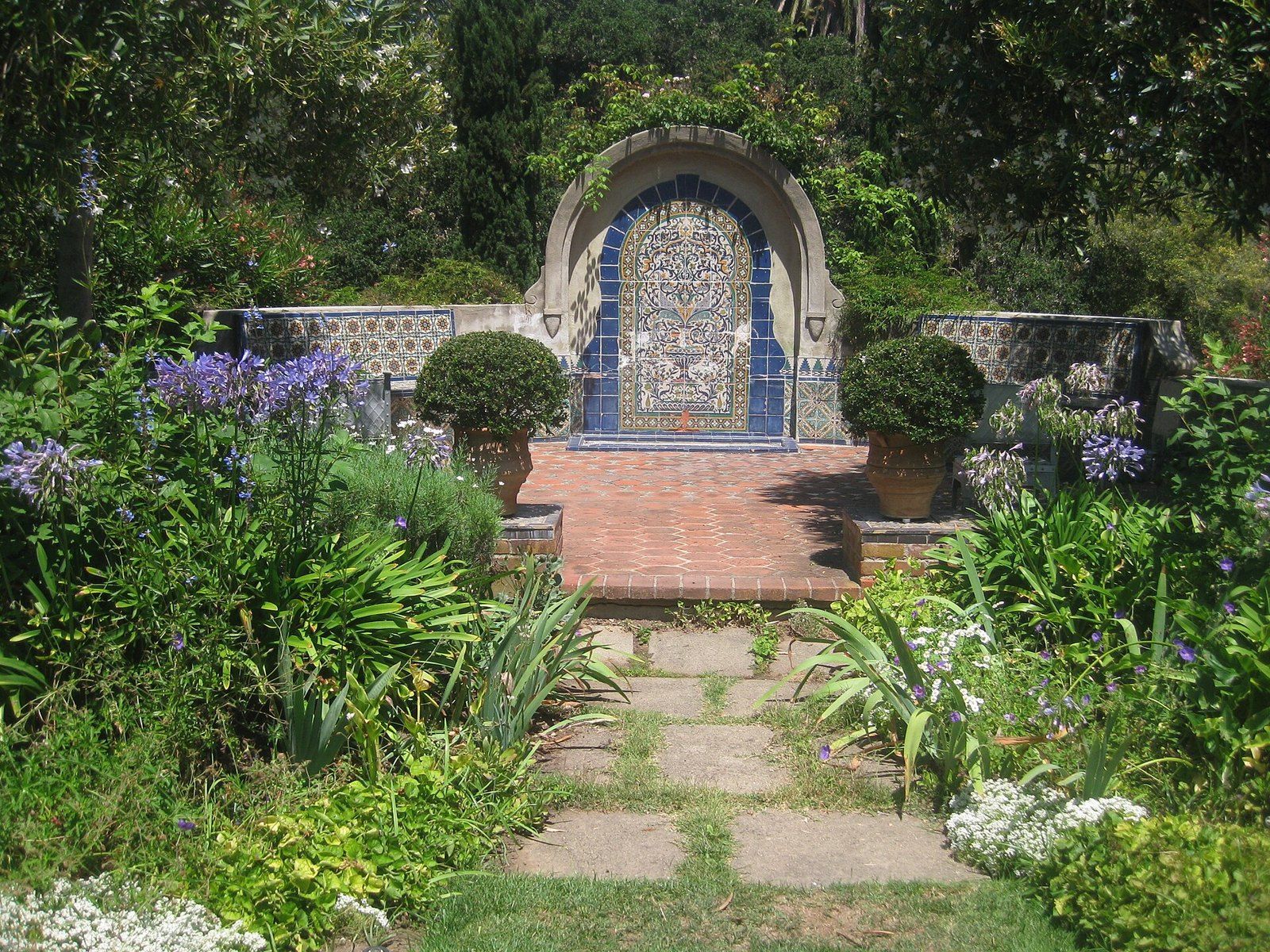 Gardens and Outdoor Living
Mediterranean Gardens
Lavender from the Basin, kangaroo paw from Australia, aloe from the Cape: a garden style built from five sister climates.
-
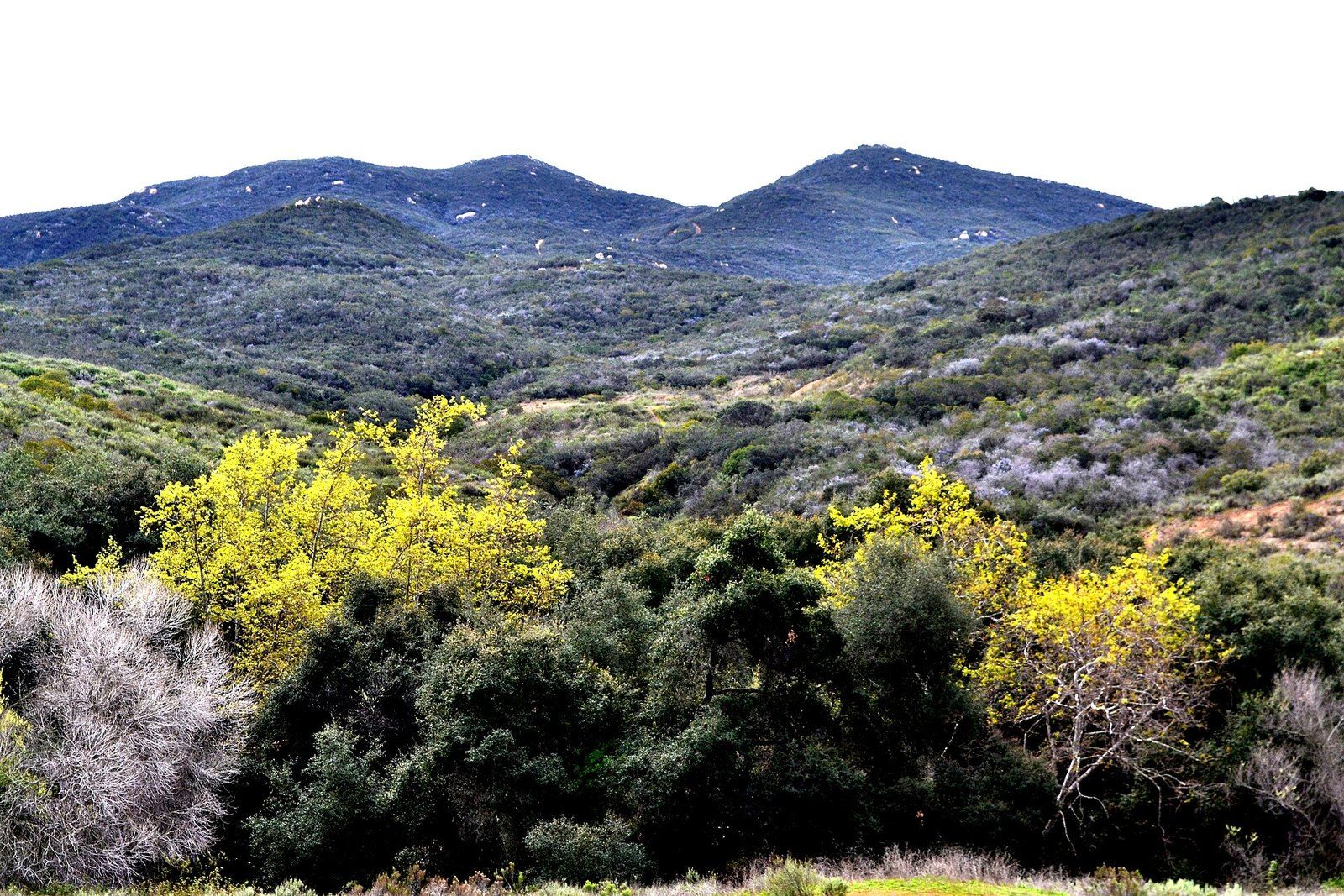 The San Gabriel Foothills
The Mediterranean Climate
Long rainless summers, short wet winters and the handful of west coast regions, from Chile to the Cape, that share them.
-
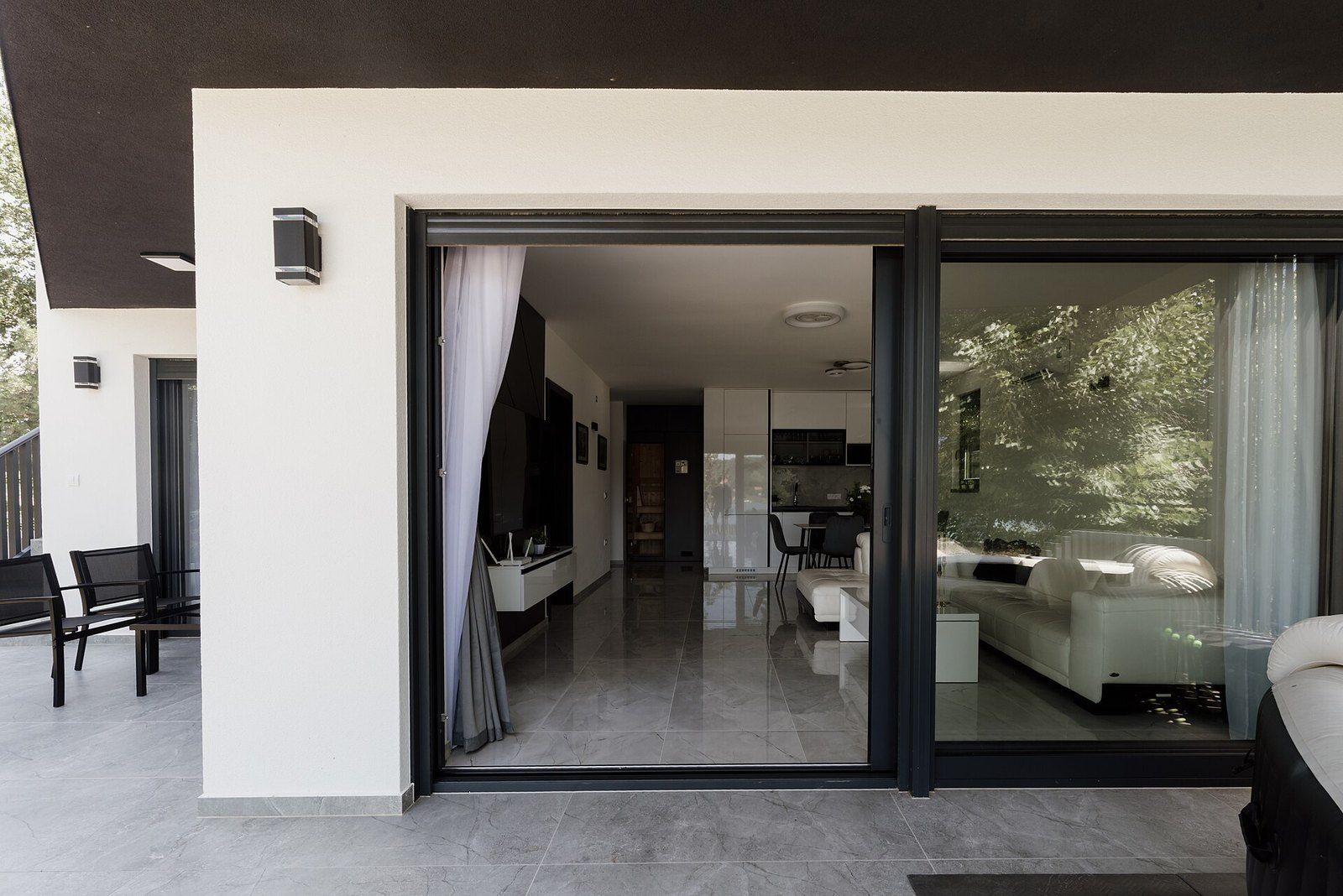 Gardens and Outdoor Living
Indoor Outdoor Living
How a wall of sliding panels and a courtyard plan turned the California yard into a set of rooms.
-
 Gardens and Outdoor Living
The Swimming Pool in Southern California
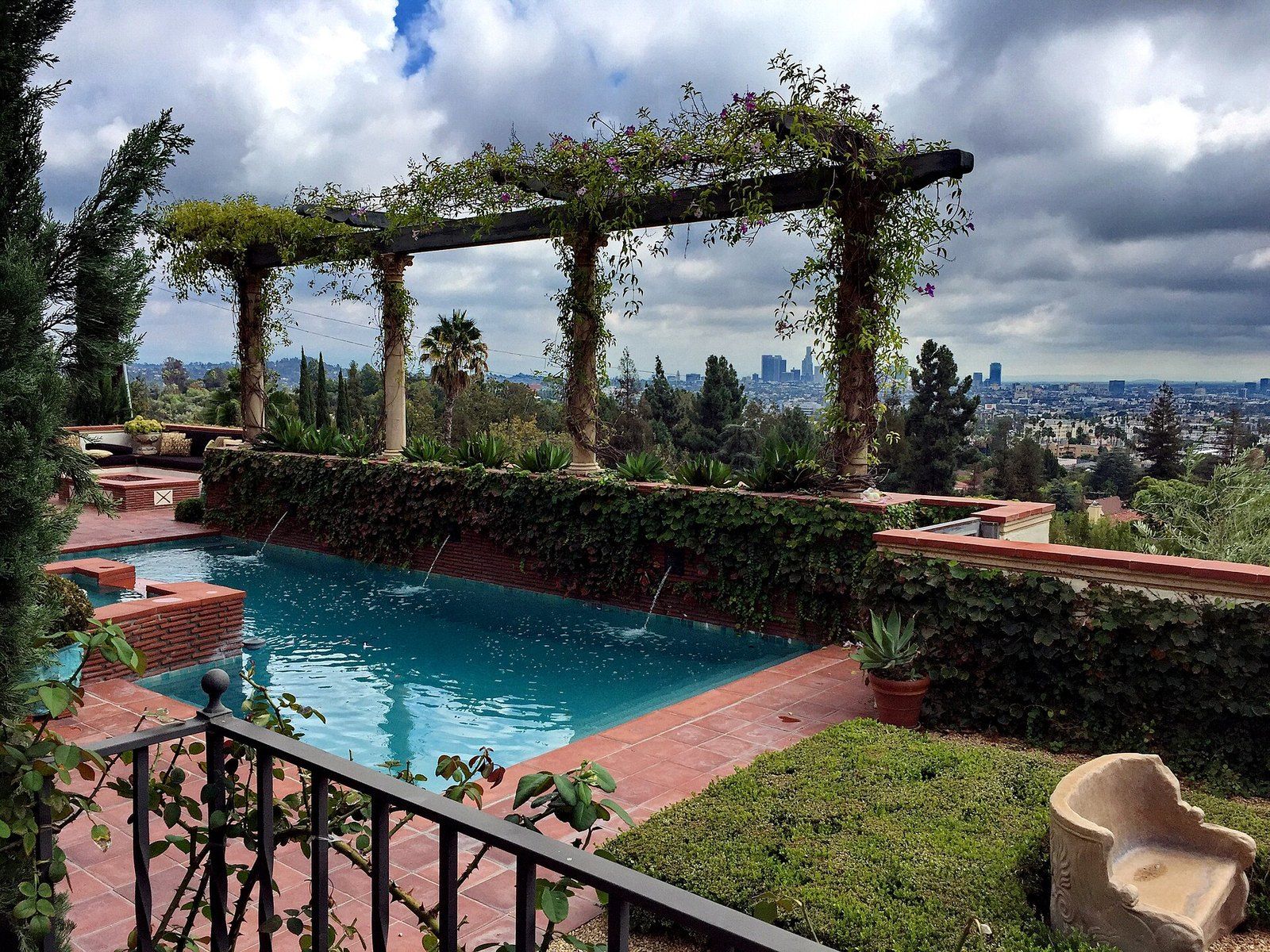
From saltwater bathhouses on the beach to a sprayed concrete basin behind the ranch house, and what it came to stand for.