
The National Register of Historic Places
Mike Kobeissi’s work covers remodeling, buying, selling and building, with guidance on staging, renovation and design, and a federal list of historic places bears on each of those. The figure that frames this subject is a federal tally: the National Park Service counts 93,350 total listings on the National Register of Historic Places, holding 1,824,802 contributing buildings, sites, structures and objects, with 1,111 listings added in 2017 alone.1 A second Park Service page, on the Register’s database and research files, puts the total since 1966 at more than 95,000 properties and more than 1.4 million individual resources.2 The numbers differ because the pages were written at different times and count in slightly different ways, but both describe the same thing: a very large list, built one nomination at a time, of places Americans have decided are worth keeping.
The Register is often imagined as a protective wall around old buildings. It is closer to an honor roll with a set of incentives attached. The Park Service calls it the official list of the nation’s historic properties considered worthy of preservation, and it notes plainly that listing a property does not change who owns it.1 What follows from a listing depends far more on state and local programs than on the federal roll itself.
How a property reaches the list
The Register was authorized by the National Historic Preservation Act of 1966 and is administered by the National Park Service inside the Department of the Interior, as California’s Office of Historic Preservation summarizes the arrangement.3 The same act built a network of State Historic Preservation Offices, and the Library of Congress house history guide explains that surveying, evaluating and nominating significant buildings, sites, structures, districts and objects is one of the key jobs those offices perform.5 The guide places the act inside a longer federal story that includes the Historic American Buildings Survey, begun in the 1930s to put architects to work documenting old buildings during the Depression, and joined later by engineering and landscape surveys in 1969 and 2000.5
A property qualifies by meeting at least one of four criteria. Under Criterion A it is tied to events that shaped the broad patterns of history; under Criterion B it is tied to the life of a significant person. Criterion C covers places that embody the distinctive characteristics of a type, period or method of construction, represent the work of a master, or show high artistic values. Criterion D covers places that have yielded, or may yield, information important to history or prehistory.3 For a house, Criterion C is the one that describes a well preserved example of a style or of a known architect’s hand. Meeting a criterion is not enough on its own; the Park Service adds that properties must possess historic integrity, meaning enough of the original fabric survives to carry the story.1
Nominating a California property
- PacketThe applicant downloads the federal registration form and the National Register Bulletins 15 and 16 A.
- OwnersOwner contact details go in with the cover letter; a private owner who objects can stop the listing.
- Local noticeThe local government gets 60 days to comment before the State Historical Resources Commission considers it.
- CommissionThe State Historical Resources Commission reviews the nomination and its photographs and maps.
The paperwork is substantial. A complete nomination includes the registration form, which gives a physical description of the place, its history and significance and a bibliography, together with photographs and maps.2 In California, applicants also notify owners if they are not the owner themselves, and the state office stresses that a property cannot be listed over the objection of its private owner, or over the objection of a majority of private owners in a district.3 Groups of related buildings can travel together through a Multiple Property Document, which sets out a shared historic context so that each individual nomination can be shorter.3 Such a document does not lower the bar: each property still has to qualify at the same level as a standalone nomination and uses the same forms.3 California also links its own roll to the federal one. Resources listed in the National Register, California Historical Landmarks numbered 770 and above, and Points of Historical Interest designated after December 1997 on the recommendation of the State Historical Resources Commission all appear in the California Register without a separate application.3
Once listed, the file becomes a public research record. The National Archives holds Register files up to the end of 2012, and properties listed since 2013 are being posted to the NPGallery database; each file carries text recognition, so a search can run across thousands of scanned nominations at once.2 For anyone researching a house history, a nomination form for a nearby building is often the best available account of how a local style developed.
Above the Register sits a smaller tier. Just over 2,600 properties are designated National Historic Landmarks, chosen because they tell stories important to the whole nation rather than to one town or state, and every Landmark is listed in the Register automatically if it was not already.1 A Southern California example is the Neutra VDL Studio and Residences in Silver Lake, designed in 1964 by Richard Neutra and named one of 24 new Landmarks by Interior Secretary Sally Jewell; Cal Poly Pomona reported that the house, which the Neutra family gave to the university in 1990, opens for public tours on Saturdays.6
Register and Landmark compared
| National Register | National Historic Landmark | |
|---|---|---|
| Size of the list | More than ninety thousand properties | Just over 2,600 properties |
| Whose story | A local community, a state, or the nation | The history of the entire nation |
| Integrity asked | Historic integrity | A high degree of historic integrity |
| Relationship | The broad official list | Listed in the Register automatically |
What a listing changes
The federal effect of a listing is mostly consideration rather than control. California’s office lists the practical results for a property in the state: tax incentives in some cases for rehabilitating depreciable buildings, a possible deduction for donating a preservation easement, code alternatives under the State Historical Building Code that the local building inspector must grant, the possibility of a Mills Act contract with the local assessor that reduces property tax, consideration in federally funded or licensed projects under Section 106, and automatic entry in the California Register of Historical Resources.3 An owner may also place a plaque or marker at the site. The same page notes that a listing may bring design or environmental review, handled locally through the California Environmental Quality Act or through local zoning and land use planning.3 That last point is where the restraint, when there is any, actually comes from.
The incentive side has its own rules. The state residential rehabilitation credit is open only to a house listed on the California Register or the National Register, or to a contributor in a registered district, and it asks for qualified rehabilitation expenses above $25,000, an owner occupant with modified adjusted gross income of $200,000 or less, and occupancy within two years of the work.4 Qualifying work includes updating electrical wiring, plumbing, foundation repair and energy improvements, while new construction, additions, furniture, landscaping and small appliances are excluded. The state office charges a review fee at both the initial and completed stages, and it warns that a nomination to the California Register generally takes six to twelve months, so listing has to come well before any application.4 The Mills Act is separate again: participating cities and counties run it, and the state office has no oversight of how they do.4
California residential credit thresholds
- minimum qualified rehabilitation expense
- $25,000
- income ceiling for the owner occupant
- $200,000
- time allowed to occupy the house after the work
- 2 years
For an owner weighing a rehabilitation, these programs reward repair of original fabric, which is why the Secretary of the Interior’s Standards matter so much in practice: they are the yardstick reviewers use when tax credits are involved. Questions about whether a particular house qualifies, and what a listing would mean for it, belong with the owner’s own tax and preservation advisors rather than with a general reference.
Several questions about the Register remain open. The first is the count itself: two Park Service pages give different totals, and neither is a live figure, so the size of the list at any moment is an estimate.12 The second is age. When the VDL House became a Landmark, the dean who oversees it remarked that modern architecture had not long ago been dismissed as too young to be historical, a remark that leaves open where the line between recent and historic should fall.6 The third is the gap between recognition and resources. California’s office can confirm whether a house appears on a register but not whether it is eligible to be listed or to receive a credit, and credit fees are refundable only when allocation funds run out, a reminder that the incentive pool is finite.4 And the deepest question is the one the Register was built to leave to others: a listing records that a place matters, while the decisions that actually keep it standing, from repairing old wood windows to choosing a roof, are still made house by house.
References
- National Park Service. The National Register of Historic Places and the National Historic Landmarks Program, 2024 05 21.
- National Park Service. National Register Database and Research, 2026 06 04.
- California Office of Historic Preservation. National Register of Historic Places, 2026 09 01.
- California Office of Historic Preservation. State Historic Rehabilitation Tax Credit (SHRTC) Residential Program, 2026 01 01.
- Library of Congress. House History: Surveys and Historic Designations, 2021 03 29.
- Cal Poly Pomona. Cal Poly Pomona's Neutra House Designated National Historic Landmark, 2017 01 13.
External links
See also
-
 Old Houses and Preservation
The Secretary of the Interior's Standards
A short federal text that shapes how old buildings across the country are repaired, altered and added to.
-
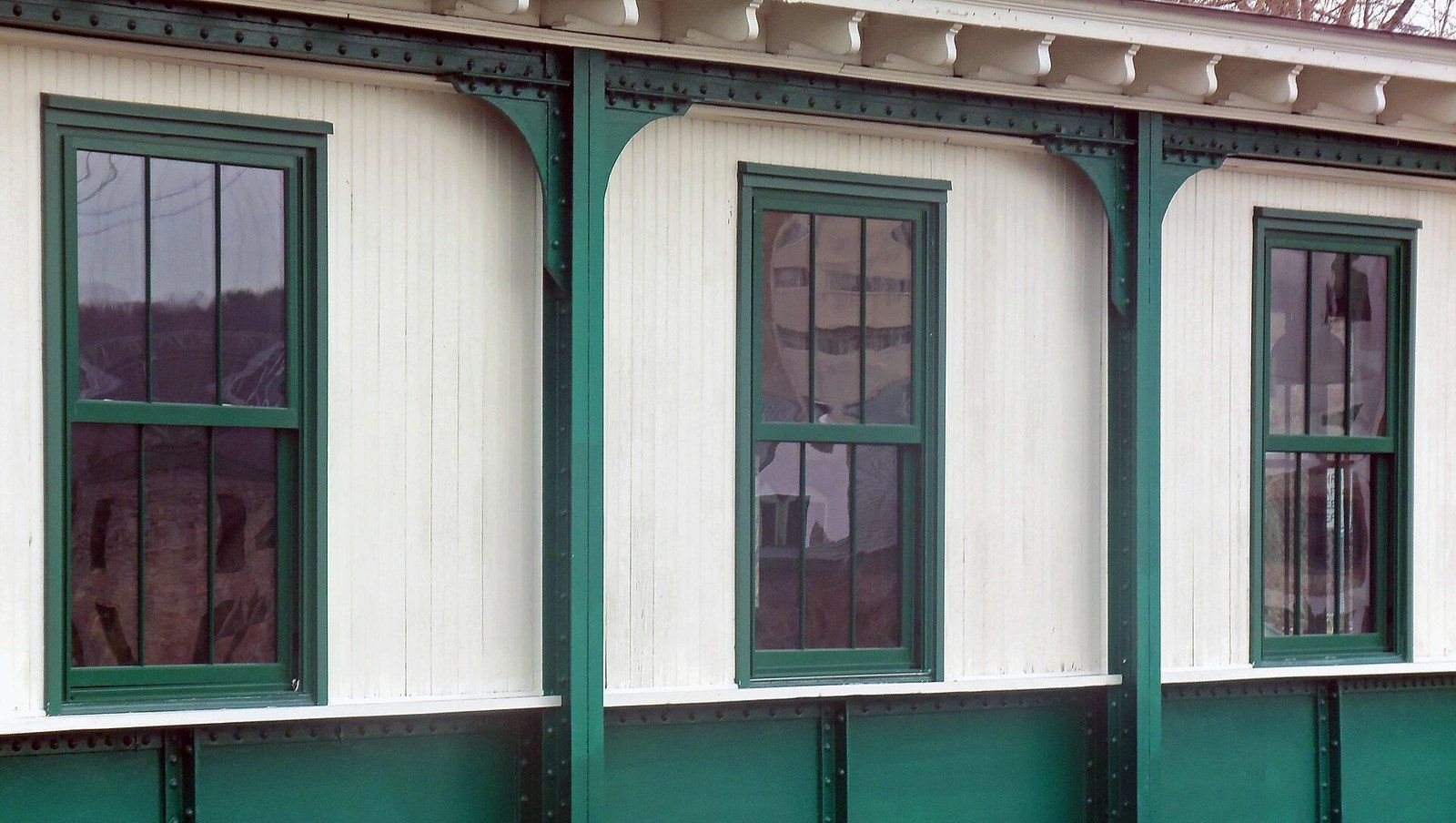 Old Houses and Preservation
Historic Wood Windows
Rope, pulley and dense lumber: the case for mending original sash rather than tearing it out.
-
 Old Houses and Preservation
Clay Tile Roofs
Kiln baked earth laid in overlapping courses, one of the longest lived coverings a house can carry.
-
 Old Houses and Preservation
Terrazzo
Chips of stone set in a binder and ground smooth, a craft that travelled from Venetian terraces to postwar lobbies.
-
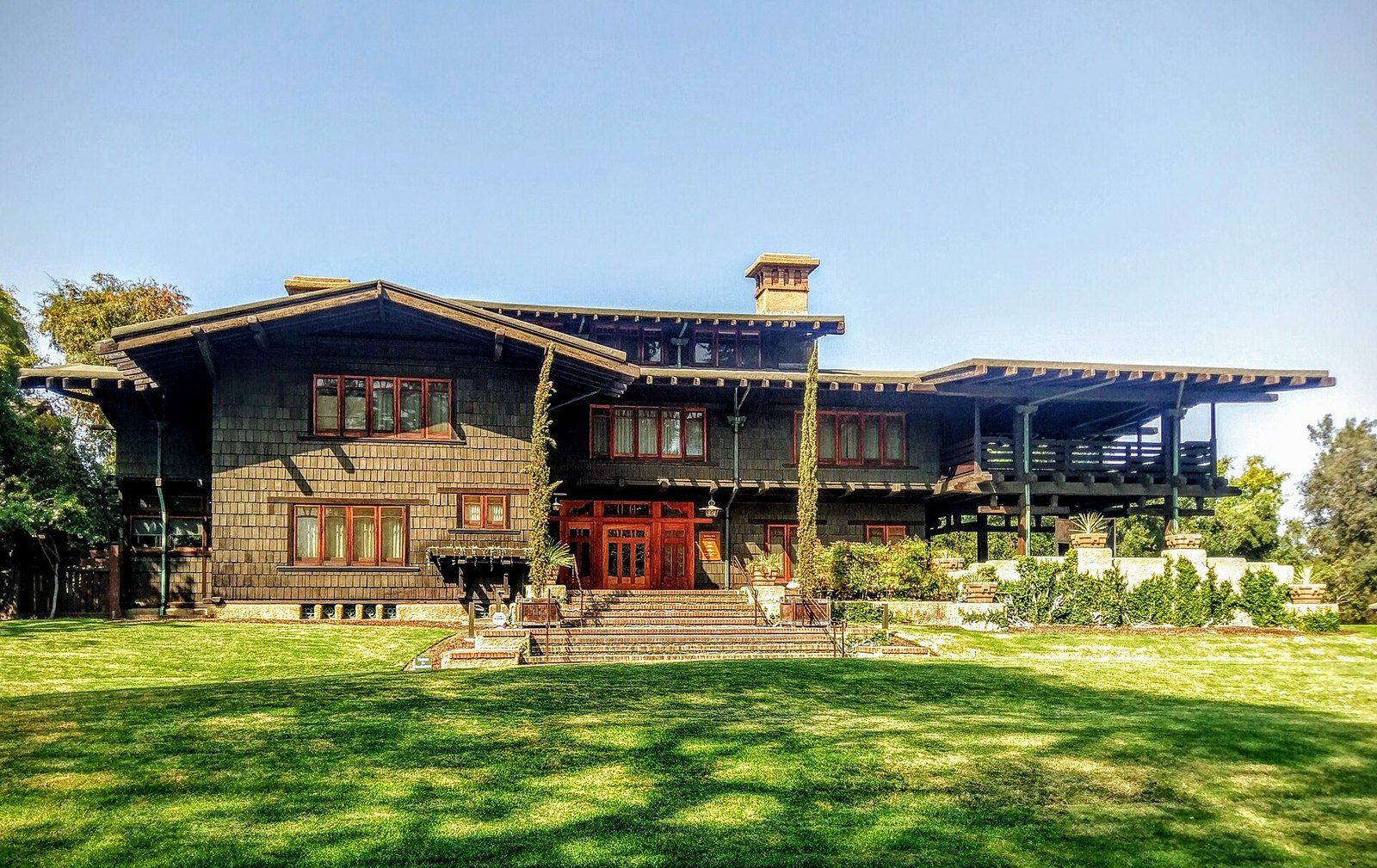 Architects of the Foothills
Greene and Greene
Two brothers, a boomtown and a house of teak, fir and cedar that its admirers call a symphony in wood.