
Mount Wilson Observatory
Contents
Mount Wilson Observatory stands on a peak of the San Gabriel range high above Pasadena and the foothill towns, among them La Cañada Flintridge, whose market Mike Kobeissi has worked for three decades. Its best known object is a mirror. Under a cavernous, rivet studded dome, the 100 inch Hooker telescope gathered its first light on November 1, 1917, and, as the Los Angeles Times recounted at its centennial, it then remained the largest telescope in the world for more than three decades.1 The mirror was cast in France, the instrument was hauled up a winding mountain road at about two miles an hour, and the whole telescope weighs nearly 200,000 pounds.12
A summit chosen for its air
George Ellery Hale, who had led the University of Chicago’s Yerkes Observatory among Wisconsin farmland, wanted a large telescope high on a nearly 6,000 foot mountain, above the clouds and much of the air that blurs starlight, unlike the low lying university observatories of his day.1 Caltech’s profile of Hale says he climbed Mount Wilson in 1903, and Carnegie Science records that in December 1904, while riding a mule up the mountain, he took a telephone call at a way station called Martin’s Camp and learned that the Carnegie institution would fund his observatory.67 The first instrument on the summit was the Snow Solar Telescope, on loan from Yerkes Observatory, and it never went back.3
Building the 60 inch reflector
- 1894William Hale buys a 60 inch disk of plate glass for his son.
- 1896The disk arrives from the St. Gobain glass works in France.
- 1904The Mount Wilson Solar Observatory is founded with Carnegie funding.
- Autumn 1905Opticians begin figuring and polishing the mirror in a sealed room.
- April 1907A contaminated compound scratches the surface; it is reground in four months.
- July 1908The mounting reaches the summit by truck and mule team.
- December 13, 1908The telescope is used for the first time.
The 60 inch reflector
The observatory’s first great night telescope began as a gift. The observatory’s own history explains that Hale’s father bought a 60 inch glass disk in 1894; grinding began after the observatory’s founding, and after a contaminated polishing compound scratched the nearly finished surface in April 1907, the opticians reground it in four months.4 The work was done in a sealed room kept at a constant temperature, where anyone entering wore a surgical gown and cap, since even the warmth of a hand could distort the glass.4 The mounting, built by the Union Iron Works in San Francisco, narrowly escaped damage in the 1906 earthquake, and it floated most of its 22 tons of moving parts on a trough of mercury.4 All 150 tons of material for the building and dome went up the mountain by mule team, and the telescope was first used on December 13, 1908.4 It was the largest operating telescope in the world until the 100 inch was finished.5
The 100 inch Hooker telescope
The larger mirror was a near failure. The businessman John D. Hooker offered $45,000 for the glass, the French firm Saint Gobain poured it in three batches that left bubbles, and replacement castings broke, so Hale and his staff finally decided to grind the original disk.2 On the first night the image of Jupiter came apart into six or seven overlapping images, apparently because sunlight had warmed the mirror through the open dome. An EBSCO research summary records that Hale returned at about 2:30 in the morning and found a clear, sharp image of the star Vega.2 Its steel cradle had been built in Quincy, Massachusetts, and shipped through the Panama Canal, and the dome was designed by the Chicago architect Daniel Hudson Burnham.2
What the mirrors found
Discoveries came quickly. In 1908 Hale used an instrument of his own design to show that sunspots are regions of intense magnetic fields, the first detection of a magnetic field beyond Earth.7 Harlow Shapley used the 60 inch to measure distances to globular clusters and showed that the sun does not lie at the center of the Milky Way.3 With the 100 inch, Edwin Hubble found a Cepheid variable star in the Andromeda nebula in 1924 and proved the nebula a separate galaxy far beyond our own, and with Milton Humason he went on to show that the galaxies are receding from one another.2 The same telescope carried Albert Michelson’s interferometer method, with which Francis Pease and John August Anderson measured the red giant Betelgeuse in 1920 at about 350 times the diameter of the sun.2 When Einstein visited in the early 1930s, Carnegie Science notes, he announced that he had changed his mind about Hubble’s claim that the universe was expanding.8
The two great reflectors
| 60 inch telescope | 100 inch Hooker telescope | |
|---|---|---|
| First light | 1908 | 1917 |
| Builder | George Ellery Hale, with Carnegie support | George Ellery Hale, with Carnegie support |
| Signature result | Harlow Shapley maps globular clusters and finds the Milky Way's center | Edwin Hubble shows the universe extends beyond the Milky Way and is expanding |
Carnegie, Caltech and Palomar
Hale built institutions as well as telescopes. As a trustee from 1906 he worked to turn Throop Polytechnic Institute into Caltech, which took its present name in 1920.8 He went on to plan the 200 inch Hale Telescope on Palomar Mountain, and from 1948 to 1980 Carnegie and Caltech ran Mount Wilson and Palomar jointly, with one director and one staff.8
A second life for the public
As Los Angeles grew, its lights dimmed the telescopes’ view, and by the 1980s the money for research on the mountain dried up. The nonprofit Mount Wilson Institute later took over operations from the Carnegie Institution, which still owns the observatory, and volunteers now run the telescopes, with telescope time sold to private groups and educational tours offered to visitors.1 The old 60 inch, in use for 85 years, is now the largest telescope in the world made available only for public viewing.4 Some research has never stopped: the HK Project begun by Olin Wilson, which tracks starspot cycles through the light of ionized calcium, has logged more than 500,000 measurements of more than 3,000 stars.3
From the summit to the weather
Hale chose the summit to rise above the clouds and much of the air, and the city lights that later dimmed its view came from the valleys below.1 The weather of those valleys, dry through long summers and wet in short winters, is taken up next under the Mediterranean climate, and the range that carries the summit is described under the San Gabriel Mountains.
References
- Los Angeles Times. At Mt. Wilson, scientists celebrate 100th birthday of the telescope that revealed the universe, 2017 11 01.
- EBSCO Research Starters. Hooker Telescope Is Installed on Mount Wilson, 2021.
- Astronomy Magazine. A timeline of Mount Wilson Observatory, 2003 07 01.
- Mount Wilson Observatory. Building the 60 inch Telescope.
- Mount Wilson Observatory. Discovering Mount Wilson Chapter 5: First Light, 2021 07 13.
- Caltech. Celebrating Caltech's Founder and Builder of Large Telescopes, 2018 06 29.
- Carnegie Science. A founder's passion set the stage for 120 years of breakthroughs.
- Carnegie Science. Carnegie Science and Caltech: A History of Collaboration.
External links
See also
-
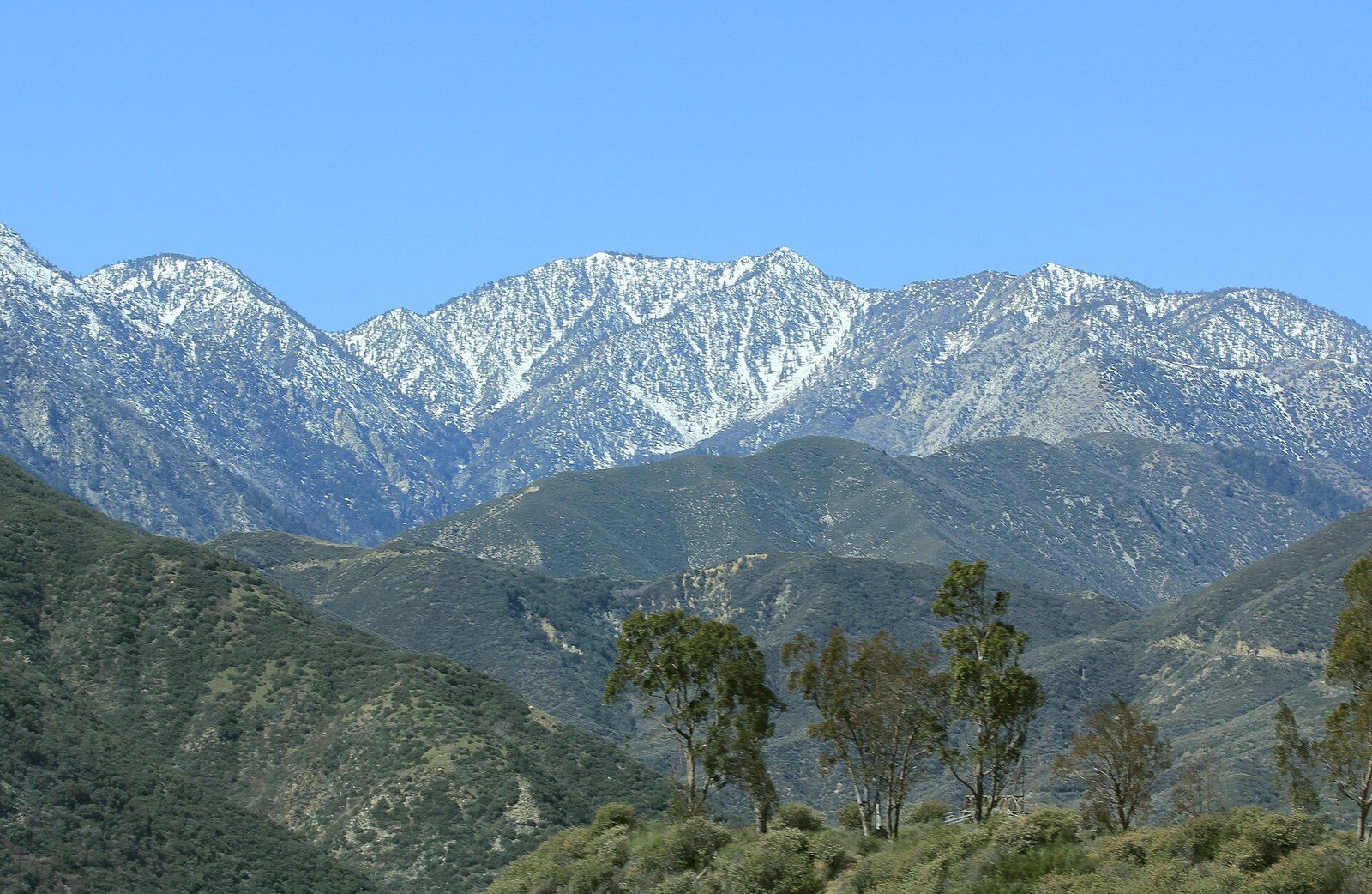 The San Gabriel Foothills
The San Gabriel Mountains
The range above Los Angeles, read through its rock, its faults, its summits and the people who crossed it first.
-
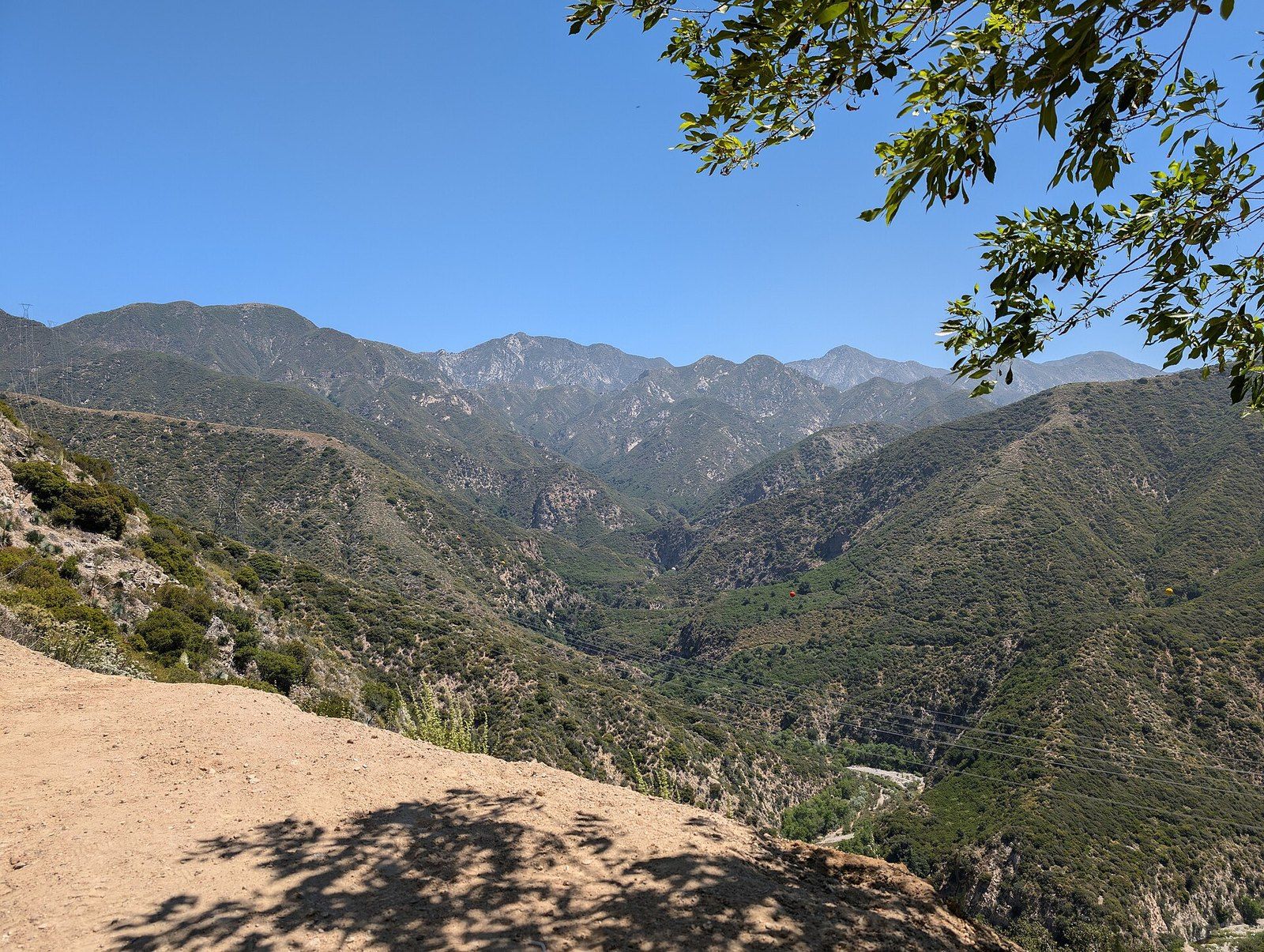 The San Gabriel Foothills
Angeles National Forest
Public land above the foothill towns, from an 1892 watershed reserve to trail camps, a mountain highway and a national monument.
-
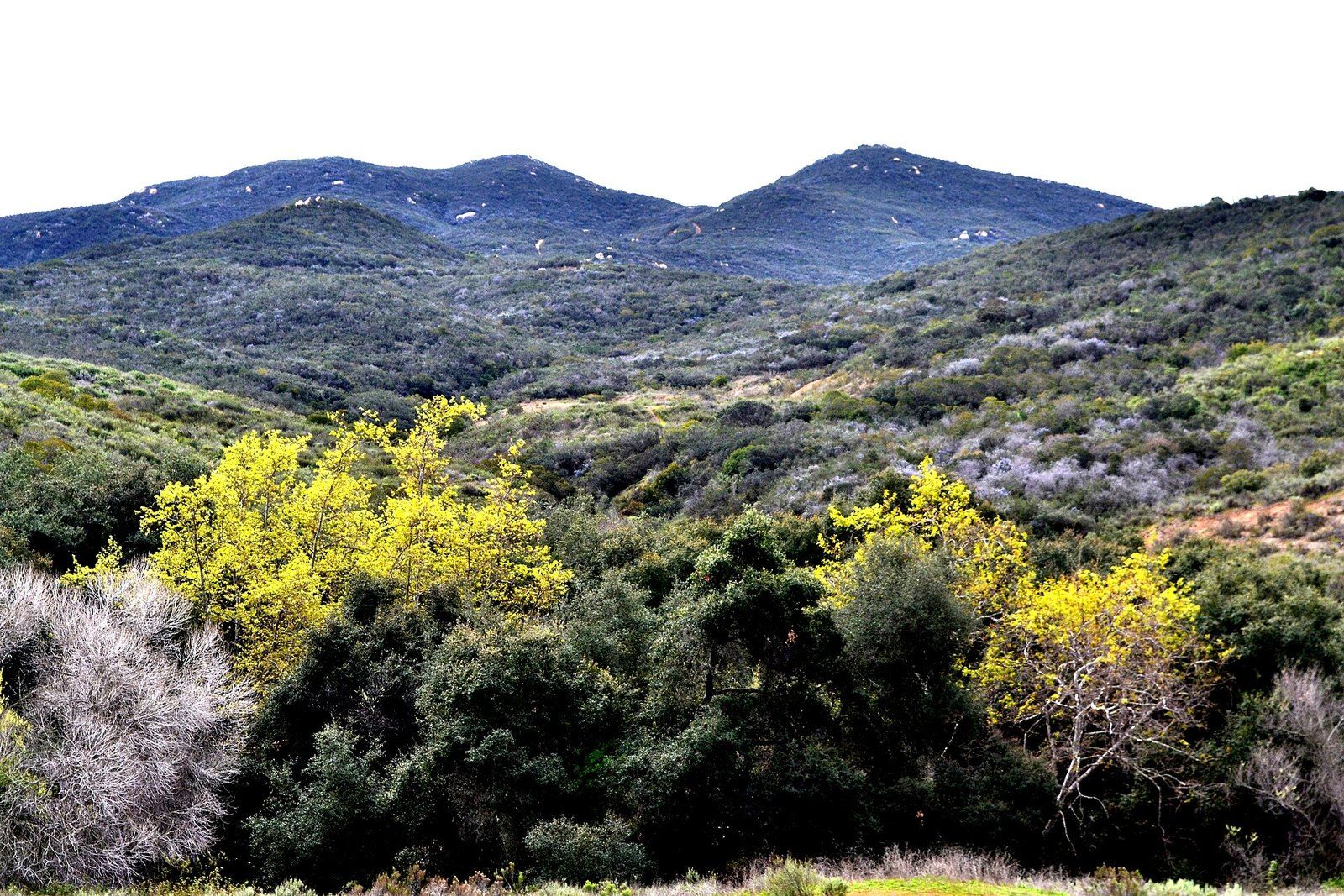 The San Gabriel Foothills
The Mediterranean Climate
Long rainless summers, short wet winters and the handful of west coast regions, from Chile to the Cape, that share them.
-
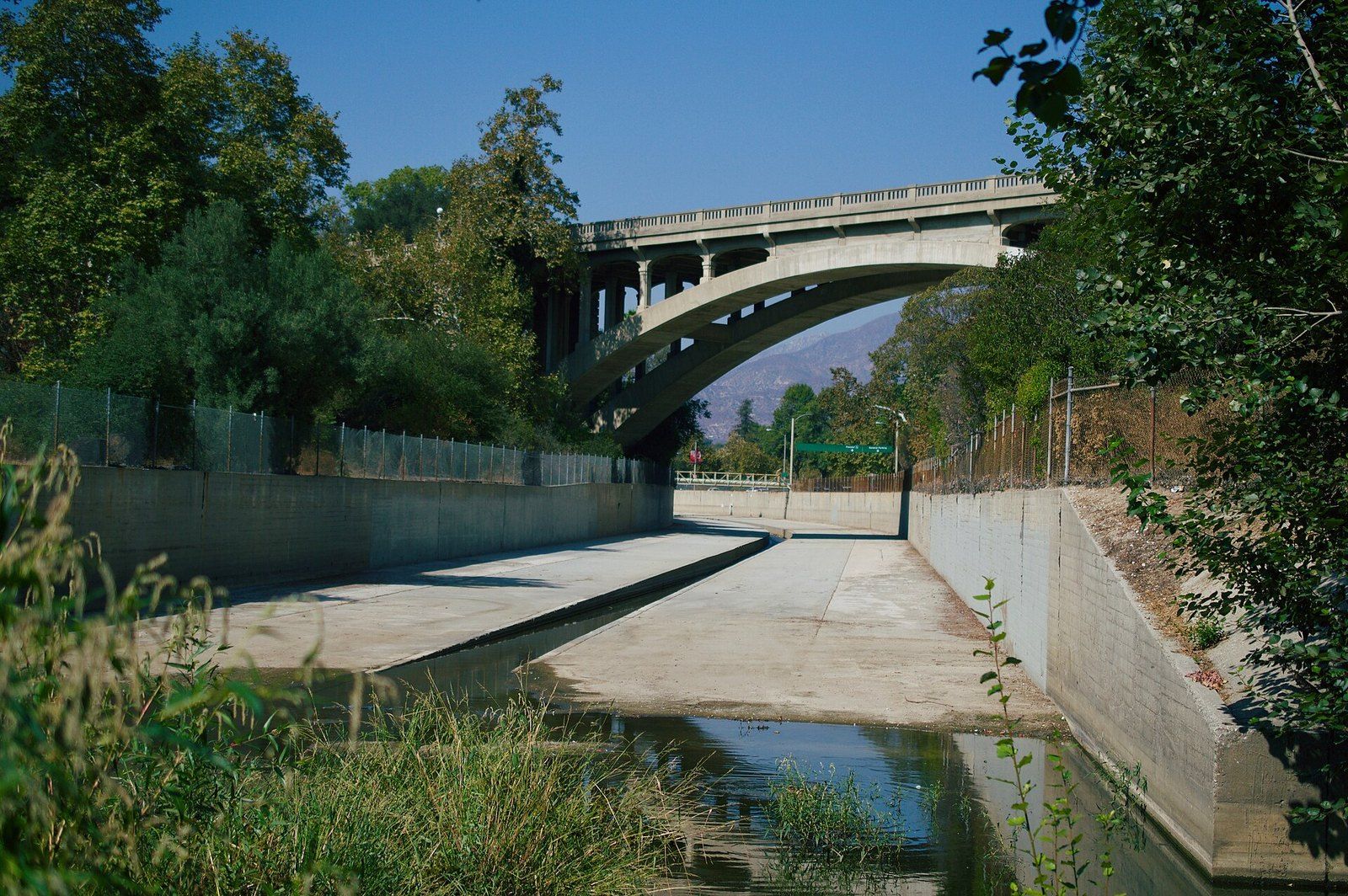 La Cañada Flintridge History
The Arroyo Seco
A seasonal stream that fed trail camps and painters, was poured into concrete in the Depression, and is now argued over again.