
Shopping Local and the Local Multiplier
Contents
Mike Kobeissi started Kobeissi Properties, the La Cañada Flintridge firm his family has worked in, and the economics of businesses owned in the place they serve has its own measure, the local multiplier.
A multiplier, in the language of economic impact modeling, is the extra activity a community gains for each dollar of direct spending. An explainer from the University of Minnesota Duluth notes that a multiplier of 1.25 means every dollar spent produces another 25 cents of local activity, as businesses buy from one another and households spend their wages.1 The local multiplier applies the idea to ownership. The American Independent Business Alliance defines it as what happens when money goes to a locally owned independent business instead of a chain or an online giant: the dollars recirculate in the local economy two to four times more than money spent at a company based elsewhere.2
Its measurement began with a single comparison. The first study by the research firm Civic Economics, made for Austin, Texas, in 2002, set an independent bookseller and an independent music seller against a proposed chain bookstore, and the firm’s later studies followed the same method.2
Three kinds of impact
Economists who measure the multiplier sort spending into three rounds. A direct impact is the business’s own spending on inventory, utilities and wages. An indirect impact is what that business then spends at other area firms. An induced impact is what owners, employees and others do with the income they received, spending it in turn at local shops and services.2 The Duluth explainer adds the reason independent firms tend to score higher: they are more likely to buy goods and services from local suppliers, hire locally and bank with local institutions than firms headquartered elsewhere.1
The Austin study
The Institute for Local Self Reliance summarized the Austin findings in 2003. For every $100 in sales, the two local stores returned $30 directly to the Austin economy, which grew to $45 once indirect and induced effects were counted. A typical outlet of the chain returned $9 directly and $13 in total.4
The Austin bookstore comparison, per $100 of sales
- total local economic activity from the two independent stores
- $45
- total local economic activity from a typical chain bookstore
- $13
- returned directly by the independents
- $30
- returned directly by the chain
- $9
The study gave three reasons for the gap. The local stores carried larger payrolls because work such as buying, accounting and advertising was done in the building rather than at a distant headquarters. They purchased more goods and services locally, including recordings by local bands. And a much larger share of their profit stayed in town.4
Later studies and their averages
Civic Economics repeated the method in other cities. A 2012 analysis of fifteen independent retailers and seven independent restaurants in Salt Lake City, reported by the same institute, found that local retailers returned an average of 52 percent of revenue to the local economy against 14 percent for chain retailers, and local restaurants 79 percent against 30 percent for chains.5
Share of revenue recirculated locally, Salt Lake City, 2012
| Independent | Chain | |
|---|---|---|
| Retailers | 52 percent | 14 percent |
| Restaurants | 79 percent | 30 percent |
The alliance reports an average across the Civic Economics retail studies of 52.9 percent recirculated by independents and less than 13.6 percent by chains.2 The American Booksellers Association keeps a list of the studies since 2002, from Andersonville in Chicago to San Francisco and a national summary of ten local studies, along with a Grand Rapids estimate that a 10 percent shift of market share from chains to independents would add about 1,600 jobs.6 Booksellers, the association notes, were often the driving force behind these efforts.6
What the multiplier does not mean
The alliance itself warns against a common misreading. When a study says 53 cents of each dollar spent at an independent is recirculated, that money does not sit still in the town; the figure describes local spending generated over several cycles.2 Results also vary by time, place and type of business. Restaurants and service providers produce larger multipliers because they are labor intensive and more of their revenue goes to local payroll, while most retailers produce more modest ones, which the alliance says does not make restaurants better for a local economy than shops.2
Small Business Saturday
The most visible national campaign built on these numbers is Small Business Saturday, held the day after Black Friday. KJZZ notes that American Express launched it in 2010 and that the U.S. Small Business Administration has cosponsored it since 2011.3 The station cites studies showing about $14 of every $100 recirculated locally when spent at a chain, against $40 to $50 at independent merchants and restaurants, and quotes a Local First Arizona officer who says Phoenix went from two chain restaurants for every local one to the reverse over twenty years.3
Where $1,000 of spending goes after six rounds
Main Street programs
The multiplier gave a vocabulary to a movement already under way. Main Street America’s own history begins in the mid 1970s, when malls and big box stores had left many downtowns with empty storefronts. In 1977 the National Trust for Historic Preservation launched a demonstration project in three Midwestern towns, Galesburg in Illinois, Hot Springs in South Dakota and Madison in Indiana, and after three years of trial and error each downtown showed a marked turnaround. The Trust codified what the managers had learned into the Main Street Four Point Approach, then tested a model in which state coordinators in Colorado, Georgia, Massachusetts, North Carolina, Pennsylvania and Texas adapted it to local conditions.7 The Trust founded the National Main Street Center in 1980, the program became an independent subsidiary in 2013, and it counts more than 2,000 communities that have used its framework.7
Recent work asks which kinds of storefront businesses spend most locally. A Next City column on Main Street America’s 2025 small business survey reports that 69 percent of maker businesses, the small producers of food, crafts and goods, use local vendors, compared with 53 percent of other small businesses, and that 41 percent supply other local firms, against 13 percent. Nearly half of the makers also see themselves as destination businesses that draw visitors downtown.8
Where to see it in person
The foothills hold one of the older experiments. The Montrose business district began with a land auction on Washington’s Birthday in 1913, and by the early 1920s a row of shops on Honolulu Avenue held a hardware store, a pharmacy, a clothier, a bank and a cafe, according to a 2005 history in the Los Angeles Times.9 In the 1950s, when the street risked becoming a truck route, a group of merchants traveled at their own expense to Grand Junction, Colorado, to study a new idea called a shopping park, in which cars could still drive down a charming main street, with limited parking in front of the stores and the main public lots behind them. The Montrose Shopping Park was completed in 1967, paid for in part through assessments on the property owners themselves, and has since grown to about eleven blocks and 200 businesses, one of the five oldest business improvement districts in the country.9 A walk down that street on a weekend shows the arrangement the studies describe. The same civic habit runs through the region’s service clubs and its town festivals. A decision about any particular property is a separate matter, one to settle with trusted professional counsel.
References
- University of Minnesota Duluth. The Economic Impact of Shopping Local, 2021 11 18.
- American Independent Business Alliance. The Local Multiplier Effect.
- KJZZ. What's the economic impact of Small Business Saturday and shopping locally?, 2024 11 28.
- Institute for Local Self Reliance. Local Stores Create Triple the Economic Activity of Chains, 2003 02 01.
- Institute for Local Self Reliance. Independent Businesses Deliver Bigger Economic Benefit, Study Finds, 2012 08 16.
- American Booksellers Association. Local First and Economic Impact Studies.
- Main Street America. Our History.
- Next City. New Data Proves Small Maker Businesses Can Revitalize Downtowns, 2026 04 10.
- Los Angeles Times. History parks itself in Montrose Shopping Park, 2005 07 19.
External links
See also
-
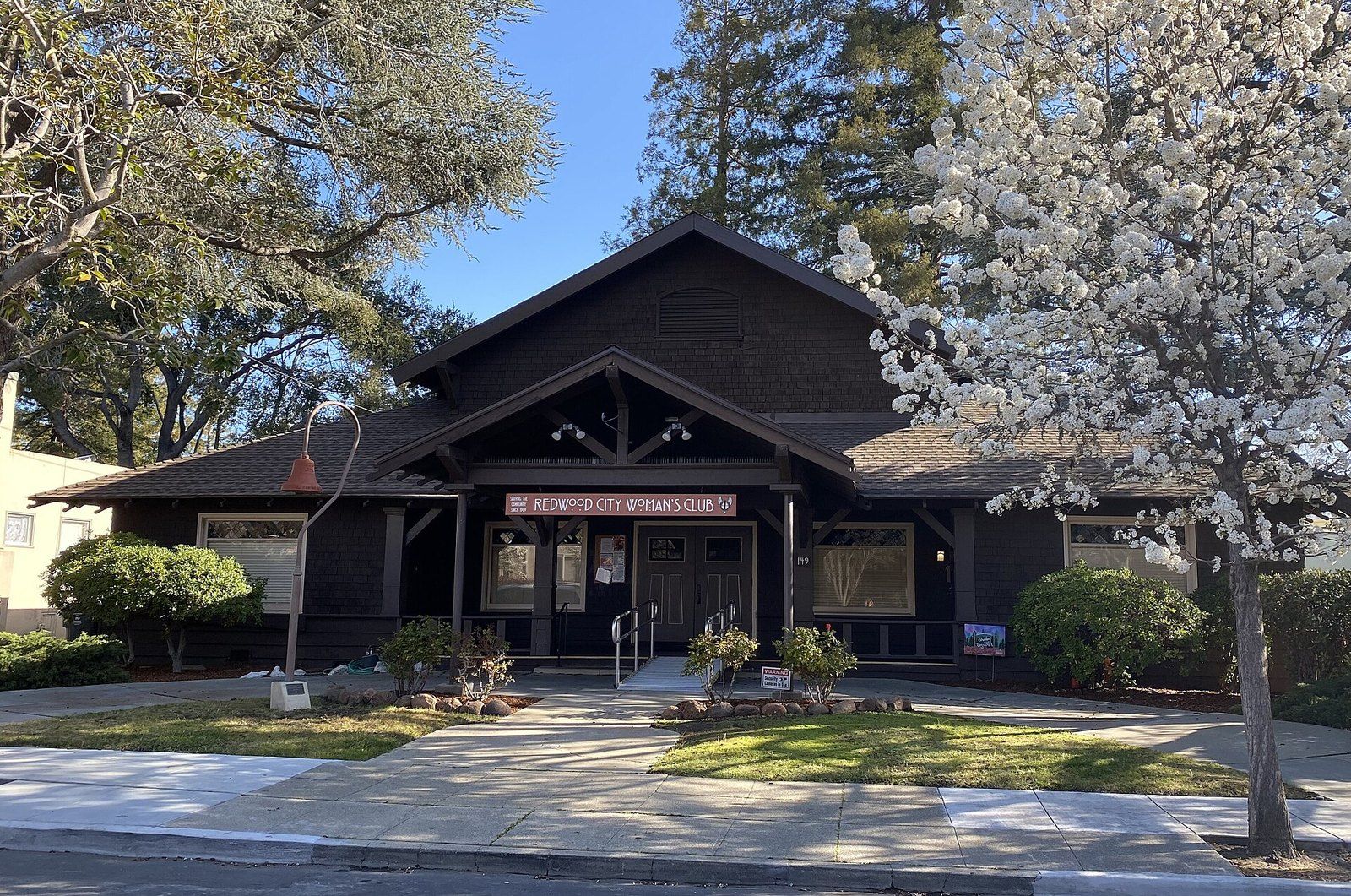 Community and Civic Life
Service Clubs and Civic Life
The weekly lunch club, from Paul Harris in Chicago to a Kiwanis installation in the foothills, and the numbers behind its long slide.
-
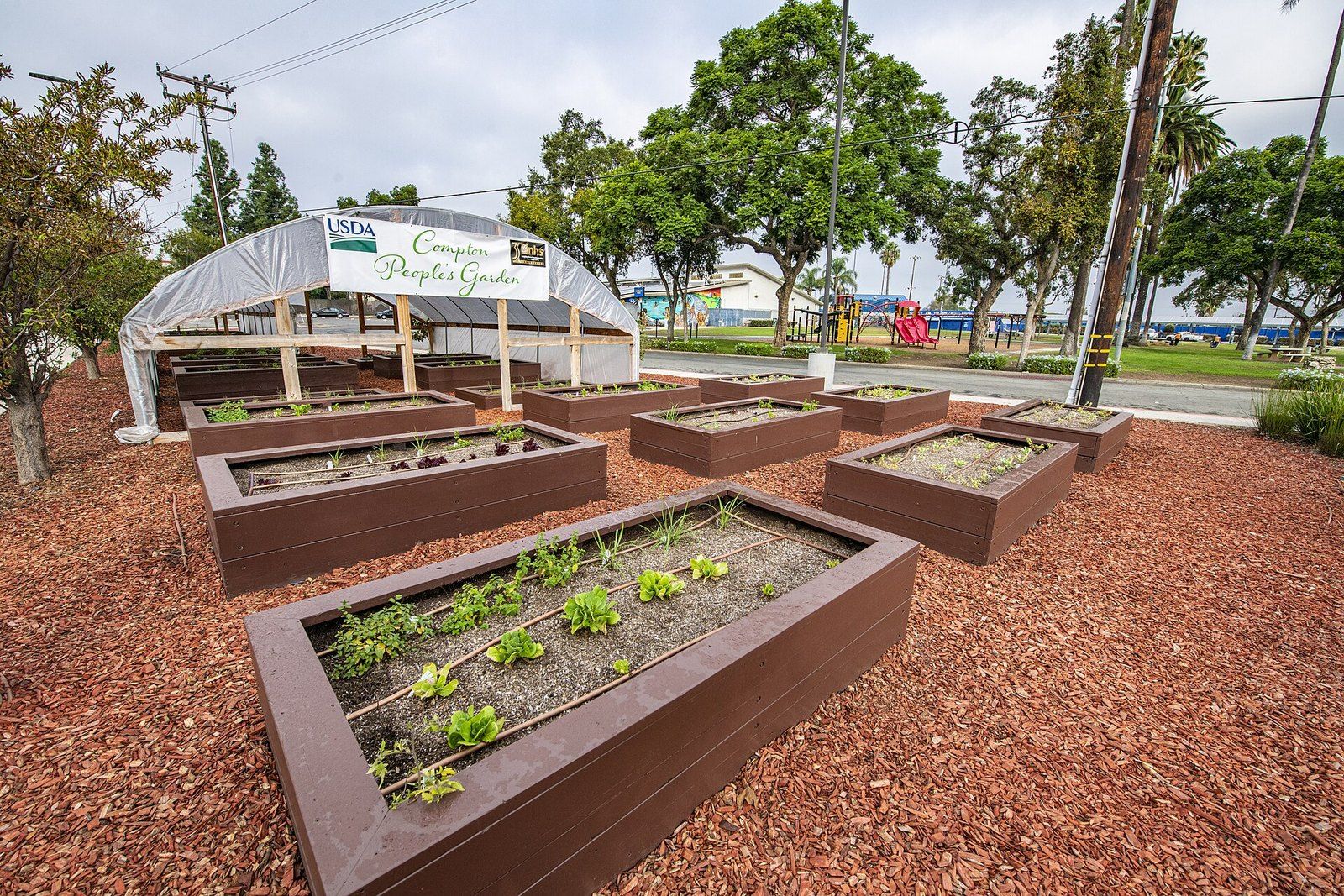 Community and Civic Life
Community Gardens
Shared ground worked by neighbors, from the patriotic plots of two world wars to the allotments and urban farms of today.
-
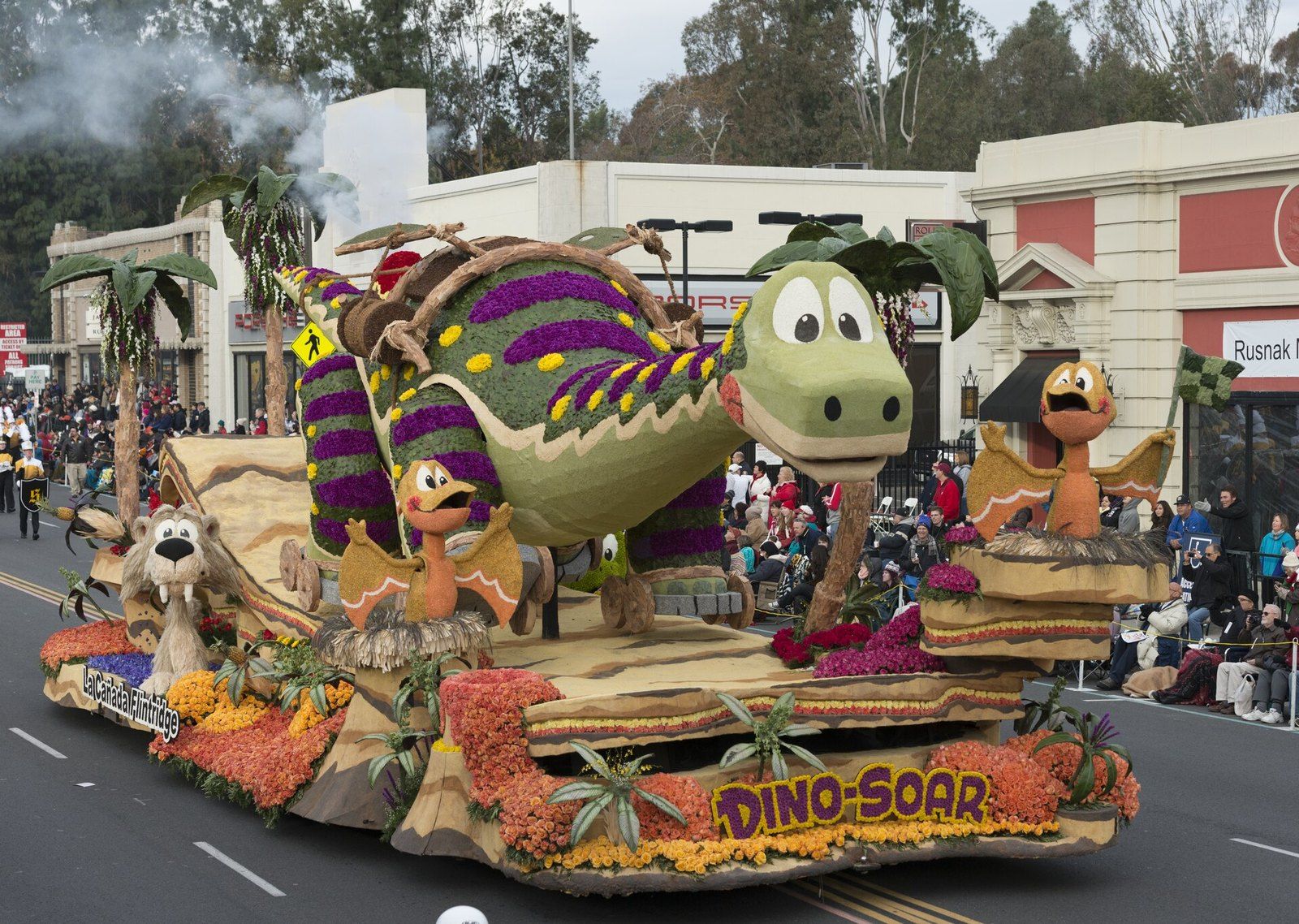 Community and Civic Life
Parades and Town Festivals
Processions, flower battles and Memorial Day marches, and how a hunt club's winter outing became a New Year tradition.
-
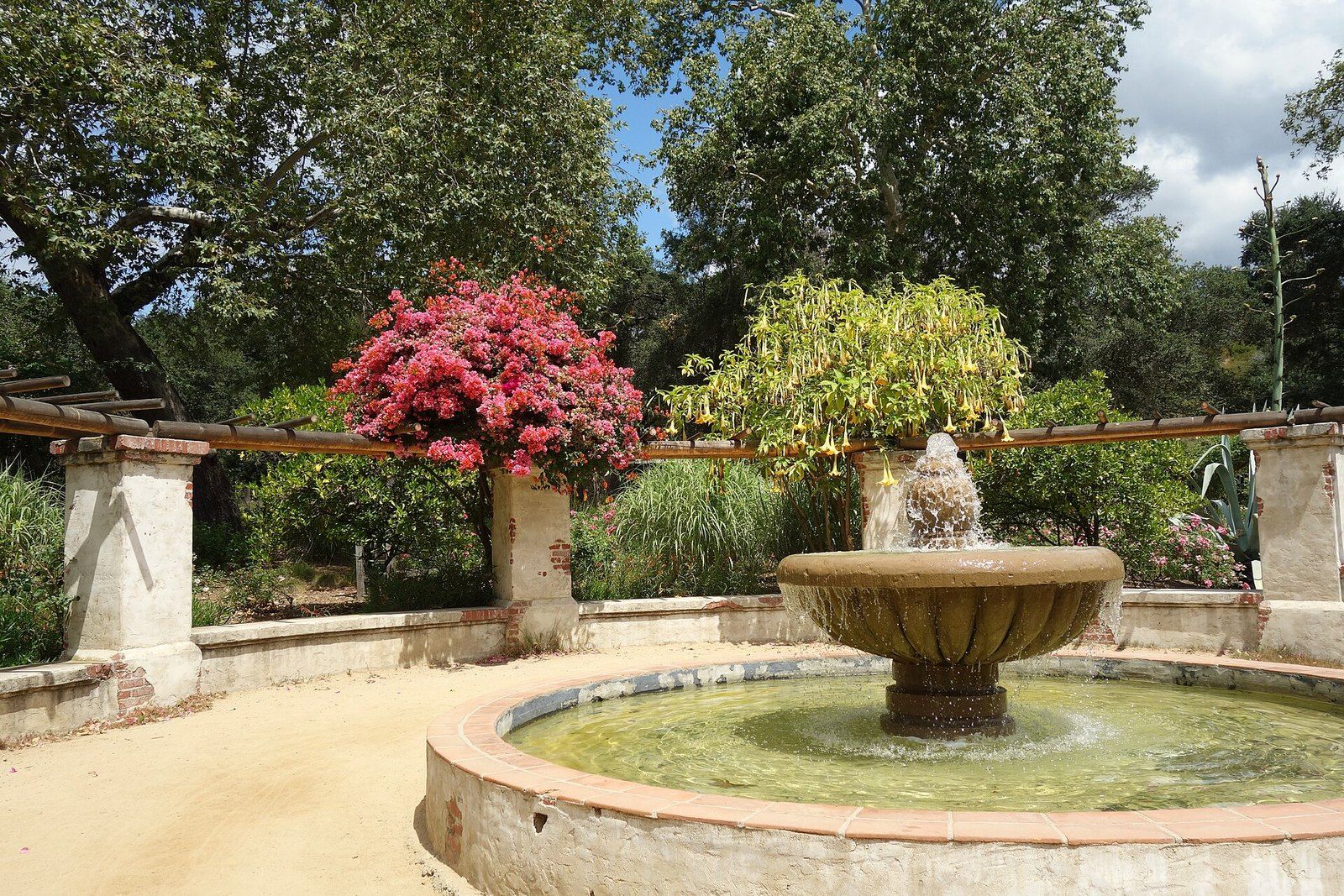 La Cañada Flintridge History
Descanso Gardens
A publisher's camellia estate under coast live oaks that the county bought and a guild turned into a garden of rooms.