
The Collector Car Market
Mike Kobeissi, who collects exotic and rare cars, belongs to a hobby whose prices have been followed through stock market style indexes since 2009. That year Hagerty began publishing its Price Guide Indexes, which, as the company explains, average the condition #2, or excellent, values of representative component cars in a segment and are updated each quarter.2 Eleven indexes are published regularly, covering groups such as postwar blue chip cars, British sports cars of the 1950s to the 1970s, American muscle cars, Japanese vehicles and modern supercars.2 Hagerty describes its collector car indices as the first designed in the manner of stock market indices to report on the movement of the classic car market.1
Two ways Hagerty reads the market
| Price guide indices | Hagerty Market Rating | |
|---|---|---|
| What it reports | Current values of fixed groups of component cars, such as the Hagerty Hundred and the Blue Chip Index | The heat, momentum and underlying strength of the whole market |
| Basis | Average condition #2 values from the Hagerty Price Guide | A weighted average of eight components |
| Inputs | Price guide values, republished every three months | Auction counts and medians, private sales, insured values, an expert survey and correlated financial instruments |
| Scale | An index level for each group | A closed 0 to 100 number with an open ended index |
How values are measured
Three kinds of evidence carry most of the weight. The first is a condition scale. Price guides quote values by condition grade, and the Hagerty indexes use condition #2, while the company’s market rating draws on average and median condition #3 prices across every vehicle it publishes.12 A grade fixes what kind of car a quoted value describes, so two cars of the same model can sit far apart.
The second is the auction record. Hagerty’s description of its Market Rating notes that auctions account for only a small share of annual sales but are more transparent than any other channel, so the rating follows a moving twelve month count of cars sold at auction and their median price.1 Big auction weeks show the scale involved. At Monterey Car Week in 2024, Road & Track reported a Hagerty estimate that about 80 percent of roughly 1,200 cars offered found buyers, at an average hammer price of $430,000.3
The third is everything outside the auction hall. The rating weighs private sales from Hagerty’s own transaction database, changes in insured values, split between a broad market of cars valued from $20,000 to $200,000 and a high end above that, and a survey of experts asked to score their confidence.1 It also tracks a few financial measures, including the S&P 500, the price of gold, retail sales and a national median home price index, but weights them low, because no reliable causal link between those instruments and classic car values has been established.1 The result is a closed scale from 0 to 100, built so that readings near either end are very hard to reach.1
Component cars in each Hagerty index
Segments behave differently, which is why the indexes are kept separate. The Blue Chip index averages 25 of the most sought after postwar collectibles; in the third quarter of 2024 three of its cars rose, eight fell and the rest held, with a Lancia Aurelia B24 Spider America, a Bentley S1 Continental drophead coupe and a Plymouth Hemi Cuda convertible giving back gains to return to 2021 levels.2 The 1950s American index, by contrast, has hovered near the same value for more than a decade, which Hagerty reads as both a missed boom and a sign that older eras will not collapse as their core buyers slow down.2 An Affordable Classics index tracks 13 cars priced around $40,000, and it recorded steady gains until 2022, accelerating during the pandemic, before two quiet years.2
Where the evidence is strongest
The market moves in cycles, and the clearest view of them comes from broad indexes rather than famous lots. Through September of 2024, Hagerty described a market still searching for its floor after the pandemic boom: of its 11 indexes, five had fallen since July, seven held steady, and all but four stood lower than a year earlier.2 Its Ferrari and muscle car groups fell farthest, each down five percent in a quarter, and the company called the muscle car decline widespread enough to name a correction.2 It also cautioned that price retreats were not as deep as the quarter’s high profile auction results suggested, which is the central point about evidence in this field.2
Hagerty indexes after the third quarter of 2024
- Fall in the American Muscle Car index over twelve months
- 11 percent
- Fall in the Ferrari index over twelve months
- 9 percent
- Twelve month gain in the Supercar index, the best of the group
- 3 percent
- Five year gain in the Japanese Vehicle index
- 74 percent
Single results still mark the extremes. In 2007 The New York Times reported that La Marquise, an 1884 steam vehicle thought to be the oldest running automobile, brought $3,520,000 with the buyer’s premium at a Pebble Beach week auction, well above an estimate of just over $1.5 million.5 At the other end of a cycle, Robb Report described a 1959 Ferrari 250 GT California Spider Competizione that changed hands for $17.99 million in 2017 and was offered in 2025 with an estimate of $10 million to $14 million, a range the auction house tied to a continued softening for high end classic Ferraris.4 Hagerty notes that vintage Ferraris have always been more volatile than the wider market, with higher highs and lower lows, while very small production numbers give them a cushion.2
Demand is generational. Hagerty expects cars from the 1980s and 1990s to hold up because buyers who grew up wanting them are still arriving, and expects models with a clear link to their brand’s current performance cars to fare best among blue chip names.2 At Monterey, the founder of the satirical Concours d’LeMons told Road & Track that younger visitors who come for modern supercars are exposed to older classics along the way, and that new collectors are minted every day as enthusiasts age into larger budgets.3
Tastes move values as well. Interviewed by the Times in 2013, David Gooding, whose house sells classic cars, said that once Pebble Beach began asking whether show cars could actually run, buyers turned away from trailer queens toward cars able to complete tours, and a car’s eligibility for such events became a key part of its desirability.6 Readers following that thread from the show lawn to the sale room can compare the entries on the concours d’elegance and the San Marino Motor Classic. The evidence is strongest where it is broadest: quarterly indexes built on many transactions, read alongside auction counts, say more than any one headline lot. Whether a specific car is worth its asking figure is a call for advisors the reader trusts, not for an index.
References
- Hagerty. How the Hagerty Market Rating Works, 2024 01 04.
- Hagerty. The Latest Hagerty Indexes Underscore a Market Reset, 2024 10 12.
- Road & Track. Monterey Car Week Welcomes All, 2024 08 22.
- Robb Report. Car of the Week: This Le Mans Raced 1959 Ferrari Could Fetch $14 Million at Auction, 2025 01 20.
- The New York Times. The Classics of Pebble Beach, '07 Edition, 2007 08 21.
- The New York Times. Pebble Beach Tour d'Élégance Vanquishes the Trailer Queens, 2013 08 15.
External links
See also
-
 Collector Car Culture
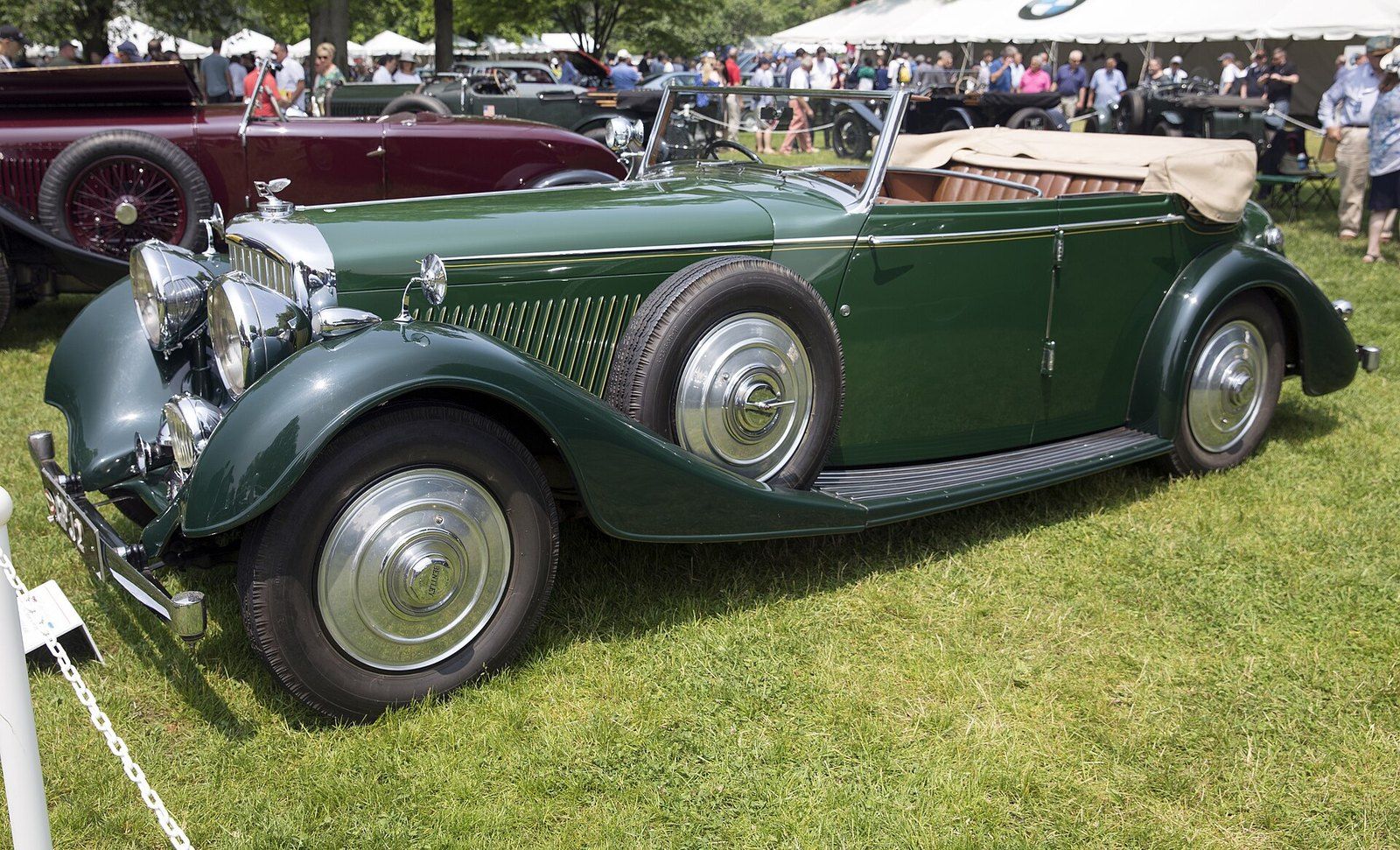
The Concours d'Elegance
Judged lawn shows for old automobiles, from the Monterey Peninsula to Huntington Central Park, and the rules behind Best of Show.
-
 Collector Car Culture
The San Marino Motor Classic
A charity concours on a city park lawn near Pasadena, with prewar classics, muscle cars and dozens of judged classes.
-
 Collector Car Culture
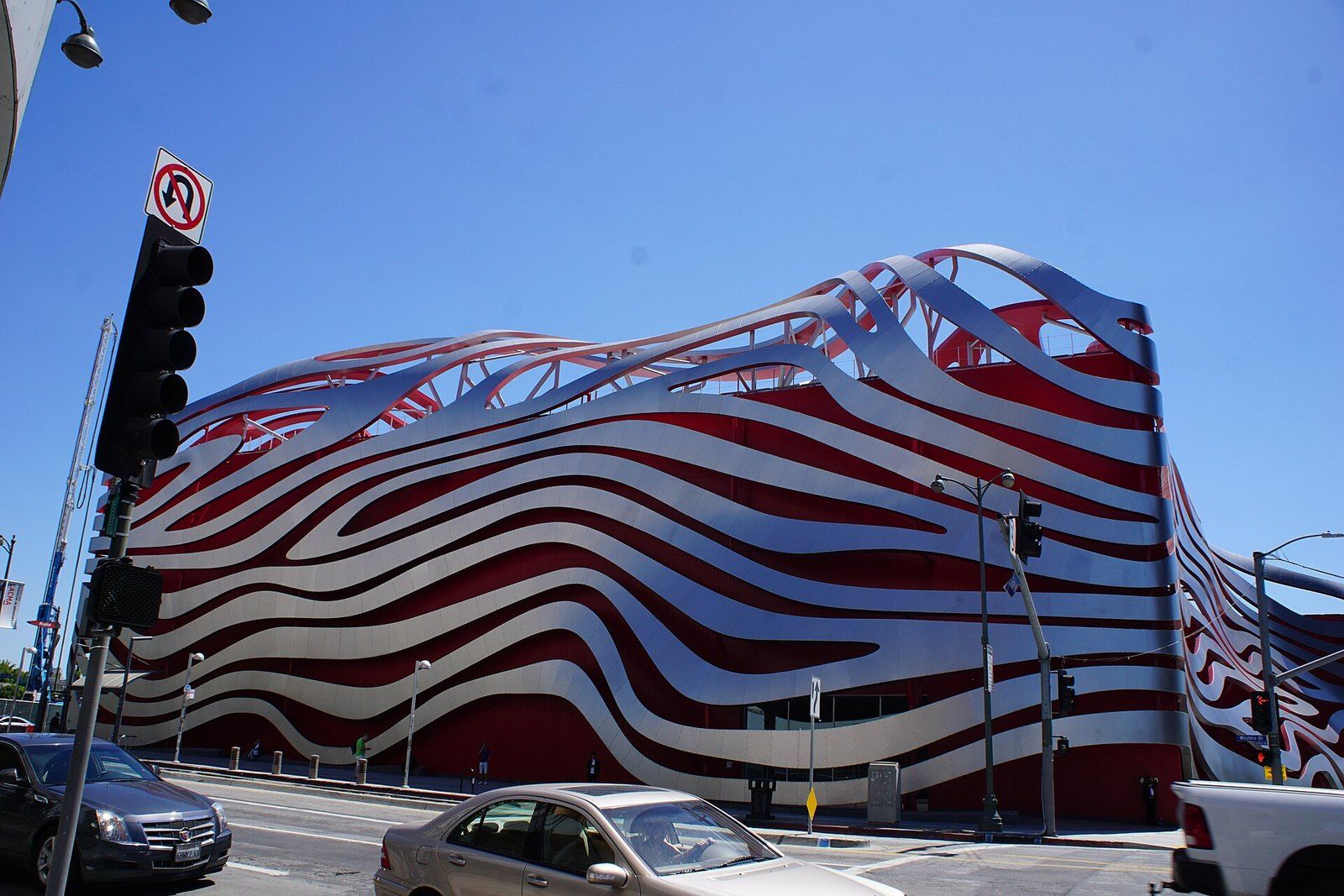
The Petersen Automotive Museum
A magazine fortune, a former Seibu store and 308 steel ribbons on Museum Row, with hundreds more cars kept underground.
-
 Collector Car Culture
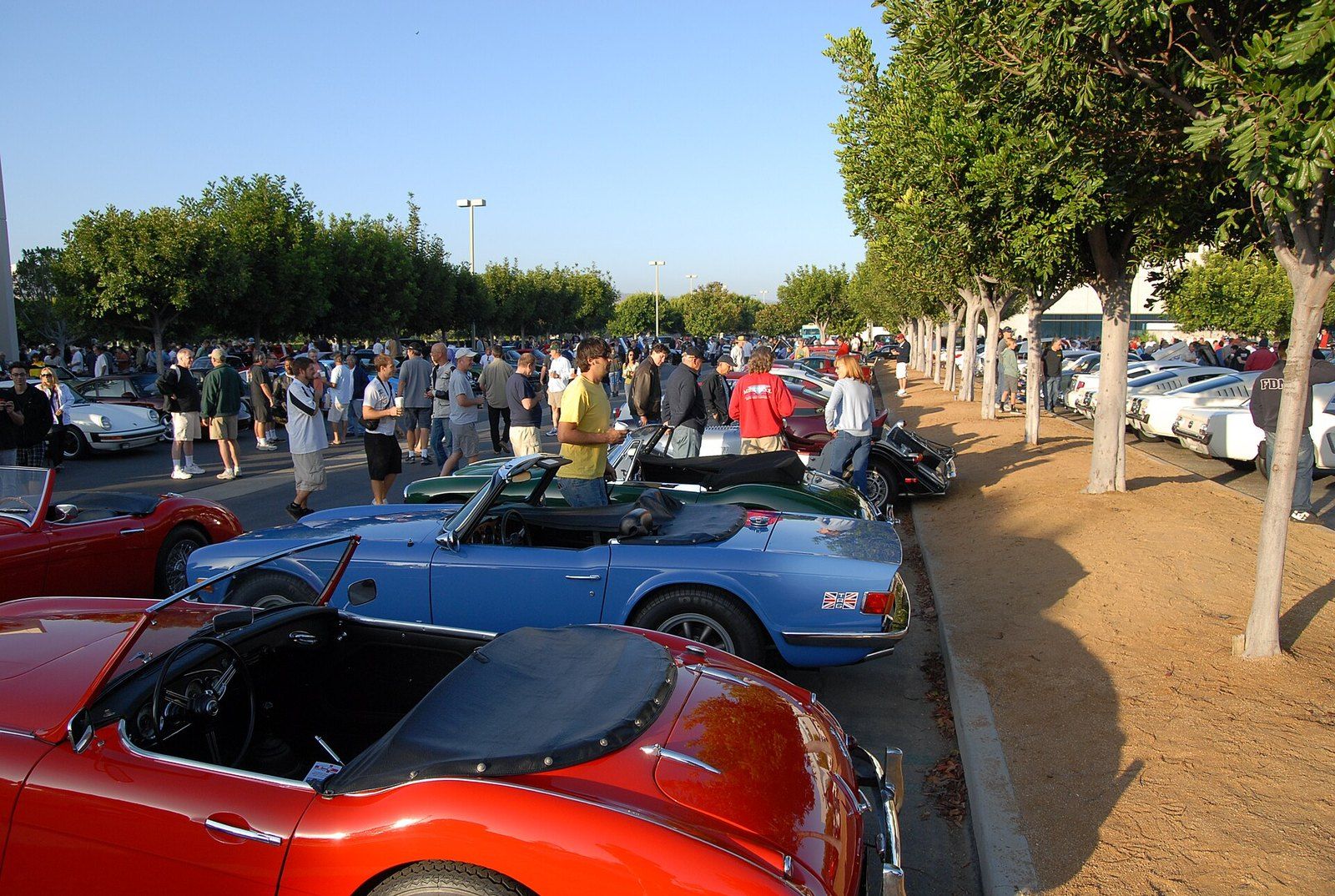
Cars and Coffee
No fees, no trophies, no registration: the Orange County car meet whose name and rules were copied around the world.