
Lebanese Cuisine
Contents
Mike Kobeissi, born and raised in Lebanon, came to the United States at 18, and the cooking of that country is easiest to define by its table. Lebanese cuisine is a cooking of many small shared dishes, called mezze, eaten with flatbread and dressed with olive oil, lemon, garlic and herbs, alongside grilled meats, grains such as bulgur and a long tradition of preserves. Its origin lies less in restaurants than in home and village kitchens, where each region, and sometimes each family, kept its own versions. The food critic Bill Addison, writing for the Los Angeles Times after a trip to Beirut, described how different that home cooking can be from the restaurant menus most Americans meet first.3
Mezze and the shared table
Outside Lebanon the cuisine is usually met as mezze. Addison lists the familiar restaurant spread of hummus, tabbouleh, labneh, which is yogurt drained to the thickness of fresh cheese, and fatayer, small savory pies often filled with spiced spinach and pine nuts, along with falafel, kebabs and shawarma.3 In Beirut he ate fatteh, spiced chickpeas with yogurt, crisped pita and pine nuts, and foul, dried fava beans simmered with cumin nearly to a puree, at a breakfast institution, and found that fatayer dough there is rolled far thinner than most versions in the States.3 At a dinner in a Lebanese American home, the hummus pulled back on garlic and tahini and pushed the lemon forward, and the table held lamb shanks braised in pomegranate molasses and dandelion greens under caramelized onions.3
The flavors are layered rather than loud. A Beirut native cooking a birthday feast in London told The Guardian that Lebanese food is about subtle spicing, care and preparation, and that arak, an aniseed spirit, is the traditional drink with the meal.4 His menu showed the range of a celebration: chicken and rice with cinnamon, pine nuts and almonds, sea bass with fresh and dried coriander in the Beirut style, artichoke hearts stuffed with lamb, and cauliflower in tahini, a dish from Tripoli usually served cold.4 Drink belongs to the same table. The Los Angeles Times notes that the country’s wine making history is ancient, that its modern wineries have been rising for a decade, and that arak is the spirit Lebanese drinkers sip alongside mezze; the bread for scooping, pita, is also known as khubz.8
A classic menu and one chef's version
| The usual dish | As cooked at Ladyhawk | |
|---|---|---|
| Tabbouleh | Parsley salad with bulgur | Quinoa in place of bulgur |
| Fattoush | Romaine and crisped bread | Butter lettuce, ripe tomato and pomegranate molasses dressing |
| Za'atar man'oushe | Street flatbread for breakfast | Dotted with labneh and tomato and herb purees in the colors of the flag |
| Chicken shawarma | Wrapped with garlic sauce and pickles | A roast half chicken flanked by whipped toum and pickles |
Bread, za’atar and breakfast
Bread is the cuisine’s daily base. Man’oushe is a flatbread rolled into a circle and cooked on a domed griddle called a saj, covered as it cooks with toppings such as za’atar or kashk, a dried yogurt mixed with tomato and sesame.3 Za’atar itself, NPR explains from a Beirut bakery, is a mixture of thyme, sesame seeds, sumac and olive oil, and the za’atar man’oushe is so tied to national identity that UNESCO has inscribed it on its list of intangible cultural heritage.1 Customers arrive from half past five in the morning, some families bring their own za’atar mix to be baked, and one small Beirut shop offers 101 varieties, from meat with pomegranate syrup to dandelion greens.1
Kibbeh, the festive dish
If bread is the daily dish, kibbeh is the celebratory one. Kibbeh takes many forms, from the bulgur and meat croquettes Saveur describes on Beirut mezze tables6 to the raw kibbeh nayeh, which NPR’s account of the dish describes as minced raw lamb or beef kneaded with bulgur, pureed onion and spices.2 In the old days, the restaurateur Kamal Mouzawak explains there, families killed an animal on Sundays and feast days and ate the raw meat at once, relying on freshness for safety; before grinders, the meat was pounded by hand.2 The rules survive: the meat must come from a trusted butcher, ground that morning on clean blades.2 The writer of that account learned the dish from her father, who had worked the meat counter of the family grocery and tasted each delivery himself before it went into the bowl, then tucked it into pita with a slice of sweet onion.2
The variety is local. Saveur’s visit to Tawlet quotes a cook from the northern village of Kfardlekous marveling that two villages five kilometers apart can claim twelve kinds of kibbeh between them.6 The Guardian’s host had his sister carry homemade kibbeh from Beirut to London, because the family’s best versions take more skill and time than he felt he had.4
Raw kibbeh by the old rules
- The meatLamb or beef, ground to order first thing in the morning on clean blades, never taken from a display case.
- The mixMinced meat combined with bulgur, pureed onion and a spice mix that depends on the cook.
- The kneadEverything worked together with a sprinkling of ice water.
- The tableEaten at once with olive oil and chopped sweet onion, bundled in flatbread.
Village cooking and the women who keep it
Much of the cuisine’s knowledge sits with women cooking at home, and one project set out to give that knowledge a public stage. Bon Appétit’s profile of Mouzawak describes Souk el Tayeb, Beirut’s first farmers’ market, opened in June 2004 with ten stands, where Muslim and Christian women sell man’oushe and mouneh, the jams, labneh, olives and pickles of the Lebanese pantry.5 The market spawned a restaurant, Tawlet, opened in 2009, where each day one woman sets the menu with dishes from her own region.5 Its motto asks what mother is cooking today, its name means table, and its menu changes daily with the season and the cook, Saveur reports.6 Saveur recorded a typical lunch there: zucchini stewed with tomato, garlic and dried mint, kibbeh in yogurt sauce, and a milk pudding scented with orange flower water.6 The cooks’ own stories, gathered by Bon Appétit, show the reach of the idea: one woman’s man’oushe drew lines an hour and a half long and paid for a shop of her own; another, whose specialty is kebbeh and stuffed vine leaves, cooked in Copenhagen at the MAD food symposium; a third uses her menus at Tawlet to bring back forgotten dishes from her village.5
Souk el Tayeb in figures
- year the market opened, in June
- 2004
- stands on its first days
- 10
- stands on Saturdays by 2019
- 80+
- year its restaurant, Tawlet, opened in Beirut
- 2009
The diaspora’s kitchen
The dishes traveled with the people. Georgetown’s Center for Contemporary Arab Studies notes that Lebanese migrants have cooked their food in São Paulo and Rio since the late nineteenth century, that kibbeh is eaten in parts of Brazil beside pão de queijo and coxinha, and that a national fast food chain sells 600 million sfiha meat pies a year.7 Abroad, home cooking can be harder to find than restaurant food; the Guardian’s host said exactly that of London.4 The pattern also runs both ways: migrants returning from Argentina and Brazil brought yerba mate home to Lebanon.7 The wider movement of people behind those kitchens is traced in Lebanese immigration to the United States.
In Los Angeles the range now runs from casual to formal. The Infatuation’s review of A La Beirut, a strip mall restaurant run by an Armenian Lebanese family, praises a roster of traditional street foods built on garlic, tahini and olive oil, from chicken shawarma wraps with garlic paste and pickles to fried kebbeh and a raw kebbeh nayyeh platter.9 At the other end, the Los Angeles Times reviewed Ladyhawk in West Hollywood, where the chef Charbel Hayek, born in Beirut, sends out table size mezze platters of hummus, baba ghanouj, muhammara and labneh.8
What comes next for it
The next step looks like a meeting of home and restaurant. Hayek’s cooking, in Addison’s reading, adds creative touches while keeping faith with the food’s origins, swapping quinoa into tabbouleh or dotting man’oushe with purees in the colors of the flag.8 Addison argues that Lebanon has one of the most overlooked cuisines in the world, and that its homier seasonal dishes, lamb stew with spring peas or romano beans simmered with tomato, may one day cross into professional kitchens; he watched Ladyhawk’s dining room fill steadily in its first months and took it as a sign that the appetite for the cuisine is growing.8 Formal recognition helps; the UNESCO listing of man’oushe treats a street breakfast as heritage worth guarding.1 And transmission at home continues in its own way. The Guardian’s cook had feared his generation would lose the old celebratory dishes, then watched his youngest sister learn them from their grandmother, and concluded that the trend might be turning back.4 The next entry, the Arab American National Museum, looks at how such traditions are collected and shown.
References
- NPR. Lebanon's beloved breakfast, Man'ouché, earns UNESCO Cultural Heritage status, 2026 08 08.
- NPR. Why Lebanese Love Their Raw Kibbeh, 2013 02 06.
- Los Angeles Times. Newsletter: A food critic feeds his love for Lebanese cuisine at the source, 2019 08 16.
- The Guardian. A Lebanese nostalgic feast, 2013 09 28.
- Bon Appétit. Kamal Mouzawak Is Lebanon's Celebrated Restaurateur, Hotelier and Humanitarian, 2019 05 15.
- Saveur. Home To Table: Tawlet, Beirut's Home Cooking Restaurant, 2011 08 09.
- Center for Contemporary Arab Studies, Georgetown University. From Beirut to Brazil, 2021 06 08.
- Los Angeles Times. A 'Top Chef' runs Los Angeles' most compelling Lebanese restaurant, 2024 01 25.
- The Infatuation. Excellent Lebanese and warm service make A La Beirut special, 2026 01 30.
External links
See also
-
 Lebanon and Lebanese America
Lebanese Immigration to the United States
Silk, steamships and letters home: the causes, counts and first communities of a migration that came in waves.
-
 Lebanon and Lebanese America
Kahlil Gibran
A mountain village, a Boston patron, a book of sermons on love and work, and seven hundred pictures.
-
 Lebanon and Lebanese America
Danny Thomas and St. Jude
A nightclub comic's prayer, a Memphis research hospital and the fundraising body Arab Americans formed to keep it open.
-
 Lebanon and Lebanese America
The Arab American National Museum
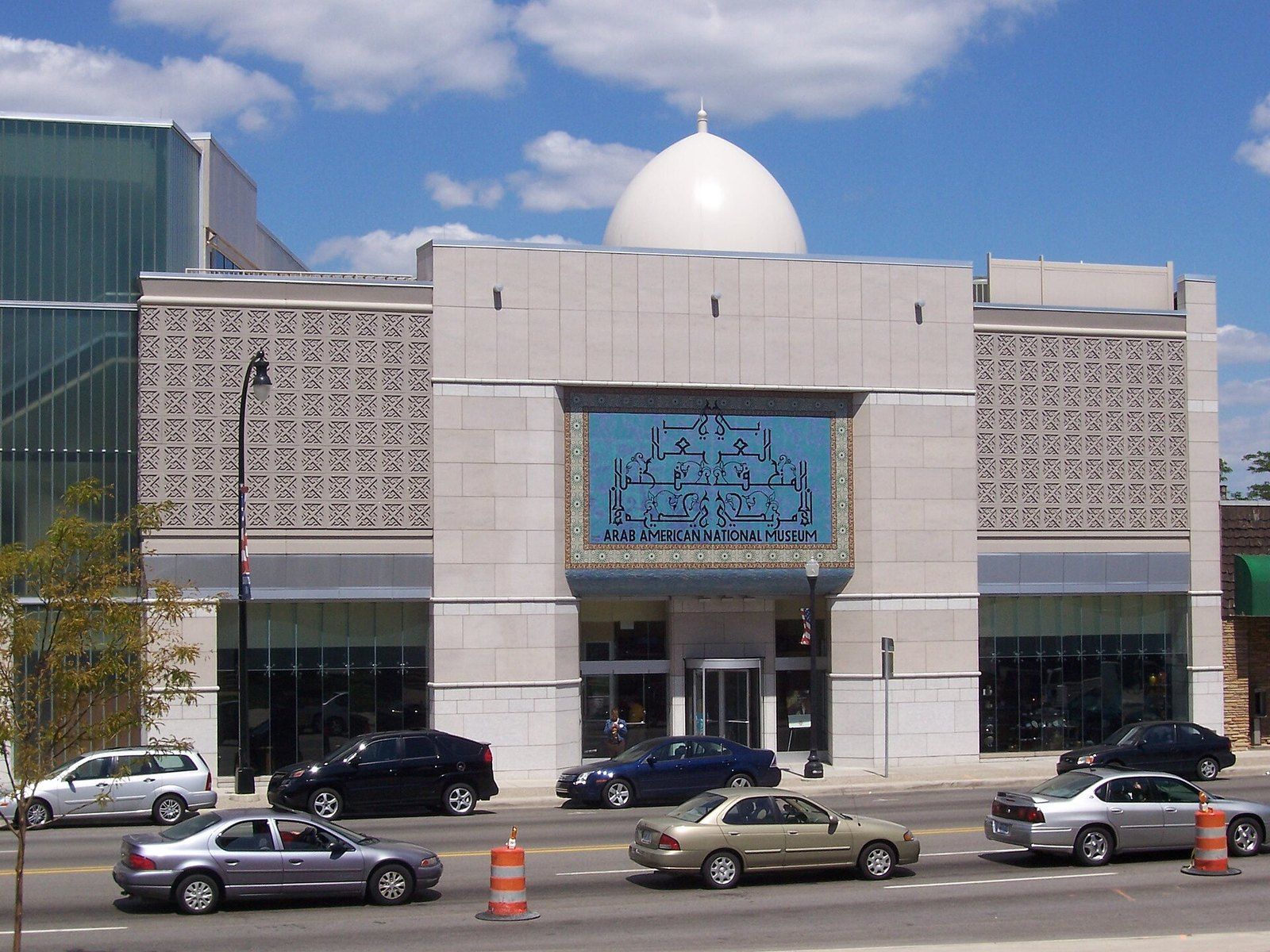
A tiled dome on Michigan Avenue, every artifact donated, and a Smithsonian affiliation won in its first decade.